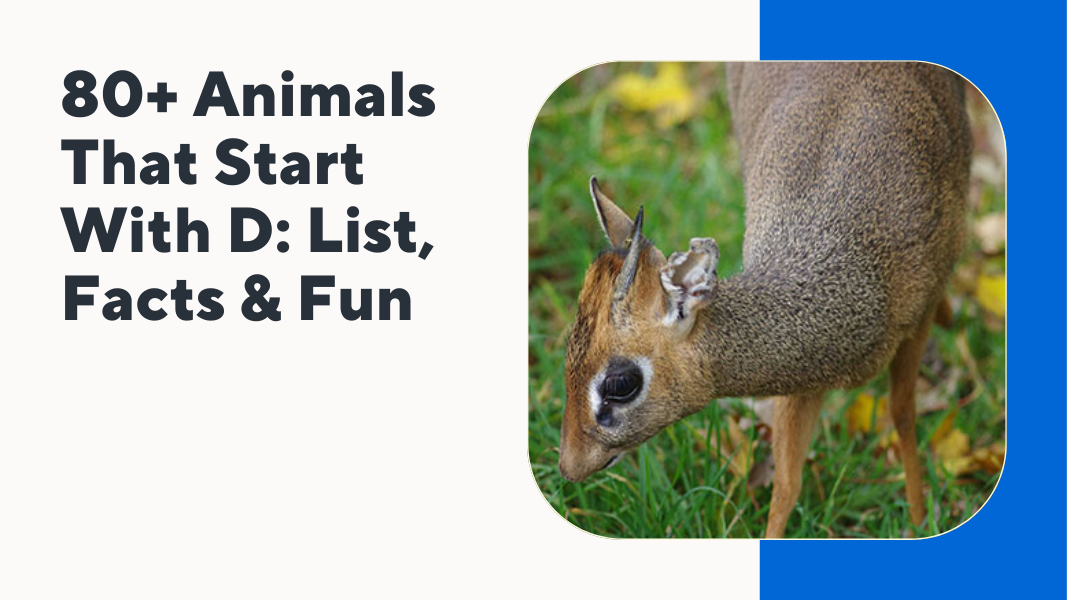
80+ Animals That Start With D: List, Facts & Fun
The animal kingdom is full of delightful and diverse species, and today we’re diving into those that start with the letter D. From dusty desert dwellers to deep-sea divers, these creatures come from every corner of the globe.
To make exploration easy and informative, we’ve grouped the animals by type — mammals, birds, reptiles, amphibians, insects, and aquatic life — each with quick facts and a fun piece of trivia. Whether you’re a wildlife enthusiast or just love a good animal fact, this list of animals that start with D offers a journey through the wild like no other.
Animals That Start With D
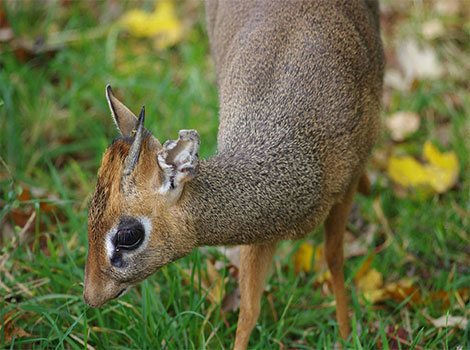
1. Dingo (Canis lupus dingo)
The dingo is a wild dog native to Australia, often seen in arid deserts, forests, and plains. It has a golden coat, upright ears, and a bushy tail. Dingoes are opportunistic carnivores that hunt alone or in small packs. They feed on kangaroos, wallabies, rabbits, and sometimes fruits. Dingoes are considered a threatened species due to habitat loss and interbreeding with domestic dogs.
Fun Fact: Dingoes don’t bark like domestic dogs — they howl instead.
Quick Facts Table:
| Attribute | Detail |
|---|---|
| Size | 90–120 cm (35–47 in) |
| Weight | 13–20 kg (29–44 lbs) |
| Lifespan | 5–10 years |
| Habitat | Australia – forests, deserts |
| Diet | Small mammals, birds, reptiles |
| Social Structure | Pack |
| Conservation | Vulnerable |
| Fun Fact | Dingoes howl instead of bark. |
2. Dhole (Cuon alpinus)
Also known as the Asiatic wild dog, the dhole is a highly social canid found in Central and Southeast Asia. It has a reddish coat, bushy black-tipped tail, and rounded ears. Dholes live in forested habitats and are known for cooperative hunting. They primarily feed on deer and other medium-sized ungulates. Though agile and powerful hunters, dholes are endangered due to habitat fragmentation.
Fun Fact: Dholes communicate with high-pitched whistles, unlike any other wild dog.
Quick Facts Table:
| Attribute | Detail |
|---|---|
| Size | 90 cm (35 in) |
| Weight | 10–21 kg (22–46 lbs) |
| Lifespan | 10–14 years |
| Habitat | Forests of Asia |
| Diet | Deer, rodents, birds |
| Social Structure | Pack |
| Conservation | Endangered |
| Fun Fact | Dholes whistle to communicate in the wild. |
3. Desert Tortoise (Gopherus agassizii)
Native to the Mojave and Sonoran Deserts, the desert tortoise is a hardy reptile that spends up to 95% of its life in burrows. Its domed shell helps conserve water, and it eats grasses, herbs, and wildflowers. It can survive extreme drought by storing water in its bladder. These tortoises are threatened by habitat destruction and illegal collection.
Fun Fact: Desert tortoises can live more than a year without drinking water.
Quick Facts Table:
| Attribute | Detail |
|---|---|
| Size | 25–36 cm (10–14 in) |
| Weight | 4–7 kg (9–15 lbs) |
| Lifespan | 50–80 years |
| Habitat | North American deserts |
| Diet | Grasses, herbs, cactus |
| Social Structure | Solitary |
| Conservation | Threatened |
| Fun Fact | Can survive over 12 months without water. |
4. Duck-Billed Platypus (Ornithorhynchus anatinus)
Found in eastern Australia, the platypus is one of only five existing species of monotremes — egg-laying mammals. It has a duck-like bill, webbed feet, and dense waterproof fur. It uses electrolocation to hunt underwater for insects, crustaceans, and worms. Males have venomous spurs on their hind legs.
Fun Fact: Platypuses close their eyes, ears, and nostrils while underwater.
Quick Facts Table:
| Attribute | Detail |
|---|---|
| Size | 40–60 cm (16–24 in) |
| Weight | 0.7–2.4 kg (1.5–5.3 lbs) |
| Lifespan | 12–17 years |
| Habitat | Rivers and lakes (Australia) |
| Diet | Insects, crustaceans, worms |
| Social Structure | Solitary |
| Conservation | Near Threatened |
| Fun Fact | Uses electrolocation to hunt underwater. |
5. Dusky Dolphin (Lagenorhynchus obscurus)
These small, agile dolphins inhabit the cool coastal waters of the Southern Hemisphere. They have a striking color pattern with a dark back and pale underside. Dusky dolphins are highly acrobatic and often seen leaping and playing in groups. Their diet includes squid, anchovies, and other schooling fish.
Fun Fact: They can coordinate complex group hunting techniques like herding.
Quick Facts Table:
| Attribute | Detail |
|---|---|
| Size | 1.6–2 m (5.2–6.6 ft) |
| Weight | 60–90 kg (132–198 lbs) |
| Lifespan | 20–25 years |
| Habitat | Coastal Southern Hemisphere |
| Diet | Fish, squid |
| Social Structure | Pod |
| Conservation | Least Concern |
| Fun Fact | Known for synchronized leaping and group acrobatics. |
6. Dragonfly (Anisoptera spp.)
Dragonflies are fast-flying insects found near freshwater bodies worldwide. They have large compound eyes, elongated bodies, and two pairs of transparent wings. Dragonflies are excellent predators that feed on mosquitoes, flies, and other small insects. Their nymphs live in water and are also carnivorous.
Fun Fact: Dragonflies can fly in all directions — even backward.
Quick Facts Table:
| Attribute | Detail |
|---|---|
| Size | 2.5–12 cm (1–4.7 in) |
| Weight | 0.1–0.4 g (0.003–0.014 oz) |
| Lifespan | 6 months–7 years (most in larval stage) |
| Habitat | Near freshwater (global) |
| Diet | Insects |
| Social Structure | Solitary |
| Conservation | Least Concern |
| Fun Fact | Dragonflies can fly backward, hover, and turn mid-air. |
7. Darwin’s Frog (Rhinoderma darwinii)
Native to the forests of Chile and Argentina, this tiny amphibian is named after Charles Darwin. Males carry developing tadpoles in their vocal sacs — a rare case of paternal care. The frog has a leaf-like appearance that helps it blend in with forest debris.
Fun Fact: Male Darwin’s frogs “swallow” their offspring to keep them safe.
Quick Facts Table:
| Attribute | Detail |
|---|---|
| Size | 2.2–3.5 cm (0.8–1.4 in) |
| Weight | ≈2 g (0.07 oz) |
| Lifespan | 5–10 years |
| Habitat | Temperate forests (Chile, Argentina) |
| Diet | Small insects |
| Social Structure | Solitary |
| Conservation | Endangered |
| Fun Fact | Males raise tadpoles inside their throat pouch. |
8. Desert Hedgehog (Paraechinus aethiopicus)
Found in North Africa and the Middle East, the desert hedgehog is adapted to arid environments. It has a small, rounded body covered in sharp spines and a distinctive dark mask across its face. Nocturnal and insectivorous, it feeds on insects, scorpions, and small reptiles. It enters a state of torpor during extreme heat.
Fun Fact: This hedgehog can roll into a tight, spiny ball when threatened.
Quick Facts Table:
| Attribute | Detail |
|---|---|
| Size | 14–28 cm (5.5–11 in) |
| Weight | 280–510 g (0.6–1.1 lbs) |
| Lifespan | 4–6 years |
| Habitat | Deserts and dry grasslands |
| Diet | Insects, scorpions, lizards |
| Social Structure | Solitary |
| Conservation | Least Concern |
| Fun Fact | Rolls into a ball, using its spines as defense. |
9. Desert Iguana (Dipsosaurus dorsalis)
Native to the southwestern U.S. and northwestern Mexico, the desert iguana is a heat-loving reptile. Its pale coloring reflects sunlight, allowing it to remain active during the hottest part of the day. It primarily feeds on desert plants and flowers, especially creosote bush blossoms.
Fun Fact: Desert iguanas can tolerate body temperatures up to 42°C (108°F).
Quick Facts Table:
| Attribute | Detail |
|---|---|
| Size | 30–41 cm (12–16 in) |
| Weight | 0.2–0.3 kg (0.4–0.7 lbs) |
| Lifespan | 7–10 years |
| Habitat | Deserts (U.S., Mexico) |
| Diet | Flowers, leaves, insects |
| Social Structure | Solitary |
| Conservation | Least Concern |
| Fun Fact | Most active reptile in midday desert heat. |
10. Dalmatian Pelican (Pelecanus crispus)
This massive water bird is among the largest of all pelican species. Native to parts of Europe and Asia, it frequents lakes, rivers, and deltas. It has a curly nape, orange bill pouch, and striking silver-white plumage. It feeds by scooping fish into its expandable pouch.
Fun Fact: The Dalmatian pelican’s wingspan can reach over 3 meters.
Quick Facts Table:
| Attribute | Detail |
|---|---|
| Size | 160–180 cm (63–71 in) |
| Weight | 10–15 kg (22–33 lbs) |
| Lifespan | 15–25 years |
| Habitat | Wetlands, lakes, rivers |
| Diet | Fish |
| Social Structure | Flock |
| Conservation | Near Threatened |
| Fun Fact | Has one of the widest wingspans of any flying bird. |
11. Deer Mouse (Peromyscus maniculatus)
This small rodent is widespread across North America. It has large eyes, soft brown fur, and a white belly. Known for its agility and jumping ability, it thrives in forests, grasslands, and deserts. It feeds on seeds, insects, and berries.
Fun Fact: Deer mice are known carriers of hantavirus, making them medically significant.
Quick Facts Table:
| Attribute | Detail |
|---|---|
| Size | 7–10 cm (2.8–4 in) |
| Weight | 10–24 g (0.35–0.85 oz) |
| Lifespan | 1–2 years |
| Habitat | Forests, fields, deserts |
| Diet | Seeds, insects, fruits |
| Social Structure | Solitary |
| Conservation | Least Concern |
| Fun Fact | Agile climbers and jumpers with excellent night vision. |
12. Desert Locust (Schistocerca gregaria)
The desert locust is a short-horned grasshopper species found in Africa, the Middle East, and Asia. In solitary phases, they are harmless, but when swarming, they form massive clouds that devastate crops. These insects can travel hundreds of kilometers in a day.
Fun Fact: A single swarm can cover 1,200 square kilometers and contain billions of locusts.
Quick Facts Table:
| Attribute | Detail |
|---|---|
| Size | 6–8 cm (2.3–3.1 in) |
| Weight | ≈2 g (0.07 oz) |
| Lifespan | 3–5 months |
| Habitat | Arid grasslands and deserts |
| Diet | Leaves, crops, grasses |
| Social Structure | Solitary or swarm |
| Conservation | Least Concern |
| Fun Fact | Swarms can eat as much as 35,000 people in one day. |
13. Desert Cottontail (Sylvilagus audubonii)
Also called Audubon’s cottontail, this rabbit species thrives in arid habitats of the southwestern U.S. It has a light gray-brown coat and a fluffy white tail. It feeds at dusk and dawn, browsing on grasses, herbs, and cacti. When threatened, it runs in zigzags to evade predators.
Fun Fact: Despite the heat, it rarely drinks water — getting moisture from plants.
Quick Facts Table:
| Attribute | Detail |
|---|---|
| Size | 36–43 cm (14–17 in) |
| Weight | 0.8–1.5 kg (1.7–3.3 lbs) |
| Lifespan | 2–3 years |
| Habitat | Deserts and scrublands |
| Diet | Grasses, shrubs, cacti |
| Social Structure | Solitary |
| Conservation | Least Concern |
| Fun Fact | Rarely drinks water due to moisture-rich diet. |
14. Dusky Shark (Carcharhinus obscurus)
This large predatory shark is found in tropical and temperate oceans worldwide. It has a slender body, rounded snout, and long pectoral fins. Dusky sharks are apex predators that feed on bony fish, rays, and smaller sharks.
Fun Fact: Dusky sharks undergo the longest known shark migration — over 5,000 km.
Quick Facts Table:
| Attribute | Detail |
|---|---|
| Size | 3–4 m (10–13 ft) |
| Weight | 160–180 kg (353–397 lbs) |
| Lifespan | 40–50 years |
| Habitat | Coastal and offshore waters |
| Diet | Fish, rays, squid |
| Social Structure | Solitary |
| Conservation | Vulnerable |
| Fun Fact | Migrates across entire oceans over vast distances. |
15. Desert Horned Viper (Cerastes cerastes)
This venomous snake inhabits North African deserts and is famous for its sidewinding locomotion. It has prominent horn-like scales above its eyes and a thick, sandy body that blends with desert soil. It hunts at night, ambushing rodents and lizards.
Fun Fact: Its sideways crawling style helps reduce heat contact with the sand.
Quick Facts Table:
| Attribute | Detail |
|---|---|
| Size | 30–60 cm (12–24 in) |
| Weight | 0.2–0.5 kg (0.4–1.1 lbs) |
| Lifespan | 15–18 years |
| Habitat | Desert dunes and rocky plains |
| Diet | Rodents, lizards |
| Social Structure | Solitary |
| Conservation | Least Concern |
| Fun Fact | Moves sideways to avoid hot desert sand. |
16. Damselfly (Zygoptera spp.)
Closely related to dragonflies, damselflies are delicate insects found near ponds, rivers, and wetlands worldwide. Unlike dragonflies, they fold their wings along their body when at rest. They have slender bodies, long transparent wings, and large eyes. Damselfly larvae are aquatic predators, while adults eat flying insects.
Fun Fact: Damselflies can move each wing independently, allowing nimble flight.
Quick Facts Table:
| Attribute | Detail |
|---|---|
| Size | 2.5–5 cm (1–2 in) |
| Weight | 0.1–0.3 g (0.003–0.01 oz) |
| Lifespan | 1–2 years |
| Habitat | Freshwater habitats |
| Diet | Small flying insects |
| Social Structure | Solitary |
| Conservation | Least Concern |
| Fun Fact | Flies with wings that move independently. |
17. Darwin’s Fox (Lycalopex fulvipes)
Endemic to Chile, Darwin’s fox is a small, critically endangered canid. It inhabits dense temperate rainforests and has a dark gray coat with reddish markings. Mostly nocturnal, it feeds on rodents, birds, fruits, and insects. Habitat fragmentation is a major threat to its survival.
Fun Fact: It was first discovered by Charles Darwin in 1834.
Quick Facts Table:
| Attribute | Detail |
|---|---|
| Size | 48–55 cm (19–22 in) |
| Weight | 2–4 kg (4.4–8.8 lbs) |
| Lifespan | 7–10 years |
| Habitat | Forests (Chile) |
| Diet | Rodents, fruit, insects |
| Social Structure | Solitary |
| Conservation | Critically Endangered |
| Fun Fact | Discovered by Darwin during his Beagle voyage. |
18. Desert Monitor (Varanus griseus)
This large lizard inhabits arid regions across the Middle East and Central Asia. It has a long tail, sharp claws, and a forked tongue. Desert monitors are carnivorous and prey on rodents, birds, eggs, and other reptiles. They are powerful diggers and use burrows for shelter.
Fun Fact: Despite the heat, they remain active during the day.
Quick Facts Table:
| Attribute | Detail |
|---|---|
| Size | 1–1.6 m (3.3–5.2 ft) |
| Weight | 3–5 kg (6.6–11 lbs) |
| Lifespan | 15–20 years |
| Habitat | Deserts and steppes |
| Diet | Rodents, reptiles, eggs |
| Social Structure | Solitary |
| Conservation | Least Concern |
| Fun Fact | Hunts by smell using a forked tongue like snakes. |
19. Diamondback Rattlesnake (Crotalus atrox)
Native to the southwestern U.S. and Mexico, this pit viper is one of the largest and most venomous rattlesnakes. It has a distinctive diamond pattern on its back and a loud rattle used to warn predators. It ambushes prey like rabbits and rodents.
Fun Fact: Can strike at speeds faster than the blink of an eye.
Quick Facts Table:
| Attribute | Detail |
|---|---|
| Size | 90–150 cm (35–59 in) |
| Weight | 1.3–2.7 kg (2.8–6 lbs) |
| Lifespan | 10–20 years |
| Habitat | Deserts, grasslands, scrublands |
| Diet | Rodents, birds |
| Social Structure | Solitary |
| Conservation | Least Concern |
| Fun Fact | Has heat-sensing pits to locate warm-blooded prey. |
20. Dusky Moorhen (Gallinula tenebrosa)
This medium-sized waterbird is found throughout Australia and Southeast Asia. It has a dark gray body with a red frontal shield and yellow-tipped bill. Dusky moorhens forage for aquatic vegetation, insects, and snails near ponds and wetlands.
Fun Fact: They bob their heads constantly while walking.
Quick Facts Table:
| Attribute | Detail |
|---|---|
| Size | 30–38 cm (12–15 in) |
| Weight | 0.3–0.5 kg (0.6–1.1 lbs) |
| Lifespan | 6–8 years |
| Habitat | Wetlands, lakes, rivers |
| Diet | Aquatic plants, insects, mollusks |
| Social Structure | Group |
| Conservation | Least Concern |
| Fun Fact | Known for head-bobbing motion while foraging. |
21. Desert Lark (Ammomanes deserti)
Found across North Africa, the Middle East, and Central Asia, this small bird is adapted to life in arid environments. It has sandy plumage that blends with rocky deserts. Desert larks feed on seeds, insects, and plant material.
Fun Fact: Their song echoes clearly across desert canyons.
Quick Facts Table:
| Attribute | Detail |
|---|---|
| Size | 15–18 cm (6–7 in) |
| Weight | 20–35 g (0.7–1.2 oz) |
| Lifespan | 3–5 years |
| Habitat | Rocky deserts, arid hills |
| Diet | Seeds, insects |
| Social Structure | Pair or small flock |
| Conservation | Least Concern |
| Fun Fact | Uses echoing song to defend territory. |
22. Dogfish Shark (Squalus acanthias)
This small shark is found in temperate coastal waters around the world. It has a slender body, gray coloration, and sharp spines in front of each dorsal fin. Dogfish sharks are slow-growing and live long lives. They feed on small fish, squid, and crustaceans.
Fun Fact: They were named “dogfish” because they hunt in packs like dogs.
Quick Facts Table:
| Attribute | Detail |
|---|---|
| Size | 60–120 cm (24–47 in) |
| Weight | 1–4 kg (2.2–8.8 lbs) |
| Lifespan | Up to 40 years |
| Habitat | Coastal and continental shelf waters |
| Diet | Fish, squid, crustaceans |
| Social Structure | School |
| Conservation | Vulnerable |
| Fun Fact | Hunts in coordinated groups like dogs. |
23. Desert Rain Frog (Breviceps macrops)
This tiny amphibian is native to the coastal deserts of Namibia and South Africa. It has a round body, short limbs, and transparent skin. It’s known for its high-pitched squeaky call and nocturnal behavior. It lives under the sand and emerges only at night.
Fun Fact: It makes a squeaky toy-like sound when threatened.
Quick Facts Table:
| Attribute | Detail |
|---|---|
| Size | 4–6 cm (1.6–2.4 in) |
| Weight | ≈7 g (0.25 oz) |
| Lifespan | 4–6 years |
| Habitat | Coastal desert |
| Diet | Insects, larvae |
| Social Structure | Solitary |
| Conservation | Near Threatened |
| Fun Fact | Sounds like a squeaky toy when distressed. |
24. Dung Beetle (Scarabaeinae spp.)
Dung beetles are found on every continent except Antarctica. They feed on feces and play a vital role in nutrient recycling. Some roll dung into balls, while others bury it for future meals or to lay eggs. They have incredible strength for their size.
Fun Fact: A dung beetle can pull over 1,000 times its body weight.
Quick Facts Table:
| Attribute | Detail |
|---|---|
| Size | 0.5–5 cm (0.2–2 in) |
| Weight | 0.01–0.1 g (0.0004–0.004 oz) |
| Lifespan | 3–5 years |
| Habitat | Grasslands, forests, deserts |
| Diet | Feces |
| Social Structure | Solitary or pair |
| Conservation | Varies by species |
| Fun Fact | Can pull over 1,000x its own body weight. |
25. Desert Finch (Rhodospiza obsoleta)
This small passerine bird lives in the arid and semi-arid zones of Central Asia and the Middle East. It has a stout beak and pale brown plumage. Desert finches feed on seeds, berries, and occasionally insects.
Fun Fact: Males sing long trills during the breeding season.
Quick Facts Table:
| Attribute | Detail |
|---|---|
| Size | 13–15 cm (5–6 in) |
| Weight | 20–25 g (0.7–0.9 oz) |
| Lifespan | 4–7 years |
| Habitat | Semi-desert, dry scrub |
| Diet | Seeds, berries |
| Social Structure | Flock |
| Conservation | Least Concern |
| Fun Fact | Males sing to attract mates during breeding. |
26. Desert Whip Snake (Demansia psammophis)
This slender, fast-moving snake is found in arid and semi-arid regions of Australia. It has a light brown or olive body with a darker head and large eyes. Although venomous, it’s not dangerous to humans. It preys primarily on lizards and small mammals.
Fun Fact: It strikes so fast that prey often doesn’t react until it’s too late.
Quick Facts Table:
| Attribute | Detail |
|---|---|
| Size | 50–100 cm (20–39 in) |
| Weight | ≈0.3 kg (0.66 lbs) |
| Lifespan | 8–12 years |
| Habitat | Arid grasslands and deserts |
| Diet | Lizards, small mammals |
| Social Structure | Solitary |
| Conservation | Least Concern |
| Fun Fact | One of Australia’s fastest-striking snakes. |
27. Dwarf Crocodile (Osteolaemus tetraspis)
The smallest of all crocodile species, the dwarf crocodile inhabits the slow-moving rivers and swamps of West and Central Africa. It has a stocky build and heavily armored skin. Mostly nocturnal, it feeds on fish, frogs, and crustaceans.
Fun Fact: It spends much of its day hiding in burrows or under vegetation.
Quick Facts Table:
| Attribute | Detail |
|---|---|
| Size | 1.5–1.9 m (4.9–6.2 ft) |
| Weight | 18–32 kg (40–70 lbs) |
| Lifespan | 40–50 years |
| Habitat | Swamps, rivers (Africa) |
| Diet | Fish, amphibians, crustaceans |
| Social Structure | Solitary |
| Conservation | Vulnerable |
| Fun Fact | Smallest living crocodilian species. |
28. Dusky Leaf Monkey (Trachypithecus obscurus)
Also known as the spectacled langur, this primate lives in the rainforests of Thailand, Malaysia, and Myanmar. It has a dark gray body and white circles around its eyes, giving it a “spectacled” look. It feeds mostly on leaves, fruits, and seeds.
Fun Fact: Their infants are born bright orange and change color as they mature.
Quick Facts Table:
| Attribute | Detail |
|---|---|
| Size | 42–61 cm (16.5–24 in) |
| Weight | 5–9 kg (11–20 lbs) |
| Lifespan | 20–25 years |
| Habitat | Tropical forests |
| Diet | Leaves, fruit, seeds |
| Social Structure | Group |
| Conservation | Near Threatened |
| Fun Fact | Babies are bright orange at birth. |
29. Desert Night Lizard (Xantusia vigilis)
Found in the southwestern United States, this secretive lizard hides under rocks, fallen logs, and cacti. Unlike many reptiles, it gives live birth instead of laying eggs. It feeds on small insects and spiders and is most active at night.
Fun Fact: Despite its name, it’s not strictly nocturnal and may emerge during cloudy days.
Quick Facts Table:
| Attribute | Detail |
|---|---|
| Size | 4–11 cm (1.6–4.3 in) |
| Weight | ≈3 g (0.1 oz) |
| Lifespan | 8–10 years |
| Habitat | Deserts, rocky areas |
| Diet | Insects, spiders |
| Social Structure | Solitary or small groups |
| Conservation | Least Concern |
| Fun Fact | One of the few lizards that give birth to live young. |
30. Daurian Redstart (Phoenicurus auroreus)
A striking songbird found across East Asia, the Daurian redstart features a black face, white wing patch, and bright orange belly. It inhabits open forests and human settlements and is known for its restless tail flicking.
Fun Fact: It often nests in man-made structures like mailboxes and drainpipes.
Quick Facts Table:
| Attribute | Detail |
|---|---|
| Size | 14–15 cm (5.5–6 in) |
| Weight | 11–20 g (0.4–0.7 oz) |
| Lifespan | 3–5 years |
| Habitat | Forests, urban areas |
| Diet | Insects, berries |
| Social Structure | Pair or solitary |
| Conservation | Least Concern |
| Fun Fact | Often builds nests in urban mailboxes. |
31. Darwin’s Ground Finch (Geospiza fortis)
One of Darwin’s famous Galápagos finches, this bird helped shape the theory of evolution. It has a thick beak suited for cracking seeds and is found on several of the Galápagos Islands. Its diet shifts with environmental conditions.
Fun Fact: Its beak size can change over generations based on food availability.
Quick Facts Table:
| Attribute | Detail |
|---|---|
| Size | 10–12 cm (4–4.7 in) |
| Weight | 15–20 g (0.5–0.7 oz) |
| Lifespan | 5–10 years |
| Habitat | Galápagos Islands |
| Diet | Seeds, insects |
| Social Structure | Flock |
| Conservation | Vulnerable |
| Fun Fact | Helped Darwin formulate natural selection theory. |
32. Dwarf Mongoose (Helogale parvula)
Africa’s smallest carnivore, the dwarf mongoose lives in savannas and woodlands across sub-Saharan Africa. It forms tight-knit groups that work together to forage and raise young. It feeds on insects, small vertebrates, and eggs.
Fun Fact: Dwarf mongooses often form symbiotic partnerships with hornbills during foraging.
Quick Facts Table:
| Attribute | Detail |
|---|---|
| Size | 18–28 cm (7–11 in) |
| Weight | 210–350 g (0.46–0.77 lbs) |
| Lifespan | 8–10 years |
| Habitat | Savanna, woodland |
| Diet | Insects, eggs, small reptiles |
| Social Structure | Group |
| Conservation | Least Concern |
| Fun Fact | Cooperates with birds to find food and avoid predators. |
33. Dogface Butterfly (Zerene cesonia)
Named for the faint dog head pattern on its wings, this butterfly is found in the southern U.S. and parts of Central America. It frequents open fields and meadows and feeds on flower nectar.
Fun Fact: The “dog face” pattern is visible only when its wings are fully open.
Quick Facts Table:
| Attribute | Detail |
|---|---|
| Size | 5–7.5 cm (2–3 in) wingspan |
| Weight | <1 g (0.03 oz) |
| Lifespan | 2–4 weeks |
| Habitat | Meadows, open woodlands |
| Diet | Nectar |
| Social Structure | Solitary |
| Conservation | Least Concern |
| Fun Fact | Named for hidden canine face on wings. |
34. Desert Kangaroo Rat (Dipodomys deserti)
This rodent thrives in the sandy deserts of North America. With long hind legs and a tufted tail, it moves by hopping. It has highly efficient kidneys, allowing it to survive without direct water intake.
Fun Fact: It collects seeds in cheek pouches and stores them in underground caches.
Quick Facts Table:
| Attribute | Detail |
|---|---|
| Size | 10–14 cm (4–5.5 in), tail 16–20 cm (6–8 in) |
| Weight | 100–160 g (3.5–5.6 oz) |
| Lifespan | 3–5 years |
| Habitat | Sandy deserts |
| Diet | Seeds, dry grasses |
| Social Structure | Solitary |
| Conservation | Least Concern |
| Fun Fact | Doesn’t need to drink water — gets moisture from seeds. |
35. Dingo Shark (Isistius brasiliensis)
Also known as the cookiecutter shark, it inhabits deep tropical and subtropical waters. It attaches to larger animals and removes circular chunks of flesh using its sharp lower teeth. Despite its small size, it has a fearsome reputation.
Fun Fact: Its glowing underside lures prey in the deep sea.
Quick Facts Table:
| Attribute | Detail |
|---|---|
| Size | 42–56 cm (16–22 in) |
| Weight | 2–5 kg (4.4–11 lbs) |
| Lifespan | 15–20 years |
| Habitat | Deep tropical oceans |
| Diet | Fish, whales, squid |
| Social Structure | Solitary |
| Conservation | Least Concern |
| Fun Fact | Named for its cookie-shaped bite marks. |
36. Desert Spiny Lizard (Sceloporus magister)
This robust lizard is found in the deserts of the southwestern United States and northern Mexico. Males display vibrant blue patches on their bellies and throats. It prefers rocky areas and feeds on insects and spiders.
Fun Fact: Males do push-up displays to defend territory and attract mates.
Quick Facts Table:
| Attribute | Detail |
|---|---|
| Size | 10–14 cm (4–5.5 in) |
| Weight | 20–30 g (0.7–1 oz) |
| Lifespan | 5–7 years |
| Habitat | Desert, rocky outcrops |
| Diet | Insects, arachnids |
| Social Structure | Solitary |
| Conservation | Least Concern |
| Fun Fact | Does push-ups to communicate dominance. |
37. Devil Ray (Mobula spp.)
Closely related to manta rays, devil rays glide through warm ocean waters. They are known for their wing-like fins and habit of leaping out of the water. They feed on plankton by filter-feeding as they swim.
Fun Fact: Devil rays can leap up to 2 meters out of the ocean.
Quick Facts Table:
| Attribute | Detail |
|---|---|
| Size | 1–3 m (3.3–9.8 ft) wingspan |
| Weight | 50–300 kg (110–660 lbs) |
| Lifespan | 20–25 years |
| Habitat | Warm tropical seas |
| Diet | Plankton, small fish |
| Social Structure | Solitary or small groups |
| Conservation | Vulnerable |
| Fun Fact | Known for acrobatic leaps from the water. |
38. Double-crested Cormorant (Phalacrocorax auritus)
This fish-eating bird is widespread across North America. It has a dark body, long neck, and bright orange facial skin. The “double crest” refers to its tufts of feathers during breeding season. It dives underwater to catch fish.
Fun Fact: After fishing, cormorants often perch with wings spread to dry.
Quick Facts Table:
| Attribute | Detail |
|---|---|
| Size | 70–90 cm (28–35 in) |
| Weight | 1.2–2.5 kg (2.6–5.5 lbs) |
| Lifespan | 6–15 years |
| Habitat | Lakes, rivers, coasts |
| Diet | Fish |
| Social Structure | Colony |
| Conservation | Least Concern |
| Fun Fact | Spreads wings to dry feathers in the sun. |
39. Dwarf Hamster (Phodopus spp.)
These tiny rodents are popular as pets and are native to parts of Asia and Eastern Europe. They are nocturnal and live in burrows, feeding on seeds, grains, and insects.
Fun Fact: Some dwarf hamsters survive freezing winters by lowering their body temperature in torpor.
Quick Facts Table:
| Attribute | Detail |
|---|---|
| Size | 5–10 cm (2–4 in) |
| Weight | 20–50 g (0.7–1.8 oz) |
| Lifespan | 1.5–3 years |
| Habitat | Steppes, deserts, homes (as pets) |
| Diet | Seeds, vegetables, insects |
| Social Structure | Solitary or pair |
| Conservation | Least Concern |
| Fun Fact | Can enter torpor to survive harsh winters. |
40. Dingo Octopus (Grimpoteuthis spp.)
Commonly called the “Dumbo octopus” for its ear-like fins, this deep-sea creature is rarely seen by humans. It lives at depths of 3,000–7,000 meters and glides using its fins. It swallows prey whole, mostly worms and crustaceans.
Fun Fact: It’s the deepest-living known octopus genus.
Quick Facts Table:
| Attribute | Detail |
|---|---|
| Size | 20–30 cm (8–12 in) |
| Weight | ≈5 kg (11 lbs) |
| Lifespan | 3–5 years |
| Habitat | Deep ocean (3,000+ m) |
| Diet | Crustaceans, worms |
| Social Structure | Solitary |
| Conservation | Data Deficient |
| Fun Fact | Lives deeper than any other known octopus. |
41. Dart Frog (Dendrobatidae spp.)
Also called poison dart frogs, these tiny amphibians are known for their bright coloration and toxic skin. They inhabit tropical rainforests in Central and South America. Their diet includes ants and mites that contribute to their toxicity.
Fun Fact: Indigenous tribes once used their toxins on blow darts for hunting.
Quick Facts Table:
| Attribute | Detail |
|---|---|
| Size | 1.5–6 cm (0.6–2.4 in) |
| Weight | 1–10 g (0.03–0.35 oz) |
| Lifespan | 4–8 years |
| Habitat | Tropical rainforest |
| Diet | Ants, mites, small insects |
| Social Structure | Solitary or pair |
| Conservation | Varies by species |
| Fun Fact | Some species’ skin can kill multiple humans. |
42. Darwin’s Toad (Rhinella spinulosa)
Found in Chile and Argentina, this toad has spiny skin and a squat body. It lives in high-altitude environments and has adapted to cold climates. It feeds on insects and other small invertebrates.
Fun Fact: Uses camouflage and stillness to avoid detection.
Quick Facts Table:
| Attribute | Detail |
|---|---|
| Size | 3–5 cm (1.2–2 in) |
| Weight | 5–15 g (0.2–0.5 oz) |
| Lifespan | 5–10 years |
| Habitat | Mountain streams and forests |
| Diet | Insects, larvae |
| Social Structure | Solitary |
| Conservation | Least Concern |
| Fun Fact | Freezes in place to avoid predators. |
43. Desert Tarantula (Aphonopelma spp.)
These large, hairy spiders are found in the deserts of the southwestern U.S. Despite their fearsome appearance, they are shy and rarely bite. They live in burrows and feed on insects, small lizards, and even mice.
Fun Fact: Males go on long journeys during mating season and may not return.
Quick Facts Table:
| Attribute | Detail |
|---|---|
| Size | 8–13 cm (3–5 in) leg span |
| Weight | 15–85 g (0.5–3 oz) |
| Lifespan | Males 5–7 years, Females 20+ years |
| Habitat | Deserts, dry grasslands |
| Diet | Insects, small animals |
| Social Structure | Solitary |
| Conservation | Least Concern |
| Fun Fact | Females can live over 20 years in the wild. |
44. Dwarf Seahorse (Hippocampus zosterae)
This tiny seahorse is found in the seagrass beds off the coast of the southeastern United States. It is one of the smallest seahorses in the world and moves by fluttering its dorsal fin.
Fun Fact: It swims slower than any other fish — slower than a snail’s pace.
Quick Facts Table:
| Attribute | Detail |
|---|---|
| Size | 1.5–2.5 cm (0.6–1 in) |
| Weight | <1 g (0.03 oz) |
| Lifespan | 1–2 years |
| Habitat | Seagrass beds |
| Diet | Plankton, tiny crustaceans |
| Social Structure | Monogamous pairs |
| Conservation | Vulnerable |
| Fun Fact | Slowest-swimming fish on Earth. |
45. Desert Woodrat (Neotoma lepida)
Also known as the packrat, this rodent builds elaborate nests from sticks, bones, and shiny objects. It lives in arid regions of the western U.S. and Mexico and is known for hoarding behavior.
Fun Fact: Its urine crystalizes into a substance called “amberat,” which can last for centuries.
Quick Facts Table:
| Attribute | Detail |
|---|---|
| Size | 14–20 cm (5.5–8 in), tail ≈17 cm (6.7 in) |
| Weight | 120–250 g (4–8.8 oz) |
| Lifespan | 2–3 years |
| Habitat | Desert canyons, rocky areas |
| Diet | Leaves, seeds, stems |
| Social Structure | Solitary |
| Conservation | Least Concern |
| Fun Fact | Hoards shiny items and makes century-lasting nests. |
46. Dwarf Antelope (Neotragus spp.)
Native to sub-Saharan Africa, dwarf antelopes are the smallest members of the antelope family. They live in dense underbrush and are incredibly agile. These shy herbivores feed on leaves, fruits, and flowers.
Fun Fact: Some dwarf antelopes stand less than 30 cm tall at the shoulder.
Quick Facts Table:
| Attribute | Detail |
|---|---|
| Size | 25–30 cm (10–12 in) |
| Weight | 2–3 kg (4.4–6.6 lbs) |
| Lifespan | 8–10 years |
| Habitat | Forests, thickets |
| Diet | Leaves, fruit, flowers |
| Social Structure | Pair or solitary |
| Conservation | Varies by species |
| Fun Fact | Among the tiniest hoofed animals on Earth. |
47. Dodo (Raphus cucullatus)
The dodo was a flightless bird endemic to Mauritius and famously went extinct in the late 1600s. It had no natural predators until humans and introduced species arrived. The dodo’s extinction helped raise awareness about human impact on ecosystems.
Fun Fact: The dodo’s closest living relative is the Nicobar pigeon.
Quick Facts Table:
| Attribute | Detail |
|---|---|
| Size | ≈90 cm (35 in) |
| Weight | 10–17 kg (22–37 lbs) |
| Lifespan | Estimated 10–20 years |
| Habitat | Mauritius (extinct) |
| Diet | Fruits, seeds, roots |
| Social Structure | Unknown |
| Conservation | Extinct |
| Fun Fact | Symbol of extinction and lost biodiversity. |
48. Dwarf Caiman (Paleosuchus spp.)
These small crocodilians inhabit freshwater rivers and swamps in South America. They’re shy, mostly nocturnal, and prefer staying hidden. Dwarf caimans feed on fish, amphibians, and invertebrates.
Fun Fact: Their tough armor includes bony plates on their bellies — rare for crocodilians.
Quick Facts Table:
| Attribute | Detail |
|---|---|
| Size | 1.2–1.6 m (4–5.2 ft) |
| Weight | 6–15 kg (13–33 lbs) |
| Lifespan | 25–40 years |
| Habitat | Forest rivers, swamps |
| Diet | Fish, amphibians, insects |
| Social Structure | Solitary |
| Conservation | Least Concern |
| Fun Fact | Has bony armor even on its underside. |
49. Dusky Grouse (Dendragapus obscurus)
A North American bird found in coniferous forests, especially in mountainous regions. Males perform elaborate displays to attract mates, including inflating neck sacs and fanning tail feathers.
Fun Fact: Unlike many birds, it moves to higher elevations in winter.
Quick Facts Table:
| Attribute | Detail |
|---|---|
| Size | 45–50 cm (18–20 in) |
| Weight | 1–1.5 kg (2.2–3.3 lbs) |
| Lifespan | 4–6 years |
| Habitat | Mountain forests |
| Diet | Needles, berries, insects |
| Social Structure | Solitary or pair |
| Conservation | Least Concern |
| Fun Fact | Migrates uphill instead of downhill for winter. |
50. Deep Sea Anglerfish (Melanocetus spp.)
This terrifying-looking fish lives thousands of meters below the ocean surface. The female has a bioluminescent lure to attract prey in the darkness. Males are much smaller and fuse to females for life.
Fun Fact: Anglerfish males permanently attach to females and share blood supply.
Quick Facts Table:
| Attribute | Detail |
|---|---|
| Size | Females: up to 18 cm (7 in), Males: 2–3 cm (0.8–1.2 in) |
| Weight | ≈1.2 kg (2.6 lbs) |
| Lifespan | 10–20 years |
| Habitat | Deep sea (1,000+ m) |
| Diet | Fish, squid |
| Social Structure | Solitary or parasitic pair |
| Conservation | Data Deficient |
| Fun Fact | Females lure prey with glowing forehead bait. |
51. Dusky Slug (Arion subfuscus)
This terrestrial slug is common in North America and Europe. It prefers moist habitats and is mostly nocturnal. It plays a vital role in decomposition by consuming dead leaves and fungi.
Fun Fact: Produces an orange slime that acts as both lubricant and predator deterrent.
Quick Facts Table:
| Attribute | Detail |
|---|---|
| Size | 5–7.5 cm (2–3 in) |
| Weight | ≈2–5 g (0.07–0.17 oz) |
| Lifespan | 1–2 years |
| Habitat | Forest floors, gardens |
| Diet | Decaying plants, fungi |
| Social Structure | Solitary |
| Conservation | Least Concern |
| Fun Fact | Secretes sticky orange slime as a defense. |
52. Desert Pupfish (Cyprinodon macularius)
A resilient freshwater fish found in desert springs and streams of the American Southwest. It survives extreme temperatures and salinity. Its population has declined due to habitat loss and invasive species.
Fun Fact: Can tolerate water temperatures up to 45°C (113°F).
Quick Facts Table:
| Attribute | Detail |
|---|---|
| Size | 3–7 cm (1.2–2.8 in) |
| Weight | ≈5 g (0.17 oz) |
| Lifespan | 1–2 years |
| Habitat | Desert springs, streams |
| Diet | Algae, detritus, insects |
| Social Structure | Small groups |
| Conservation | Endangered |
| Fun Fact | Survives both high heat and high salinity. |
53. Dog Tick (Dermacentor variabilis)
This blood-sucking arachnid attaches to dogs, humans, and other mammals. It can transmit diseases like Rocky Mountain spotted fever. It thrives in grassy, wooded environments and is active in warm months.
Fun Fact: Can survive several months without a host.
Quick Facts Table:
| Attribute | Detail |
|---|---|
| Size | 0.3–1.5 cm (0.1–0.6 in) |
| Weight | Up to 0.5 g (0.02 oz) engorged |
| Lifespan | 2–3 years |
| Habitat | Grassy fields, forests |
| Diet | Blood of mammals |
| Social Structure | Solitary |
| Conservation | Not Applicable |
| Fun Fact | Can go months without feeding. |
54. Double-barred Finch (Taeniopygia bichenovii)
Native to Australia, this small bird has two black chest bands that resemble spectacles. It lives in grasslands and open woodlands and feeds on seeds. It’s popular in aviculture for its calm nature.
Fun Fact: Often nests in the abandoned homes of other birds.
Quick Facts Table:
| Attribute | Detail |
|---|---|
| Size | 10–12 cm (4–4.7 in) |
| Weight | 10–12 g (0.35–0.42 oz) |
| Lifespan | 5–8 years |
| Habitat | Grasslands, savannas |
| Diet | Grass seeds |
| Social Structure | Flock |
| Conservation | Least Concern |
| Fun Fact | Uses old nests instead of building its own. |
55. Dumeril’s Boa (Acrantophis dumerili)
Native to Madagascar, this non-venomous boa is thick-bodied and terrestrial. It uses camouflage to ambush prey like rodents and birds. It’s popular among reptile enthusiasts due to its docile nature.
Fun Fact: Unlike many boas, it prefers dry forests over rainforests.
Quick Facts Table:
| Attribute | Detail |
|---|---|
| Size | 1.8–2.1 m (6–7 ft) |
| Weight | 6–9 kg (13–20 lbs) |
| Lifespan | 20–30 years |
| Habitat | Dry forests of Madagascar |
| Diet | Rodents, birds |
| Social Structure | Solitary |
| Conservation | Least Concern |
| Fun Fact | Masters of camouflage in leaf litter. |
56. Dusky Dolphin (Lagenorhynchus obscurus)
Found in the Southern Hemisphere, especially off New Zealand, South America, and southern Africa, the dusky dolphin is known for its acrobatics. It has a dark gray back and a light underside, with a robust, streamlined body. It feeds mainly on anchovies, squid, and sardines.
Fun Fact: Dusky dolphins often work in groups to herd fish into tight balls before striking.
Quick Facts Table:
| Attribute | Detail |
|---|---|
| Size | 1.6–2 m (5.2–6.6 ft) |
| Weight | 60–90 kg (132–198 lbs) |
| Lifespan | 20–25 years |
| Habitat | Temperate oceans (Southern Hemisphere) |
| Diet | Fish, squid |
| Social Structure | Pod |
| Conservation | Least Concern |
| Fun Fact | Performs flips and spins above water in large pods. |
57. Dwarf Lanternshark (Etmopterus perryi)
This deep-sea species is the smallest known shark, discovered off the coast of Colombia and Venezuela. It glows in the dark thanks to bioluminescent organs along its belly. It preys on crustaceans and small fish.
Fun Fact: It can fit in the palm of your hand.
Quick Facts Table:
| Attribute | Detail |
|---|---|
| Size | Up to 21 cm (8.3 in) |
| Weight | ≈200 g (0.44 lbs) |
| Lifespan | Unknown |
| Habitat | Deep sea (283–439 m) |
| Diet | Shrimp, small fish |
| Social Structure | Unknown |
| Conservation | Data Deficient |
| Fun Fact | Smallest shark species in the world. |
58. Daurian Hedgehog (Mesechinus dauuricus)
Found in Mongolia, China, and Russia, the Daurian hedgehog is a nocturnal insectivore with a robust body and dark spines. It inhabits steppes and open woodlands, often sheltering in rock crevices or burrows.
Fun Fact: Unlike many hedgehogs, it hibernates in underground dens during winter.
Quick Facts Table:
| Attribute | Detail |
|---|---|
| Size | 15–20 cm (6–8 in) |
| Weight | 500–900 g (1.1–2 lbs) |
| Lifespan | 5–7 years |
| Habitat | Steppes, forests |
| Diet | Insects, worms |
| Social Structure | Solitary |
| Conservation | Least Concern |
| Fun Fact | Hibernates for up to 6 months in cold climates. |
59. Devilfish (Octopus spp.)
“Devilfish” is a nickname sometimes used for large octopuses, especially the Giant Pacific Octopus. These intelligent cephalopods have incredible problem-solving abilities and can change their shape and color at will.
Fun Fact: Giant Pacific octopuses have been known to unscrew jar lids to reach prey inside.
Quick Facts Table:
| Attribute | Detail |
|---|---|
| Size | Up to 4.3 m (14 ft) arm span |
| Weight | 15–50 kg (33–110 lbs) |
| Lifespan | 3–5 years |
| Habitat | Coastal seafloors, reefs |
| Diet | Crabs, fish, mollusks |
| Social Structure | Solitary |
| Conservation | Not Evaluated |
| Fun Fact | Known to escape aquariums by opening latches. |
60. Desert Wheatear (Oenanthe deserti)
A small migratory bird that breeds in the deserts of North Africa and Central Asia. Males are sandy-colored with black facial markings and tail. It feeds on insects and is often seen flicking its tail while hopping across the ground.
Fun Fact: Migrates thousands of kilometers to winter in India and northeastern Africa.
Quick Facts Table:
| Attribute | Detail |
|---|---|
| Size | 14–15 cm (5.5–6 in) |
| Weight | 15–25 g (0.5–0.9 oz) |
| Lifespan | 3–5 years |
| Habitat | Arid steppes, deserts |
| Diet | Insects |
| Social Structure | Solitary or pair |
| Conservation | Least Concern |
| Fun Fact | Travels intercontinentally between breeding and wintering grounds. |
61. Dapple Gray Horse (Equus ferus caballus)
While not a species but rather a coat color, dapple gray horses are beloved for their silvery, speckled appearance. Common in many breeds, they are known for their athleticism and are often used in sport and show.
Fun Fact: Dappled coats usually lighten with age, often turning white by maturity.
Quick Facts Table:
| Attribute | Detail |
|---|---|
| Size | 1.4–1.7 m (14–17 hands) |
| Weight | 400–600 kg (880–1,320 lbs) |
| Lifespan | 25–30 years |
| Habitat | Domestic |
| Diet | Grasses, grains |
| Social Structure | Herd |
| Conservation | Domesticated |
| Fun Fact | Dapples often fade as horses age. |
62. Daurian Jackdaw (Coloeus dauuricus)
This social crow species is found in East Asia. It has a pale face and neck that contrast with its black body. Like other corvids, it’s highly intelligent and vocal, nesting in colonies on cliffs or tall buildings.
Fun Fact: Forms large flocks that mimic human-like chatter.
Quick Facts Table:
| Attribute | Detail |
|---|---|
| Size | 32–34 cm (12.5–13.5 in) |
| Weight | 180–200 g (6.3–7 oz) |
| Lifespan | 5–10 years |
| Habitat | Open plains, urban areas |
| Diet | Insects, grains, carrion |
| Social Structure | Flock |
| Conservation | Least Concern |
| Fun Fact | Mimics sounds and has complex social calls. |
63. Dumeril’s Monitor (Varanus dumerilii)
A large monitor lizard from Southeast Asia’s rainforests. It has a black and yellow pattern, powerful limbs, and a long tail. It is semi-arboreal and feeds on birds, eggs, and small mammals.
Fun Fact: Its tail is used for both swimming and defense.
Quick Facts Table:
| Attribute | Detail |
|---|---|
| Size | 1.2–1.5 m (4–5 ft) |
| Weight | 8–12 kg (17–26 lbs) |
| Lifespan | 15–20 years |
| Habitat | Tropical forests |
| Diet | Eggs, birds, mammals |
| Social Structure | Solitary |
| Conservation | Vulnerable |
| Fun Fact | Uses its long tail to balance in trees and fend off predators. |
64. Dusky Salamander (Desmognathus fuscus)
Found in the eastern U.S., this small amphibian lives near moist forest streams. It breathes through its skin and is highly sensitive to environmental changes. It feeds on insects, worms, and spiders.
Fun Fact: Can drop its tail to escape predators, and it regrows over time.
Quick Facts Table:
| Attribute | Detail |
|---|---|
| Size | 6–14 cm (2.4–5.5 in) |
| Weight | ≈3–8 g (0.1–0.3 oz) |
| Lifespan | 5–10 years |
| Habitat | Streams, moist forest floors |
| Diet | Insects, worms, spiders |
| Social Structure | Solitary |
| Conservation | Least Concern |
| Fun Fact | Can detach and regenerate its tail. |
65. Desert Leafcutter Ant (Acromyrmex versicolor)
This hardworking insect is native to arid areas of the southwestern U.S. and Mexico. It cuts leaves to cultivate underground fungus farms. Colonies have highly organized castes.
Fun Fact: Their underground fungus gardens are tended like miniature farms.
Quick Facts Table:
| Attribute | Detail |
|---|---|
| Size | Workers: 4–10 mm (0.2–0.4 in) |
| Weight | <1 g (0.03 oz) |
| Lifespan | Workers: 6 months, Queen: 10+ years |
| Habitat | Deserts and dry scrub |
| Diet | Fungus (cultivated on plant matter) |
| Social Structure | Colony |
| Conservation | Not Evaluated |
| Fun Fact | Farm fungus underground using chewed leaves. |
66. Dotted Humming Frog (Adelastes hylonomos)
This elusive amphibian is found in the lowland rainforests of South America. It has a rounded body with orange or yellowish spots, and it uses leaf litter for cover. Little is known about its behavior due to its reclusive nature.
Fun Fact: Its unique squeaky call can be heard only at dusk during the rainy season.
Quick Facts Table:
| Attribute | Detail |
|---|---|
| Size | 2.5–3.5 cm (1–1.4 in) |
| Weight | ≈3 g (0.1 oz) |
| Lifespan | 4–6 years |
| Habitat | Rainforest floor |
| Diet | Insects, worms |
| Social Structure | Solitary |
| Conservation | Data Deficient |
| Fun Fact | Only sings after heavy rains at twilight. |
67. Dune Hairy-footed Gerbil (Gerbillurus tytonis)
Native to Namibia’s sand dunes, this small rodent is well adapted to desert life. It has fur-covered feet that allow it to move easily across hot sand and burrows deeply to escape the heat.
Fun Fact: Uses its hind legs to perform long, kangaroo-like jumps.
Quick Facts Table:
| Attribute | Detail |
|---|---|
| Size | 9–12 cm (3.5–4.7 in) |
| Weight | 25–35 g (0.9–1.2 oz) |
| Lifespan | 3–4 years |
| Habitat | Desert sand dunes |
| Diet | Seeds, insects |
| Social Structure | Solitary |
| Conservation | Least Concern |
| Fun Fact | Leaps up to 1 meter in a single bound. |
68. Deep-sea Dragonfish (Stomiidae spp.)
These terrifying predators dwell in ocean depths where sunlight never reaches. They have bioluminescent lures and long, fang-like teeth. Some species can produce red light, which is invisible to most deep-sea animals.
Fun Fact: Some dragonfish can unhinge their jaws to swallow prey larger than themselves.
Quick Facts Table:
| Attribute | Detail |
|---|---|
| Size | 15–40 cm (6–16 in) |
| Weight | ≈100–200 g (3.5–7 oz) |
| Lifespan | 5–10 years |
| Habitat | Deep ocean (1,000+ m) |
| Diet | Fish, shrimp |
| Social Structure | Solitary |
| Conservation | Not Evaluated |
| Fun Fact | Produces red bioluminescent light to sneak up on prey. |
69. Dwarf Siren (Pseudobranchus spp.)
A type of aquatic salamander found in the southeastern U.S., the dwarf siren has a long, eel-like body and external gills. It lacks hind limbs and lives in shallow, vegetated waters.
Fun Fact: Can survive droughts by burying in mud and forming a cocoon-like shell.
Quick Facts Table:
| Attribute | Detail |
|---|---|
| Size | 10–25 cm (4–10 in) |
| Weight | ≈20–60 g (0.7–2.1 oz) |
| Lifespan | 5–10 years |
| Habitat | Marshes, ponds |
| Diet | Insects, larvae |
| Social Structure | Solitary |
| Conservation | Least Concern |
| Fun Fact | Survives dry spells by encasing itself in mucus underground. |
70. D’Arnault’s Owl (Strix d’arnoulti)
This rare owl is found in parts of Central Africa. It favors montane forests and is known for its deep hooting call. It hunts at night and preys on small mammals and birds.
Fun Fact: Still poorly studied — only a handful of sightings have been recorded.
Quick Facts Table:
| Attribute | Detail |
|---|---|
| Size | ≈40 cm (16 in) |
| Weight | 400–600 g (0.9–1.3 lbs) |
| Lifespan | 10–15 years |
| Habitat | Montane forests |
| Diet | Rodents, birds |
| Social Structure | Solitary |
| Conservation | Near Threatened |
| Fun Fact | Among the least-documented owl species on Earth. |
71. Dog-faced Bat (Molossidae spp.)
Named for their blunt, canine-like faces, these bats live across Central and South America. They are fast fliers and hunt insects in the open sky. Their short fur and streamlined bodies make them ideal aerial hunters.
Fun Fact: Can reach flight speeds of up to 160 km/h — faster than most birds.
Quick Facts Table:
| Attribute | Detail |
|---|---|
| Size | 9–12 cm (3.5–4.7 in) wingspan 30–40 cm (12–16 in) |
| Weight | 20–35 g (0.7–1.2 oz) |
| Lifespan | 6–12 years |
| Habitat | Forest edges, caves |
| Diet | Insects |
| Social Structure | Colonies |
| Conservation | Least Concern |
| Fun Fact | Among the fastest flying mammals. |
72. Dragon Moray Eel (Enchelycore pardalis)
Found in Indo-Pacific reefs, this striking eel has a dragon-like appearance with sharp teeth and vivid orange and white markings. It hunts at night, preying on fish and crustaceans.
Fun Fact: Despite its fierce look, it’s shy and spends most of the day hiding in crevices.
Quick Facts Table:
| Attribute | Detail |
|---|---|
| Size | 80–100 cm (31–39 in) |
| Weight | 1.5–3 kg (3.3–6.6 lbs) |
| Lifespan | 10–15 years |
| Habitat | Coral reefs |
| Diet | Fish, crustaceans |
| Social Structure | Solitary |
| Conservation | Least Concern |
| Fun Fact | Has two sets of jaws, like the alien in movies. |
73. Desert Flamingo (Phoenicopterus jamesi)
Also called the James’s flamingo, this species lives in high-altitude salt flats and lakes of the Andes. It has pale pink plumage and feeds on algae using its unique filtering beak.
Fun Fact: Lives at elevations over 4,000 meters in some of the harshest habitats.
Quick Facts Table:
| Attribute | Detail |
|---|---|
| Size | 90–110 cm (35–43 in) |
| Weight | 2–3 kg (4.4–6.6 lbs) |
| Lifespan | 20–30 years |
| Habitat | Salt flats, high lakes |
| Diet | Algae, plankton |
| Social Structure | Flock |
| Conservation | Near Threatened |
| Fun Fact | One of only three flamingo species that live at high altitudes. |
74. Dashing Pygmy Goby (Eviota spp.)
This tiny reef fish is found in the warm waters of the Indo-Pacific. It’s often brightly colored and blends into coral rubble. It lives short lives but reproduces quickly.
Fun Fact: Completes its entire life cycle in just two months.
Quick Facts Table:
| Attribute | Detail |
|---|---|
| Size | 1–2 cm (0.4–0.8 in) |
| Weight | <1 g (0.03 oz) |
| Lifespan | 60 days |
| Habitat | Coral reefs |
| Diet | Zooplankton |
| Social Structure | Solitary or small group |
| Conservation | Least Concern |
| Fun Fact | Among the shortest lifespans of any vertebrate. |
75. Dwarf Boa (Tropidophis spp.)
Native to the Caribbean and parts of South America, this small constrictor hides under logs and rocks. It’s non-venomous and feeds on frogs and lizards. Some species can bleed from their eyes when threatened.
Fun Fact: Plays dead and oozes blood from the mouth and nostrils to scare predators.
Quick Facts Table:
| Attribute | Detail |
|---|---|
| Size | 30–60 cm (12–24 in) |
| Weight | 300–500 g (0.7–1.1 lbs) |
| Lifespan | 10–15 years |
| Habitat | Forest floor, scrublands |
| Diet | Frogs, lizards |
| Social Structure | Solitary |
| Conservation | Varies by species |
| Fun Fact | Uses theatrical “blood play” to deter attackers. |
76. Dwarf Zebra Lionfish (Dendrochirus zebra)
This stunning reef fish is smaller than typical lionfish and features bold zebra-like striping. It lives in coral-rich lagoons and uses its large pectoral fins to corner prey like shrimp and small fish.
Fun Fact: Though venomous, its sting is rarely fatal to humans.
Quick Facts Table:
| Attribute | Detail |
|---|---|
| Size | 10–15 cm (4–6 in) |
| Weight | 200–400 g (0.4–0.9 lbs) |
| Lifespan | 5–15 years |
| Habitat | Coral reefs |
| Diet | Crustaceans, fish |
| Social Structure | Solitary |
| Conservation | Least Concern |
| Fun Fact | Uses fan-like fins to herd prey into corners. |
77. Daurian Partridge (Perdix dauurica)
This ground-dwelling bird is native to grasslands and steppes in Asia. It has a rotund body, gray-brown plumage, and a rusty face. It feeds on seeds, grains, and insects.
Fun Fact: Daurian partridges form monogamous pairs and raise large broods.
Quick Facts Table:
| Attribute | Detail |
|---|---|
| Size | 28–32 cm (11–13 in) |
| Weight | 300–400 g (0.7–0.9 lbs) |
| Lifespan | 4–6 years |
| Habitat | Steppes, grasslands |
| Diet | Seeds, insects |
| Social Structure | Pair or covey |
| Conservation | Least Concern |
| Fun Fact | Pairs remain together year-round, even in winter. |
78. Dwarf Pipehorse (Idiotropiscis spp.)
A close relative of seahorses, this tiny fish camouflages among seagrasses and algae. It has a stiff, armored body and swims using small pectoral fins. Native to Australian waters.
Fun Fact: Males carry fertilized eggs in a pouch like seahorses.
Quick Facts Table:
| Attribute | Detail |
|---|---|
| Size | 2–4 cm (0.8–1.6 in) |
| Weight | <1 g (0.03 oz) |
| Lifespan | 1–2 years |
| Habitat | Coastal seagrass beds |
| Diet | Zooplankton |
| Social Structure | Pair or solitary |
| Conservation | Data Deficient |
| Fun Fact | Male carries and births the offspring. |
79. Darwin’s Slipper Lobster (Scyllarides roggeveenii)
This flat, armored crustacean lives in rocky and coral habitats in the Indo-Pacific. It lacks large claws and instead uses its front limbs for digging and defense.
Fun Fact: Despite its tough look, it’s quite shy and nocturnal.
Quick Facts Table:
| Attribute | Detail |
|---|---|
| Size | 20–30 cm (8–12 in) |
| Weight | 0.8–1.2 kg (1.8–2.6 lbs) |
| Lifespan | 10–15 years |
| Habitat | Coral reefs, rocky seabeds |
| Diet | Mollusks, detritus |
| Social Structure | Solitary |
| Conservation | Not Evaluated |
| Fun Fact | Digs into seabed sand to hide during daylight. |
80. Desert Baboon (Papio ursinus)
Also known as the chacma baboon, this primate inhabits dry savannas and deserts of southern Africa. It is highly social and forms troops of up to 100 individuals. It eats fruits, roots, insects, and even small vertebrates.
Fun Fact: Chacma baboons are among the largest and most terrestrial of all baboons.
Quick Facts Table:
| Attribute | Detail |
|---|---|
| Size | 50–115 cm (20–45 in) |
| Weight | 14–45 kg (30–99 lbs) |
| Lifespan | 30–40 years |
| Habitat | Desert, savanna |
| Diet | Omnivorous |
| Social Structure | Troop |
| Conservation | Least Concern |
| Fun Fact | Large male baboons can dissuade leopards with threats. |
Read: Animals That Start With T
Read: Animals That Start With B
Read: Animals That Start With Y
Read: Animals That Start With S
Read: Animals That Start With M
FAQs
What kinds of animals are included in this list?
This article includes mammals, birds, reptiles, amphibians, insects, and aquatic animals — all starting with the letter D. The goal was to be as comprehensive and diverse as possible.
How were these animals selected?
Only animals whose common names begin with the letter D were included, based on zoological databases, conservation lists, and scientific references.
Do all of these animals still exist?
Most of the animals listed are still living, though some, like the dodo, are extinct. Conservation statuses are included for each species.
Are any of these animals endangered?
Yes, several species in this list are endangered or vulnerable, including the dhole, Darwin’s fox, and dwarf caiman. Conservation efforts vary by region and species.
Where can I see these animals in real life?
Some can be seen in national parks, zoos, aquariums, or in the wild across Africa, Asia, the Americas, and Australia, depending on their habitat range.
Conclusion
From deep-sea dwellers like the dragonfish to desert-adapted creatures like the dingo, these 80+ animals that start with D showcase the remarkable adaptability and variety of Earth’s fauna. Whether it’s the camouflage of a dwarf boa or the acrobatics of a dusky dolphin, each animal reveals something unique about life in its environment. This diverse list invites you to keep exploring the natural world — one letter at a time.