
80+ Animals That Start With A: List, Facts & Fun
The animal kingdom is packed with awe-inspiring creatures, and those that start with the letter A are among the most diverse. From agile hunters to gentle grazers, these animals span every continent and ecosystem imaginable. In this guide to animals that start with A, you’ll explore species from the African savanna to Arctic ice, grouped across mammals, birds, reptiles, amphibians, fish, and insects.
Each section highlights what makes them unique — including their scientific names, habitats, diets, and conservation status. Whether you’re a student, wildlife lover, or trivia enthusiast, this A-to-amazing list brings the animal alphabet to life with facts and fun discoveries.
Animals That Start With A
1. Aardvark (Orycteropus afer)
The aardvark is a nocturnal mammal native to sub-Saharan Africa. Recognized by its pig-like snout and long, sticky tongue, it feeds primarily on ants and termites. It digs extensive burrows to rest during the day and uses its powerful claws to break into insect mounds. Despite its odd appearance, the aardvark plays a vital ecological role by aerating soil.
Fun Fact: The word “aardvark” comes from Afrikaans meaning “earth pig.”
| Attribute | Detail |
|---|---|
| Size | 105–130 cm (3.4–4.3 ft) |
| Weight | 60–80 kg (132–176 lb) |
| Lifespan | Up to 23 years |
| Habitat | Savannas, grasslands |
| Diet | Ants, termites |
| Social Structure | Solitary |
| Conservation | Least Concern |
Fun Fact: Aardvarks can close their nostrils to keep out dust while digging.
2. African Elephant (Loxodonta africana)
The African elephant is the largest land animal, roaming across grasslands and forests of Africa. It’s known for its intelligence, strong social bonds, and trunk versatility. These gentle giants use their tusks to dig for water and strip bark. Sadly, habitat loss and poaching threaten their populations.
Fun Fact: An elephant’s trunk contains over 40,000 muscles.
| Attribute | Detail |
|---|---|
| Size | 2.7–4 m (9–13 ft) tall |
| Weight | 2,700–6,000 kg (6,000–13,000 lb) |
| Lifespan | 60–70 years |
| Habitat | Grasslands, forests, savannas |
| Diet | Grasses, bark, fruit |
| Social Structure | Herd |
| Conservation | Vulnerable |
Fun Fact: Elephants can communicate through seismic vibrations.
3. Alpaca (Vicugna pacos)
Alpacas are domesticated relatives of the llama, native to South America’s Andes Mountains. Known for their soft fleece, they are farmed for wool rather than used as pack animals. They graze on grasses and live in herds. Their gentle nature makes them favorites on eco-farms worldwide.
Fun Fact: Alpacas hum softly to communicate with each other.
| Attribute | Detail |
|---|---|
| Size | 81–99 cm (2.6–3.2 ft) at shoulder |
| Weight | 48–84 kg (106–185 lb) |
| Lifespan | 15–20 years |
| Habitat | Mountain pastures |
| Diet | Grass, hay |
| Social Structure | Herd |
| Conservation | Domesticated |
Fun Fact: Alpaca wool is hypoallergenic and warmer than sheep’s wool.
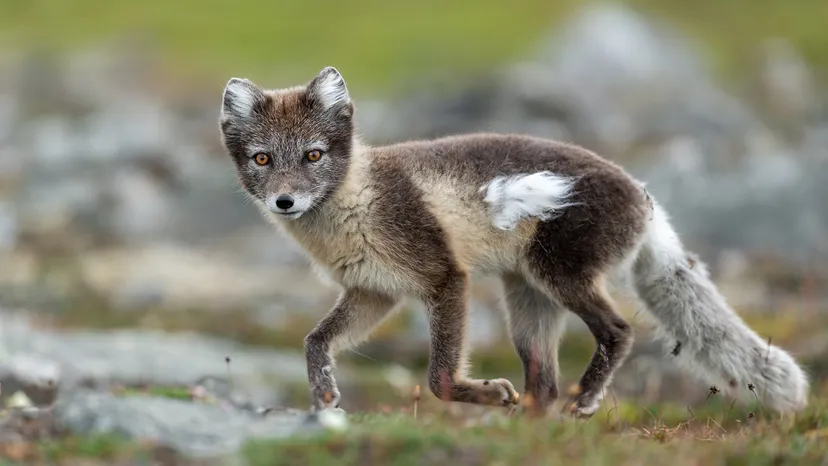
4. Arctic Fox (Vulpes lagopus)
The Arctic fox thrives in polar regions, adapted with thick fur that changes color seasonally — white in winter, brown in summer. It preys on rodents, birds, and carrion. Its compact body and furry feet help conserve heat in frigid climates.
Fun Fact: Arctic foxes can survive temperatures as low as −50 °C (−58 °F).
| Attribute | Detail |
|---|---|
| Size | 46–68 cm (18–27 in) |
| Weight | 2.5–9 kg (5.5–20 lb) |
| Lifespan | 3–6 years |
| Habitat | Arctic tundra |
| Diet | Lemmings, birds, fish |
| Social Structure | Pairs or small groups |
| Conservation | Least Concern |
Fun Fact: Arctic foxes store extra food in the snow for lean times.
5. Armadillo (Dasypodidae family)
Armadillos are armored mammals found mainly in Central and South America. Their hard shell plates protect them from predators. Most species dig burrows and feed on insects, small vertebrates, and plants. The nine-banded armadillo is the most widespread.
Fun Fact: Armadillos can hold their breath underwater for up to six minutes.
| Attribute | Detail |
|---|---|
| Size | 15–150 cm (6 in–5 ft) depending on species |
| Weight | 0.85–54 kg (2–119 lb) |
| Lifespan | 7–20 years |
| Habitat | Forests, grasslands |
| Diet | Insects, roots |
| Social Structure | Solitary |
| Conservation | Varies by species |
Fun Fact: Some armadillos can roll completely into a ball for defense.
Birds That Start With A
6. Albatross (Diomedeidae family)
Albatrosses are large seabirds famous for their long wingspans — some exceeding 3 m. They glide effortlessly across oceans and feed on fish and squid. Mating pairs are monogamous, often reuniting each breeding season.
Fun Fact: The wandering albatross holds the record for the longest wingspan of any bird.
| Attribute | Detail |
|---|---|
| Size | 89–130 cm (35–51 in) body |
| Weight | 6–12 kg (13–26 lb) |
| Lifespan | 40–60 years |
| Habitat | Open oceans |
| Diet | Fish, squid |
| Social Structure | Colonial breeders |
| Conservation | Varies (many Vulnerable) |
Fun Fact: Albatrosses can sleep while gliding over the sea.
7. African Grey Parrot (Psittacus erithacus)
Renowned for its intelligence and mimicry, the African grey parrot inhabits rainforests of Central Africa. It feeds on seeds, fruits, and nuts. These parrots form strong pair bonds and live long lives, making them popular (though often trafficked) pets.
Fun Fact: Some African greys can learn over 1000 words.
| Attribute | Detail |
|---|---|
| Size | 33 cm (13 in) |
| Weight | 400 g (0.9 lb) |
| Lifespan | 40–60 years |
| Habitat | Tropical forests |
| Diet | Seeds, fruits |
| Social Structure | Flocks |
| Conservation | Endangered |
Fun Fact: African grey parrots can understand concepts like counting.
8. Avocet (Recurvirostra avosetta)
The avocet is a wading bird recognized by its upturned bill and striking black-and-white plumage. It feeds by sweeping its bill through shallow water to catch crustaceans and insects. Found across Europe, Asia, and Africa, it prefers coastal lagoons and mudflats.
Fun Fact: The avocet’s return to Britain in the 1940s became a conservation success story.
| Attribute | Detail |
|---|---|
| Size | 42–45 cm (16–18 in) |
| Weight | 300 g (0.66 lb) |
| Lifespan | Up to 15 years |
| Habitat | Wetlands, estuaries |
| Diet | Crustaceans, insects |
| Social Structure | Colonies |
| Conservation | Least Concern |
Fun Fact: Avocets use their curved bills to “filter feed” like tiny spoonbills.
9. American Robin (Turdus migratorius)
This familiar North American bird is known for its red breast and cheerful song. It thrives in gardens, forests, and cities. The robin feeds mainly on worms and insects but also eats fruits in winter.
Fun Fact: American robins are one of the first birds to sing at dawn.
| Attribute | Detail |
|---|---|
| Size | 23–28 cm (9–11 in) |
| Weight | 77 g (2.7 oz) |
| Lifespan | 2 years average |
| Habitat | Woodlands, lawns |
| Diet | Insects, worms, fruits |
| Social Structure | Pairs or flocks |
| Conservation | Least Concern |
Fun Fact: Robins often return to the same nesting site year after year.
10. Andean Condor (Vultur gryphus)
The Andean condor is one of the world’s largest flying birds, soaring across South America’s Andes Mountains. It’s primarily a scavenger, feeding on carrion. Males have a distinctive fleshy comb, and both sexes boast immense black wings with white collars.
Fun Fact: The Andean condor’s wingspan can exceed 3 m (10 ft).
| Attribute | Detail |
|---|---|
| Size | 100–130 cm (3.3–4.3 ft) |
| Weight | 11–15 kg (24–33 lb) |
| Lifespan | 50 years |
| Habitat | Mountain cliffs |
| Diet | Carrion |
| Social Structure | Solitary or pairs |
| Conservation | Near Threatened |
Fun Fact: Andean condors rely on rising thermals to glide for hours without flapping.
Reptiles, Amphibians, and Fish That Start With A
11. Anaconda (Eunectes murinus)
The green anaconda is the heaviest snake in the world, inhabiting South American swamps and rivers. It’s a powerful constrictor that preys on capybaras, birds, and even caimans. Despite its size, it’s an ambush predator, spending much of its life in water.
Fun Fact: A full-grown anaconda can weigh over 200 kg (440 lb).
| Attribute | Detail |
|---|---|
| Size | Up to 9 m (29 ft) |
| Weight | Up to 200 kg (440 lb) |
| Lifespan | 10–30 years |
| Habitat | Swamps, rivers |
| Diet | Mammals, birds, reptiles |
| Social Structure | Solitary |
| Conservation | Not Threatened |
Fun Fact: Female anacondas are much larger than males — one of the biggest size differences in the snake world.
12. Alligator (Alligator mississippiensis)
Alligators are large reptiles found in freshwater habitats like swamps and rivers, primarily in the southeastern United States and China. They have powerful jaws and armored skin, feeding on fish, amphibians, and small mammals.
Fun Fact: Alligators can replace each of their 80 teeth up to 50 times in a lifetime.
| Attribute | Detail |
|---|---|
| Size | 3–4.5 m (10–15 ft) |
| Weight | 230–450 kg (500–1000 lb) |
| Lifespan | 35–50 years |
| Habitat | Freshwater wetlands |
| Diet | Fish, birds, mammals |
| Social Structure | Solitary |
| Conservation | Least Concern |
Fun Fact: Alligators communicate with growls and bellows during mating season.
13. Agama (Agama agama)
This colorful lizard species is common in sub-Saharan Africa. Males display bright blue and red hues during mating season. They feed on insects and bask on rocks during the day. Their adaptability allows them to thrive even in urban areas.
Fun Fact: Male agamas do “push-ups” to attract females.
| Attribute | Detail |
|---|---|
| Size | 13–30 cm (5–12 in) |
| Weight | 100–200 g (3.5–7 oz) |
| Lifespan | Up to 10 years |
| Habitat | Savannas, urban areas |
| Diet | Insects |
| Social Structure | Territorial groups |
| Conservation | Least Concern |
Fun Fact: Agamas can change color depending on temperature and mood.
14. Axolotl (Ambystoma mexicanum)
The axolotl is an aquatic salamander native to Mexico. It remains in its larval form throughout life — a phenomenon called neoteny. It regenerates limbs and organs, making it a favorite in scientific research.
Fun Fact: Axolotls can regrow entire limbs, spinal cords, and even parts of their heart.
| Attribute | Detail |
|---|---|
| Size | 15–45 cm (6–18 in) |
| Weight | 60–200 g (2–7 oz) |
| Lifespan | 10–15 years |
| Habitat | Lakes, canals |
| Diet | Worms, small fish |
| Social Structure | Solitary |
| Conservation | Critically Endangered |
Fun Fact: The axolotl was once a sacred symbol of the Aztec god Xolotl.
15. Angelfish (Pterophyllum scalare)
Angelfish are freshwater cichlids from the Amazon Basin, admired for their triangular fins and graceful swimming. They live in slow-moving waters and feed on small crustaceans and plants. Popular in aquariums, they come in various color patterns.
Fun Fact: Angelfish form monogamous pairs that guard their eggs together.
| Attribute | Detail |
|---|---|
| Size | 15 cm (6 in) |
| Weight | 60 g (2 oz) |
| Lifespan | 10 years |
| Habitat | Freshwater rivers |
| Diet | Insects, crustaceans |
| Social Structure | Pairs or small groups |
| Conservation | Least Concern |
Fun Fact: Wild angelfish prefer dark, shaded waters with heavy vegetation.
16. Archerfish (Toxotes jaculatrix)
This tropical fish is famous for its ability to shoot down insects with jets of water from its mouth. Found in mangrove estuaries and coastal rivers in Southeast Asia and Australia, the archerfish has exceptional aim.
Fun Fact: Archerfish can hit targets over 2 meters (6.5 ft) away.
| Attribute | Detail |
|---|---|
| Size | 10–30 cm (4–12 in) |
| Weight | 150 g (5 oz) |
| Lifespan | 5–10 years |
| Habitat | Mangroves, estuaries |
| Diet | Insects |
| Social Structure | Small schools |
| Conservation | Least Concern |
Fun Fact: Archerfish adjust their water jets for light refraction when shooting.
17. Atlantic Salmon (Salmo salar)
The Atlantic salmon is a migratory fish that hatches in freshwater, migrates to the ocean, and returns to rivers to spawn. It’s prized for its strength and taste, playing a key role in aquatic ecosystems.
Fun Fact: Some Atlantic salmon can leap waterfalls over 3 meters high.
| Attribute | Detail |
|---|---|
| Size | 71–91 cm (28–36 in) |
| Weight | 3.6–5.4 kg (8–12 lb) |
| Lifespan | 4–10 years |
| Habitat | Freshwater and ocean |
| Diet | Insects, small fish |
| Social Structure | Solitary (migratory) |
| Conservation | Least Concern (some populations Endangered) |
Fun Fact: After spawning, many salmon die, enriching river ecosystems with nutrients.
18. Anglerfish (Lophiiformes order)
Known for its eerie lure, the anglerfish lives in deep ocean waters. It uses a bioluminescent appendage to attract prey in the dark. Female anglerfish are much larger than males, which fuse to them in a parasitic mating process.
Fun Fact: Anglerfish lights are produced by symbiotic bacteria.
| Attribute | Detail |
|---|---|
| Size | 8–120 cm (3–47 in) |
| Weight | Up to 45 kg (99 lb) |
| Lifespan | 20 years |
| Habitat | Deep sea |
| Diet | Fish, crustaceans |
| Social Structure | Solitary |
| Conservation | Least Concern |
Fun Fact: Male anglerfish attach to females permanently for reproduction.
19. Atlantic Puffin (Fratercula arctica)
This seabird, often called the “clown of the sea,” nests in North Atlantic cliffs. It’s known for its colorful beak and strong diving ability. Puffins feed mainly on small fish, catching several in one dive.
Fun Fact: Puffins can flap their wings up to 400 times per minute.
| Attribute | Detail |
|---|---|
| Size | 26–29 cm (10–11 in) |
| Weight | 490 g (1.1 lb) |
| Lifespan | 20 years |
| Habitat | Coastal cliffs |
| Diet | Fish |
| Social Structure | Colonies |
| Conservation | Vulnerable |
Fun Fact: Puffins can dive as deep as 60 meters (197 ft) underwater.
20. Antelope (Bovidae family)
Antelopes are swift, graceful mammals found across Africa and parts of Asia. Their long legs and horns make them superb runners and defenders. They live in herds and graze on grasses. Species include impala, gazelle, and oryx.
Fun Fact: The springbok antelope can leap 4 meters high in a behavior called “pronking.”
| Attribute | Detail |
|---|---|
| Size | 1–2 m (3–6.5 ft) |
| Weight | 40–900 kg (88–1984 lb) depending on species |
| Lifespan | 10–25 years |
| Habitat | Grasslands, savannas |
| Diet | Grass, leaves |
| Social Structure | Herd |
| Conservation | Mostly Least Concern |
Fun Fact: Some antelopes can run over 90 km/h (56 mph).
More Animals That Start With A
21. Arctic Hare (Lepus arcticus)
The Arctic hare is a snow-dwelling mammal found in the tundra regions of North America. It has thick white fur for insulation and camouflage. It feeds on woody plants, mosses, and lichens during harsh winters and can run at incredible speeds to escape predators.
Fun Fact: Arctic hares can reach speeds up to 60 km/h (37 mph).
| Attribute | Detail |
|---|---|
| Size | 43–70 cm (17–28 in) |
| Weight | 2.5–6 kg (5.5–13 lb) |
| Lifespan | 3–5 years |
| Habitat | Arctic tundra |
| Diet | Shrubs, moss, lichens |
| Social Structure | Solitary or small groups |
| Conservation | Least Concern |
Fun Fact: Their thick fur even covers the soles of their feet to prevent frostbite.
22. Arctic Wolf (Canis lupus arctos)
A subspecies of the gray wolf, the Arctic wolf lives in Canada and Greenland’s icy tundra. It has dense white fur and shorter ears to retain body heat. They hunt musk oxen and Arctic hares in packs, displaying remarkable teamwork.
Fun Fact: Arctic wolves can survive months of darkness and −30 °C cold.
| Attribute | Detail |
|---|---|
| Size | 1–1.5 m (3.3–5 ft) |
| Weight | 32–80 kg (70–176 lb) |
| Lifespan | 7–10 years |
| Habitat | Arctic tundra |
| Diet | Musk ox, hare, lemming |
| Social Structure | Pack |
| Conservation | Least Concern |
Fun Fact: Their paws act like snowshoes to walk on icy terrain.
23. Aye-Aye (Daubentonia madagascariensis)
This unusual lemur from Madagascar has rodent-like teeth and an elongated middle finger used to extract insects from tree bark. Its nocturnal habits and eerie appearance make it one of nature’s strangest primates.
Fun Fact: Aye-ayes use echolocation-like tapping to find hollow wood containing insects.
| Attribute | Detail |
|---|---|
| Size | 40 cm (16 in) body |
| Weight | 2–3 kg (4.4–6.6 lb) |
| Lifespan | 20 years |
| Habitat | Rainforests |
| Diet | Insects, fruits, seeds |
| Social Structure | Solitary |
| Conservation | Endangered |
Fun Fact: In Malagasy folklore, seeing an aye-aye is considered a bad omen.
24. African Wild Dog (Lycaon pictus)
Also called the painted wolf, this endangered canine is native to sub-Saharan Africa. It’s known for its mottled coat and strong pack coordination. African wild dogs hunt antelopes and smaller mammals, relying on endurance and teamwork.
Fun Fact: Their hunting success rate exceeds 70%, one of the highest among predators.
| Attribute | Detail |
|---|---|
| Size | 75–110 cm (30–43 in) |
| Weight | 18–36 kg (40–79 lb) |
| Lifespan | 10–12 years |
| Habitat | Savannas, grasslands |
| Diet | Antelopes, rodents |
| Social Structure | Pack |
| Conservation | Endangered |
Fun Fact: Each wild dog has a unique coat pattern, like a fingerprint.
25. Ant (Formicidae family)
Ants are social insects found on every continent except Antarctica. They form complex colonies that can contain millions of individuals, each fulfilling specific roles like workers, soldiers, and queens.
Fun Fact: Ants can lift objects up to 50 times their body weight.
| Attribute | Detail |
|---|---|
| Size | 2–25 mm (0.08–1 in) |
| Weight | Less than 1 g |
| Lifespan | Weeks to years |
| Habitat | Forests, deserts, grasslands |
| Diet | Sugars, fungi, insects |
| Social Structure | Colonies |
| Conservation | Not Evaluated |
Fun Fact: Some ant species “farm” aphids for honeydew.
26. Antbird (Thamnophilidae family)
These small tropical birds follow army ants through rainforests in Central and South America, snatching up insects flushed out by the swarms. Males often have dark plumage, while females are lighter.
Fun Fact: Antbirds depend entirely on army ants to find food.
| Attribute | Detail |
|---|---|
| Size | 10–20 cm (4–8 in) |
| Weight | 15–40 g (0.5–1.4 oz) |
| Lifespan | Up to 10 years |
| Habitat | Tropical rainforests |
| Diet | Insects |
| Social Structure | Pairs |
| Conservation | Least Concern |
Fun Fact: Despite the name, antbirds never eat ants themselves.
27. Antlion (Myrmeleontidae family)
Antlions are predatory insects whose larvae dig funnel traps in sand to catch prey. The adult looks like a delicate dragonfly but is weak in flight. They are found in warm, dry habitats worldwide.
Fun Fact: The larval “doodlebug” can stay buried for months waiting for food.
| Attribute | Detail |
|---|---|
| Size | 4–40 mm (0.16–1.6 in) |
| Weight | <1 g |
| Lifespan | 1–3 years (larval + adult) |
| Habitat | Sandy soils |
| Diet | Insects |
| Social Structure | Solitary |
| Conservation | Not Evaluated |
Fun Fact: Antlion pits are marvels of natural engineering.
28. Axanthic Python (Python regius – color morph)
The axanthic python is a selectively bred morph of the ball python lacking yellow pigment, giving it a grayscale appearance. Popular in the pet trade, it retains the docile temperament of its wild counterparts.
Fun Fact: “Axanthic” literally means “without yellow.”
| Attribute | Detail |
|---|---|
| Size | 90–150 cm (3–5 ft) |
| Weight | 1.4–2.3 kg (3–5 lb) |
| Lifespan | 20–30 years |
| Habitat | Captive environments, West African origin |
| Diet | Rodents |
| Social Structure | Solitary |
| Conservation | Domesticated Morph |
Fun Fact: Breeders combine axanthic traits with other morphs for unique color varieties.
29. African Buffalo (Syncerus caffer)
The African buffalo, or Cape buffalo, is one of Africa’s Big Five. Known for its curved horns and unpredictable behavior, it lives in large herds across savannas and forests. Its strength and herd defense make it nearly predator-proof.
Fun Fact: Lions rarely attack healthy adult buffalo due to their group retaliation.
| Attribute | Detail |
|---|---|
| Size | 1–1.7 m (3.3–5.6 ft) tall |
| Weight | 425–870 kg (937–1918 lb) |
| Lifespan | 15–25 years |
| Habitat | Grasslands, savannas |
| Diet | Grasses |
| Social Structure | Herd |
| Conservation | Least Concern |
Fun Fact: African buffalo herds are known to rescue captured members from lions.
30. Asian Elephant (Elephas maximus)
Slightly smaller than its African cousin, the Asian elephant inhabits forests of South and Southeast Asia. It has smaller ears and a single-fingered trunk tip. Asian elephants are highly intelligent and play a vital cultural role in many countries.
Fun Fact: Asian elephants can recognize themselves in mirrors — a sign of self-awareness.
| Attribute | Detail |
|---|---|
| Size | 2–3 m (6.6–9.8 ft) tall |
| Weight | 2,700–5,400 kg (6,000–12,000 lb) |
| Lifespan | 48–60 years |
| Habitat | Forests, grasslands |
| Diet | Grass, fruits, bark |
| Social Structure | Herd |
| Conservation | Endangered |
Fun Fact: Female Asian elephants are called “cows,” and only males grow large tusks.
31. Atlantic Bluefin Tuna (Thunnus thynnus)
The Atlantic bluefin tuna is one of the ocean’s most powerful fish, capable of crossing entire oceans at high speed. Known for its torpedo-shaped body and metallic sheen, it’s highly prized in sushi markets. Overfishing has led to population declines, but conservation measures are helping recovery.
Fun Fact: Bluefin tuna can warm their body temperature above the surrounding water.
| Attribute | Detail |
|---|---|
| Size | 2–4.6 m (6.5–15 ft) |
| Weight | 250–680 kg (550–1,500 lb) |
| Lifespan | Up to 40 years |
| Habitat | Atlantic Ocean |
| Diet | Fish, squid |
| Social Structure | Schools |
| Conservation | Endangered |
Fun Fact: Bluefin tuna can swim at speeds exceeding 70 km/h (43 mph).
32. Atlantic Cod (Gadus morhua)
This cold-water fish is vital to the North Atlantic ecosystem and has been a key food source for centuries. It has a distinctive chin barbel and feeds on crustaceans and smaller fish. Overfishing drastically reduced its numbers in the late 20th century.
Fun Fact: Cod populations once supported entire coastal economies in Europe and North America.
| Attribute | Detail |
|---|---|
| Size | 51–130 cm (20–51 in) |
| Weight | Up to 40 kg (88 lb) |
| Lifespan | 20 years |
| Habitat | Cold coastal waters |
| Diet | Crustaceans, fish |
| Social Structure | Schools |
| Conservation | Vulnerable |
Fun Fact: The word “codfish” has been used in English since the 14th century.
33. Atlantic Mackerel (Scomber scombrus)
A sleek, fast-swimming fish, the Atlantic mackerel travels in massive schools. It’s recognized by its greenish-blue back with wavy stripes. Mackerel are key prey for many larger predators and an important food fish for humans.
Fun Fact: Mackerel can travel hundreds of kilometers following warm water currents.
| Attribute | Detail |
|---|---|
| Size | 30–50 cm (12–20 in) |
| Weight | 0.4–2.2 kg (1–5 lb) |
| Lifespan | 20 years |
| Habitat | Atlantic Ocean |
| Diet | Plankton, fish larvae |
| Social Structure | Schools |
| Conservation | Least Concern |
Fun Fact: Mackerel have no swim bladder, so they must keep swimming to stay afloat.
34. Atlantic Horseshoe Crab (Limulus polyphemus)
Despite its name, this ancient species isn’t a true crab. It’s more closely related to spiders and scorpions. Found along North America’s Atlantic coast, it plays a vital medical role because its blue blood detects bacterial toxins.
Fun Fact: Horseshoe crabs have existed for over 450 million years.
| Attribute | Detail |
|---|---|
| Size | 60 cm (24 in) |
| Weight | 1.5–4.5 kg (3–10 lb) |
| Lifespan | 20 years |
| Habitat | Coastal shallows |
| Diet | Worms, clams |
| Social Structure | Solitary |
| Conservation | Vulnerable |
Fun Fact: Their blue blood is used in biomedical testing worldwide.
35. Australian Shepherd (Canis lupus familiaris)
This herding dog breed originated in the United States despite its name. It’s known for intelligence, agility, and loyalty, often used in ranching. Their striking eyes and multicolored coats make them favorites among active families.
Fun Fact: “Aussies” excel in dog sports like agility and herding trials.
| Attribute | Detail |
|---|---|
| Size | 46–58 cm (18–23 in) |
| Weight | 18–32 kg (40–70 lb) |
| Lifespan | 12–15 years |
| Habitat | Domestic (global) |
| Diet | Omnivorous (domestic feed) |
| Social Structure | Pack/family |
| Conservation | Domesticated |
Fun Fact: Many Australian Shepherds are born with naturally bobbed tails.
36. Australian Cattle Dog (Canis lupus familiaris)
Bred for endurance and intelligence, the Australian cattle dog is a hardworking herder native to Australia. It’s known for its blue or red speckled coat and fierce loyalty. This breed thrives on activity and purpose.
Fun Fact: Nicknamed “Blue Heeler,” it helped develop the famous Kelpie breed.
| Attribute | Detail |
|---|---|
| Size | 43–51 cm (17–20 in) |
| Weight | 14–16 kg (31–35 lb) |
| Lifespan | 12–16 years |
| Habitat | Domestic |
| Diet | Omnivorous |
| Social Structure | Family groups |
| Conservation | Domesticated |
Fun Fact: Australian cattle dogs can travel over 50 km (31 miles) in a day of herding.
37. African Penguin (Spheniscus demersus)
Found along the coastlines of South Africa and Namibia, the African penguin is nicknamed the “jackass penguin” for its donkey-like bray. It feeds on sardines and anchovies but faces threats from oil spills and overfishing.
Fun Fact: African penguins mate for life.
| Attribute | Detail |
|---|---|
| Size | 60–70 cm (24–28 in) |
| Weight | 2–5 kg (4.4–11 lb) |
| Lifespan | 10–15 years |
| Habitat | Coastal islands |
| Diet | Fish, squid |
| Social Structure | Colonies |
| Conservation | Endangered |
Fun Fact: They use a unique call to recognize their partners in noisy colonies.
38. African Bullfrog (Pyxicephalus adspersus)
One of the largest frog species, the African bullfrog is native to sub-Saharan Africa. It can grow as large as a dinner plate and feeds on insects, rodents, and even small birds. Males are territorial and fiercely protect their tadpoles.
Fun Fact: African bullfrogs can go months without eating during droughts.
| Attribute | Detail |
|---|---|
| Size | Up to 24 cm (9.5 in) |
| Weight | Up to 2 kg (4.4 lb) |
| Lifespan | 20–30 years |
| Habitat | Ponds, grasslands |
| Diet | Insects, small vertebrates |
| Social Structure | Solitary |
| Conservation | Least Concern |
Fun Fact: They secrete mucus that prevents dehydration in dry conditions.
39. Australian Magpie (Gymnorhina tibicen)
The Australian magpie is a black-and-white bird known for its melodious songs and territorial swooping behavior during breeding season. It feeds on insects and small vertebrates. Intelligent and social, magpies can recognize human faces.
Fun Fact: Magpies have one of the most complex songs in the bird world.
| Attribute | Detail |
|---|---|
| Size | 37–43 cm (14–17 in) |
| Weight | 220–350 g (7.7–12 oz) |
| Lifespan | 25 years |
| Habitat | Woodlands, urban areas |
| Diet | Insects, small animals |
| Social Structure | Groups |
| Conservation | Least Concern |
Fun Fact: Magpies form lifelong territorial partnerships.
40. African Lion (Panthera leo)
The African lion is one of the most iconic predators on Earth. Found across African savannas, it lives in social groups called prides. Lions are apex hunters, feeding on zebras, antelopes, and buffalo. Males are recognizable by their majestic manes.
Fun Fact: A lion’s roar can be heard up to 8 km (5 miles) away.
| Attribute | Detail |
|---|---|
| Size | 1.2 m (4 ft) at shoulder |
| Weight | 150–250 kg (330–550 lb) |
| Lifespan | 10–14 years |
| Habitat | Grasslands, savannas |
| Diet | Large herbivores |
| Social Structure | Pride |
| Conservation | Vulnerable |
Fun Fact: Lions rest up to 20 hours a day to conserve energy for hunting.
41. Amazon River Dolphin (Inia geoffrensis)
Also known as the pink river dolphin, this freshwater mammal inhabits the Amazon and Orinoco river basins. Its flexible neck and long snout help it navigate flooded forests and hunt fish, crabs, and turtles. Its pink coloration deepens with age.
Fun Fact: Amazon river dolphins can turn their heads 180 degrees — a rare trait in dolphins.
| Attribute | Detail |
|---|---|
| Size | 2–2.6 m (6.6–8.5 ft) |
| Weight | 85–160 kg (187–353 lb) |
| Lifespan | 30 years |
| Habitat | Freshwater rivers |
| Diet | Fish, crustaceans |
| Social Structure | Solitary or pairs |
| Conservation | Endangered |
Fun Fact: Legends in Brazil say these dolphins transform into humans at night.
42. Amazon Parrot (Amazona aestiva)
The Amazon parrot, famous for its vibrant green feathers and talkative nature, is found throughout South America. These social birds live in flocks and feed on seeds, fruits, and nuts. In captivity, they’re beloved for their intelligence and mimicry.
Fun Fact: Amazon parrots can live over 60 years in proper care.
| Attribute | Detail |
|---|---|
| Size | 33–38 cm (13–15 in) |
| Weight | 400–700 g (0.9–1.5 lb) |
| Lifespan | 40–70 years |
| Habitat | Tropical forests |
| Diet | Seeds, nuts, fruits |
| Social Structure | Flocks |
| Conservation | Least Concern |
Fun Fact: Some Amazon parrots develop regional dialects within flocks.
43. Amazon Tree Boa (Corallus hortulanus)
This colorful snake species is native to South America’s tropical forests. It displays a wide range of colors, from yellow to red to brown. Nocturnal and arboreal, it preys on birds and small mammals.
Fun Fact: Amazon tree boas use heat-sensitive pits to locate prey at night.
| Attribute | Detail |
|---|---|
| Size | 1.5–2 m (5–6.5 ft) |
| Weight | 1–1.5 kg (2–3.3 lb) |
| Lifespan | 15–20 years |
| Habitat | Rainforest canopy |
| Diet | Birds, rodents |
| Social Structure | Solitary |
| Conservation | Least Concern |
Fun Fact: Their striking color variations make them popular in the exotic pet trade.
44. Amur Leopard (Panthera pardus orientalis)
The Amur leopard is one of the world’s rarest big cats, found in the temperate forests of Russia and China. It has thick fur for cold winters and hunts deer and hares. Only around 100 individuals remain in the wild.
Fun Fact: The Amur leopard can leap over 6 meters horizontally.
| Attribute | Detail |
|---|---|
| Size | 1–1.3 m (3.3–4.3 ft) |
| Weight | 32–48 kg (70–106 lb) |
| Lifespan | 10–15 years |
| Habitat | Temperate forests |
| Diet | Deer, hares |
| Social Structure | Solitary |
| Conservation | Critically Endangered |
Fun Fact: Each leopard’s rosette pattern is completely unique.
45. Alpine Ibex (Capra ibex)
The Alpine ibex is a wild mountain goat living in the European Alps. It’s known for climbing steep cliffs with ease, thanks to its strong hooves and balance. Males have massive curved horns used in dominance battles.
Fun Fact: Ibexes can scale near-vertical dams to lick mineral salts.
| Attribute | Detail |
|---|---|
| Size | 70–90 cm (28–35 in) at shoulder |
| Weight | 65–100 kg (143–220 lb) |
| Lifespan | 10–20 years |
| Habitat | Mountain slopes |
| Diet | Grass, herbs |
| Social Structure | Herd |
| Conservation | Least Concern |
Fun Fact: The Alpine ibex was once extinct in Switzerland but successfully reintroduced.
46. Arctic Tern (Sterna paradisaea)
This migratory bird makes the longest migration in the animal kingdom, traveling from the Arctic to the Antarctic and back each year. It feeds on small fish and invertebrates while flying over oceans.
Fun Fact: Arctic terns see more daylight than any other creature on Earth.
| Attribute | Detail |
|---|---|
| Size | 28–39 cm (11–15 in) |
| Weight | 100–125 g (3.5–4.4 oz) |
| Lifespan | 20–30 years |
| Habitat | Polar regions, oceans |
| Diet | Fish, crustaceans |
| Social Structure | Colonies |
| Conservation | Least Concern |
Fun Fact: In its lifetime, an Arctic tern can fly the equivalent of three trips to the Moon and back.
47. Asiatic Black Bear (Ursus thibetanus)
Also called the moon bear for its white chest crescent, this species inhabits forests across Asia. It’s an omnivore, eating fruits, insects, and small mammals. Sadly, it’s hunted for bile used in traditional medicine.
Fun Fact: Asiatic black bears are skilled climbers, often sleeping in tree nests.
| Attribute | Detail |
|---|---|
| Size | 1.2–1.9 m (4–6.2 ft) |
| Weight | 60–200 kg (132–440 lb) |
| Lifespan | 25 years |
| Habitat | Forested mountains |
| Diet | Fruit, insects, meat |
| Social Structure | Solitary |
| Conservation | Vulnerable |
Fun Fact: Their chest marking is as unique as a fingerprint.
48. Australian Pelican (Pelecanus conspicillatus)
With the world’s longest bill, the Australian pelican lives across Australia’s lakes and coastal areas. It feeds by scooping up fish in its elastic throat pouch. Pelicans are strong fliers, soaring in thermals between water bodies.
Fun Fact: Their bill can hold up to 13 liters (3.4 gallons) of water.
| Attribute | Detail |
|---|---|
| Size | 1.6–1.8 m (5.2–5.9 ft) |
| Weight | 4–7 kg (9–15 lb) |
| Lifespan | 15–25 years |
| Habitat | Lakes, coasts |
| Diet | Fish, crustaceans |
| Social Structure | Colonies |
| Conservation | Least Concern |
Fun Fact: They can travel over 3,000 km in search of water.
49. Asian Small-Clawed Otter (Aonyx cinerea)
The smallest otter species, native to Southeast Asia, thrives in rivers and wetlands. It’s highly social and intelligent, known for playful behavior and coordinated hunting. It primarily feeds on crustaceans and shellfish.
Fun Fact: These otters use pebbles as tools to break open shells.
| Attribute | Detail |
|---|---|
| Size | 70–100 cm (27–39 in) |
| Weight | 2.7–5.4 kg (6–12 lb) |
| Lifespan | 10–15 years |
| Habitat | Rivers, mangroves |
| Diet | Crabs, shellfish |
| Social Structure | Family groups |
| Conservation | Vulnerable |
Fun Fact: Otter pairs are monogamous and share parental duties.
50. Australian King Parrot (Alisterus scapularis)
This brilliantly colored bird with a red head and green wings inhabits eastern Australia’s forests. It feeds on fruits, nuts, and seeds. Males and females are easily distinguished by color — males are red-headed, females mostly green.
Fun Fact: These parrots often visit backyard feeders in Australian suburbs.
| Attribute | Detail |
|---|---|
| Size | 43 cm (17 in) |
| Weight | 250 g (8.8 oz) |
| Lifespan | 25 years |
| Habitat | Rainforests, gardens |
| Diet | Fruits, nuts, seeds |
| Social Structure | Pairs or small groups |
| Conservation | Least Concern |
Fun Fact: Australian king parrots are among the few parrot species where the sexes look different.
More Fascinating Animals Beginning With A
51. African Grey Hornbill (Lophoceros nasutus)
This bird, found across sub-Saharan Africa, is known for its large curved bill and distinct “laughing” call. It feeds on fruits, insects, and small reptiles. Males seal females inside tree cavities during nesting, leaving only a small opening for food delivery.
Fun Fact: The hornbill’s casque helps amplify its calls.
| Attribute | Detail |
|---|---|
| Size | 45–60 cm (18–24 in) |
| Weight | 210–400 g (7–14 oz) |
| Lifespan | 10–15 years |
| Habitat | Woodlands, savannas |
| Diet | Fruits, insects |
| Social Structure | Pairs or small groups |
| Conservation | Least Concern |
Fun Fact: Hornbills play a major role in spreading fruit seeds across African forests.
52. African Civet (Civettictis civetta)
This nocturnal mammal has a raccoon-like face and a musky scent once used in perfume-making. Native to sub-Saharan Africa, it’s an omnivore feeding on fruits, insects, and small animals. Its distinctive markings help camouflage it in dense forests.
Fun Fact: The “civet musk” used in ancient perfumes came from this animal.
| Attribute | Detail |
|---|---|
| Size | 67–84 cm (26–33 in) |
| Weight | 12–15 kg (26–33 lb) |
| Lifespan | 15–20 years |
| Habitat | Forests, savannas |
| Diet | Fruit, insects, small vertebrates |
| Social Structure | Solitary |
| Conservation | Least Concern |
Fun Fact: Each civet’s pattern of stripes and spots is unique.
53. American Alligator (Alligator mississippiensis)
The American alligator is a large reptile native to the southeastern United States. It thrives in freshwater swamps and marshes and is an apex predator feeding on fish, birds, and mammals. Once endangered, it has recovered through strict conservation.
Fun Fact: Alligators regulate temperature by basking or submerging themselves.
| Attribute | Detail |
|---|---|
| Size | 3–4.5 m (10–15 ft) |
| Weight | 230–450 kg (500–1,000 lb) |
| Lifespan | 35–50 years |
| Habitat | Swamps, rivers |
| Diet | Fish, mammals, birds |
| Social Structure | Solitary |
| Conservation | Least Concern |
Fun Fact: Mother alligators gently carry hatchlings in their mouths to water.
54. American Bison (Bison bison)
The American bison, often called a buffalo, is North America’s largest land mammal. Once near extinction, it now thrives thanks to conservation. These grazers roam grasslands and can weigh over a ton.
Fun Fact: Bison can run at speeds up to 55 km/h (34 mph) despite their size.
| Attribute | Detail |
|---|---|
| Size | 2–3.5 m (6.5–11.5 ft) |
| Weight | 400–1,000 kg (880–2,200 lb) |
| Lifespan | 15–25 years |
| Habitat | Grasslands, plains |
| Diet | Grasses |
| Social Structure | Herd |
| Conservation | Near Threatened |
Fun Fact: The American bison is the national mammal of the United States.
55. American Beaver (Castor canadensis)
This industrious rodent is famous for building dams and lodges in North American rivers. Beavers modify ecosystems by creating wetlands that support biodiversity. Their sharp teeth continuously grow, keeping them ready for constant gnawing.
Fun Fact: Beaver dams can be visible from space due to their size.
| Attribute | Detail |
|---|---|
| Size | 74–90 cm (29–35 in) |
| Weight | 16–32 kg (35–70 lb) |
| Lifespan | 10–15 years |
| Habitat | Freshwater rivers, lakes |
| Diet | Bark, twigs, aquatic plants |
| Social Structure | Family groups |
| Conservation | Least Concern |
Fun Fact: Beavers slap their tails on water to warn of danger.
56. American Black Bear (Ursus americanus)
The American black bear inhabits forests across North America. Despite the name, it can be brown, cinnamon, or even white. It’s omnivorous, feeding on berries, insects, and fish. These bears hibernate during winter months.
Fun Fact: Black bears are excellent tree climbers.
| Attribute | Detail |
|---|---|
| Size | 1.2–2 m (4–6.5 ft) |
| Weight | 90–270 kg (200–600 lb) |
| Lifespan | 20–30 years |
| Habitat | Forests, mountains |
| Diet | Plants, insects, small animals |
| Social Structure | Solitary |
| Conservation | Least Concern |
Fun Fact: Some black bears can smell food from over 3 km (2 miles) away.
57. American Flamingo (Phoenicopterus ruber)
The American flamingo is a striking wading bird with bright pink feathers, long legs, and a curved bill. Found in the Caribbean and northern South America, it feeds on algae and crustaceans that give its feathers their color.
Fun Fact: Flamingos stand on one leg to conserve body heat.
| Attribute | Detail |
|---|---|
| Size | 120–145 cm (47–57 in) |
| Weight | 2–4 kg (4.4–8.8 lb) |
| Lifespan | 40–50 years |
| Habitat | Lagoons, salt flats |
| Diet | Algae, crustaceans |
| Social Structure | Colonies |
| Conservation | Least Concern |
Fun Fact: Flamingos get their pink hue from carotenoid pigments in their food.
58. American Kestrel (Falco sparverius)
North America’s smallest falcon, the American kestrel is a colorful bird of prey with rust, blue, and white plumage. It hovers mid-air before diving for prey such as insects, small birds, and rodents.
Fun Fact: Kestrels use UV light to track rodent trails through urine.
| Attribute | Detail |
|---|---|
| Size | 22–31 cm (8.7–12 in) |
| Weight | 80–165 g (2.8–5.8 oz) |
| Lifespan | 10 years |
| Habitat | Open fields, forests |
| Diet | Insects, rodents |
| Social Structure | Solitary |
| Conservation | Least Concern |
Fun Fact: The kestrel’s hovering flight helps it spot prey from above.
59. American Pika (Ochotona princeps)
This small mountain-dwelling mammal resembles a tiny rabbit and lives among rocky talus slopes in North America. Pikas collect grasses to store for winter since they don’t hibernate.
Fun Fact: Pikas communicate through high-pitched “eep” calls.
| Attribute | Detail |
|---|---|
| Size | 15–23 cm (6–9 in) |
| Weight | 120–175 g (4.2–6.2 oz) |
| Lifespan | 5–7 years |
| Habitat | Alpine talus fields |
| Diet | Grasses, herbs |
| Social Structure | Solitary |
| Conservation | Least Concern |
Fun Fact: Pikas are highly sensitive to heat and can die from prolonged exposure to temperatures above 25°C (77°F).
60. American Toad (Anaxyrus americanus)
The American toad is a common amphibian throughout eastern North America. Its warty skin secretes toxins that deter predators. It feeds on insects and worms, and its long trill call announces spring.
Fun Fact: A single toad can eat thousands of insects in one season.
| Attribute | Detail |
|---|---|
| Size | 5–10 cm (2–4 in) |
| Weight | 20–80 g (0.7–2.8 oz) |
| Lifespan | 5–10 years |
| Habitat | Forests, gardens, wetlands |
| Diet | Insects, worms |
| Social Structure | Solitary |
| Conservation | Least Concern |
Fun Fact: American toads can burrow underground to escape freezing temperatures.
61. American Woodcock (Scolopax minor)
The American woodcock is a plump, short-billed bird that inhabits moist forests and meadows across eastern North America. Its long bill is used to probe for earthworms, and males perform spectacular aerial mating displays at dusk.
Fun Fact: Woodcocks can see in almost every direction without moving their heads.
| Attribute | Detail |
|---|---|
| Size | 25–30 cm (10–12 in) |
| Weight | 140–230 g (5–8 oz) |
| Lifespan | 7–8 years |
| Habitat | Wet forests, fields |
| Diet | Earthworms, insects |
| Social Structure | Solitary |
| Conservation | Least Concern |
Fun Fact: Its “sky dance” courtship display has inspired birdwatchers for generations.
62. African Clawed Frog (Xenopus laevis)
Native to sub-Saharan Africa, this fully aquatic frog uses its clawed toes to shred prey. It’s widely used in scientific research and can survive harsh conditions by burrowing into mud.
Fun Fact: Female African clawed frogs were once used in early pregnancy tests.
| Attribute | Detail |
|---|---|
| Size | 10–13 cm (4–5 in) |
| Weight | 60–200 g (2–7 oz) |
| Lifespan | Up to 15 years |
| Habitat | Ponds, lakes |
| Diet | Insects, worms, small fish |
| Social Structure | Solitary |
| Conservation | Least Concern |
Fun Fact: These frogs can regenerate damaged limbs.
63. Asian Giant Hornet (Vespa mandarinia)
The world’s largest hornet, found in East Asia, has a fearsome sting and powerful mandibles. It hunts other insects, especially honeybees, and can decimate hives within hours.
Fun Fact: The Asian giant hornet can fly up to 40 km (25 mi) per day in search of prey.
| Attribute | Detail |
|---|---|
| Size | 4–5 cm (1.5–2 in) |
| Weight | 1–2 g |
| Lifespan | Up to 1 year (queens) |
| Habitat | Forests, mountains |
| Diet | Insects, nectar |
| Social Structure | Colonies |
| Conservation | Not Evaluated |
Fun Fact: Their venom contains enzymes that dissolve tissue, making stings extremely painful.
64. Amazonian Manatee (Trichechus inunguis)
This gentle herbivore lives in the Amazon Basin’s freshwater systems. Unlike its marine cousins, it feeds on aquatic plants in rivers and flooded forests. Slow-moving and peaceful, it’s threatened by hunting and habitat loss.
Fun Fact: Manatees must surface every 5–10 minutes to breathe.
| Attribute | Detail |
|---|---|
| Size | 2.8–3 m (9–10 ft) |
| Weight | 350–500 kg (770–1,100 lb) |
| Lifespan | 30–40 years |
| Habitat | Amazon rivers |
| Diet | Aquatic vegetation |
| Social Structure | Solitary or pairs |
| Conservation | Vulnerable |
Fun Fact: Amazonian manatees have no nails on their flippers, unlike other species.
65. Atlantic Puffadder Shyshark (Haploblepharus edwardsii)
A small, cat-like shark native to South Africa’s coastal waters, it has a distinctive pattern of saddles and spots. When threatened, it curls into a ring, covering its eyes with its tail.
Fun Fact: This shark’s name comes from its puffadder-like markings.
| Attribute | Detail |
|---|---|
| Size | 60 cm (24 in) |
| Weight | ~1 kg (2.2 lb) |
| Lifespan | 20 years |
| Habitat | Coastal shallows |
| Diet | Crustaceans, small fish |
| Social Structure | Solitary |
| Conservation | Near Threatened |
Fun Fact: Females lay pairs of leathery egg cases nicknamed “mermaid’s purses.”
66. Alpine Newt (Ichthyosaura alpestris)
This amphibian inhabits mountain ponds and lakes across central Europe. Males develop bright blue and orange breeding colors in spring. They spend summers in water and winters hibernating on land.
Fun Fact: Alpine newts can regenerate limbs and parts of their eyes.
| Attribute | Detail |
|---|---|
| Size | 8–12 cm (3–5 in) |
| Weight | <20 g |
| Lifespan | 10–15 years |
| Habitat | Mountain ponds |
| Diet | Insects, larvae |
| Social Structure | Solitary |
| Conservation | Least Concern |
Fun Fact: Their skin secretes toxins that make them unpalatable to predators.
67. Arabian Oryx (Oryx leucoryx)
The Arabian oryx is a desert antelope adapted to extreme heat, able to survive without drinking water for weeks. Once extinct in the wild, it was reintroduced successfully in Oman and Saudi Arabia.
Fun Fact: The oryx’s horns inspired the unicorn myth.
| Attribute | Detail |
|---|---|
| Size | 1 m (3.3 ft) at shoulder |
| Weight | 70 kg (154 lb) |
| Lifespan | 20 years |
| Habitat | Deserts, steppes |
| Diet | Grass, roots |
| Social Structure | Herd |
| Conservation | Vulnerable |
Fun Fact: Arabian oryx can detect distant rain and travel toward it for fresh grazing.
68. Ashy-Faced Owl (Tyto glaucops)
Endemic to Hispaniola in the Caribbean, this owl resembles the barn owl but with gray facial features. It hunts rodents and insects at night and roosts in trees or caves during the day.
Fun Fact: Its call is a raspy hiss rather than a hoot.
| Attribute | Detail |
|---|---|
| Size | 30–40 cm (12–16 in) |
| Weight | 400–600 g (0.9–1.3 lb) |
| Lifespan | 10–15 years |
| Habitat | Forests, farmlands |
| Diet | Rodents, insects |
| Social Structure | Solitary |
| Conservation | Least Concern |
Fun Fact: This species helps control agricultural pests naturally.
69. African Rock Python (Python sebae)
Africa’s largest snake, the African rock python, inhabits savannas and forests across the continent. It kills prey by constriction and can take down antelope-sized animals. Despite fearsome size, it rarely attacks humans.
Fun Fact: It can swallow prey weighing nearly its own body mass.
| Attribute | Detail |
|---|---|
| Size | 3–6 m (10–20 ft) |
| Weight | 45–90 kg (100–200 lb) |
| Lifespan | 20–30 years |
| Habitat | Grasslands, wetlands |
| Diet | Mammals, birds |
| Social Structure | Solitary |
| Conservation | Least Concern |
Fun Fact: Females guard their eggs until they hatch — unusual among snakes.
70. Atlantic Spotted Dolphin (Stenella frontalis)
This playful dolphin lives in warm Atlantic waters and is known for its speckled skin and acrobatic leaps. It’s highly social and forms pods of dozens to hundreds of individuals.
Fun Fact: Spots increase with age, helping researchers estimate dolphin age visually.
| Attribute | Detail |
|---|---|
| Size | 1.8–2.3 m (6–7.5 ft) |
| Weight | 100–140 kg (220–308 lb) |
| Lifespan | 40–50 years |
| Habitat | Warm Atlantic Ocean |
| Diet | Fish, squid |
| Social Structure | Pods |
| Conservation | Least Concern |
Fun Fact: Atlantic spotted dolphins often ride the bow waves of boats for fun.
71. Andean Flamingo (Phoenicoparrus andinus)
Native to the high Andes of South America, this flamingo is one of the rarest in the world. It inhabits salt lakes over 3,000 meters above sea level and filters algae with its unique bill.
Fun Fact: The Andean flamingo is one of only three flamingo species found in South America.
| Attribute | Detail |
|---|---|
| Size | 102–110 cm (40–43 in) |
| Weight | 2–3 kg (4.4–6.6 lb) |
| Lifespan | 20–30 years |
| Habitat | Andean salt lakes |
| Diet | Algae, plankton |
| Social Structure | Colonies |
| Conservation | Vulnerable |
Fun Fact: Its pink color fades during fasting and brightens after feeding on pigmented algae.
72. Arctic Char (Salvelinus alpinus)
This cold-water fish is found in Arctic and alpine lakes. Related to salmon and trout, it changes color depending on the season and environment. It’s an important food source for northern communities.
Fun Fact: Arctic char are the only fish to live as far north as the Arctic Ocean.
| Attribute | Detail |
|---|---|
| Size | 40–80 cm (16–31 in) |
| Weight | 1–9 kg (2–20 lb) |
| Lifespan | Up to 25 years |
| Habitat | Cold lakes, rivers |
| Diet | Insects, small fish |
| Social Structure | Solitary or schools |
| Conservation | Least Concern |
Fun Fact: Arctic char populations may be migratory or landlocked depending on location.
73. Asiatic Lion (Panthera leo persica)
Once widespread across the Middle East and India, this subspecies now survives only in Gujarat’s Gir Forest. Slightly smaller than African lions, they form prides and hunt deer and antelope.
Fun Fact: The Asiatic lion has a distinctive fold of skin along its belly.
| Attribute | Detail |
|---|---|
| Size | 1.7–2.9 m (5.6–9.5 ft) |
| Weight | 160–190 kg (350–420 lb) |
| Lifespan | 16–18 years |
| Habitat | Dry forests, scrublands |
| Diet | Deer, antelope |
| Social Structure | Pride |
| Conservation | Endangered |
Fun Fact: The entire wild population lives within a single protected park.
74. American Goldfinch (Spinus tristis)
A bright yellow songbird native to North America, the American goldfinch feeds on seeds and thistles. It molts twice a year, turning dull olive in winter and vivid yellow in summer.
Fun Fact: Goldfinches are one of the latest nesting birds, waiting for seed abundance.
| Attribute | Detail |
|---|---|
| Size | 11–13 cm (4–5 in) |
| Weight | 11–20 g (0.4–0.7 oz) |
| Lifespan | 8–10 years |
| Habitat | Meadows, gardens |
| Diet | Seeds, insects |
| Social Structure | Flocks |
| Conservation | Least Concern |
Fun Fact: The male’s song resembles a cheerful “po-ta-to-chip” call in flight.
75. Australian Sea Lion (Neophoca cinerea)
Endemic to southern Australia, this sea lion species breeds on remote beaches and islands. It’s known for playful behavior and strong social bonds.
Fun Fact: Females return to the same breeding site every 18 months.
| Attribute | Detail |
|---|---|
| Size | 1.5–2.5 m (5–8 ft) |
| Weight | 105–300 kg (230–660 lb) |
| Lifespan | 20–25 years |
| Habitat | Coastal islands |
| Diet | Fish, squid |
| Social Structure | Colonies |
| Conservation | Endangered |
Fun Fact: They are the only pinnipeds that breed every 18 months rather than annually.
76. Asian Elephant Shrew (Macroscelides proboscideus)
Despite its name, this small insectivorous mammal isn’t related to elephants. Found in Africa, it uses its elongated snout to hunt ants and beetles among rocks.
Fun Fact: Elephant shrews can leap over 30 cm (1 ft) in a single bound.
| Attribute | Detail |
|---|---|
| Size | 10–30 cm (4–12 in) |
| Weight | 50–280 g (1.7–9.8 oz) |
| Lifespan | 2–5 years |
| Habitat | Deserts, savannas |
| Diet | Insects |
| Social Structure | Pairs |
| Conservation | Least Concern |
Fun Fact: DNA studies show they’re more closely related to elephants than to shrews.
77. Aardwolf (Proteles cristata)
This African mammal resembles a small hyena but feeds almost exclusively on termites. It has a slender build, tall mane, and nocturnal habits. Unlike other hyenas, it doesn’t hunt large prey.
Fun Fact: An aardwolf can consume 200,000 termites in a single night.
| Attribute | Detail |
|---|---|
| Size | 85–105 cm (33–41 in) |
| Weight | 7–10 kg (15–22 lb) |
| Lifespan | 12–15 years |
| Habitat | Grasslands, savannas |
| Diet | Termites |
| Social Structure | Monogamous pairs |
| Conservation | Least Concern |
Fun Fact: Aardwolves mark their territory using scent glands near their tails.
78. Atlantic Seahorse (Hippocampus erectus)
This delicate marine fish has a horse-like head and prehensile tail. Found along the Atlantic coast, it attaches to seagrass while feeding on plankton and shrimp. Males carry developing embryos in a special pouch.
Fun Fact: Male seahorses give birth to live young.
| Attribute | Detail |
|---|---|
| Size | 10–19 cm (4–7.5 in) |
| Weight | <50 g |
| Lifespan | 4 years |
| Habitat | Seagrass beds |
| Diet | Plankton, shrimp |
| Social Structure | Monogamous pairs |
| Conservation | Vulnerable |
Fun Fact: Seahorses use color changes to communicate with mates.
79. Australian Tree Frog (Litoria caerulea)
Also known as the white’s tree frog, this amphibian is native to Australia and New Guinea. Its smooth green skin and friendly nature make it popular as a pet. It can absorb water through its skin rather than drinking.
Fun Fact: This frog secretes natural antibacterial compounds.
| Attribute | Detail |
|---|---|
| Size | 10 cm (4 in) |
| Weight | 90–120 g (3–4 oz) |
| Lifespan | 15–20 years |
| Habitat | Forests, swamps |
| Diet | Insects, small vertebrates |
| Social Structure | Solitary |
| Conservation | Least Concern |
Fun Fact: During dry periods, it hides inside tree hollows lined with mucus for moisture.
80. African Jacana (Actophilornis africanus)
The African jacana, known as the “lily-trotter,” walks gracefully across floating vegetation with its long toes. Males care for eggs and chicks while females may mate with several males.
Fun Fact: Jacanas can swim and dive despite their delicate appearance.
| Attribute | Detail |
|---|---|
| Size | 23–31 cm (9–12 in) |
| Weight | 120–260 g (4–9 oz) |
| Lifespan | 5–10 years |
| Habitat | Freshwater wetlands |
| Diet | Insects, larvae |
| Social Structure | Polyandrous |
| Conservation | Least Concern |
Fun Fact: Chicks can run across water by using floating leaves as stepping stones.
Read: Animals That Start With E
Read: Animals That Start With X
Read: Animals That Start With N
FAQs
1. How many animals start with the letter A?
There are more than 80 known animals that start with A, ranging from mammals like aardvarks to aquatic species like angelfish.
2. Which is the largest animal starting with A?
The African elephant is the largest, weighing up to 6,000 kilograms and towering over all other land mammals.
3. What small animals start with A?
Examples include the ant, axolotl, and aye-aye, all of which are fascinating despite their size.
4. Are any “A” animals endangered?
Yes — species like the Amur leopard, Amazonian manatee, and Asian elephant are endangered due to habitat loss and poaching.
5. Which “A” animals are unique to Australia?
The Australian sea lion, Australian tree frog, and Australian magpie are just a few examples found only in or around Australia.
Conclusion
From the mighty African elephant to the tiny ant, the diversity of animals that start with A shows how life adapts to every environment on Earth. These species inhabit icy tundras, tropical rainforests, and deep oceans, each contributing to the planet’s rich web of biodiversity.
Learning about them reminds us how vital conservation is to protect both familiar favorites and hidden wonders. Whether it’s an aardvark digging for termites or an albatross gliding across the sea, the letter A truly represents the beginning of the animal alphabet’s endless fascination.