
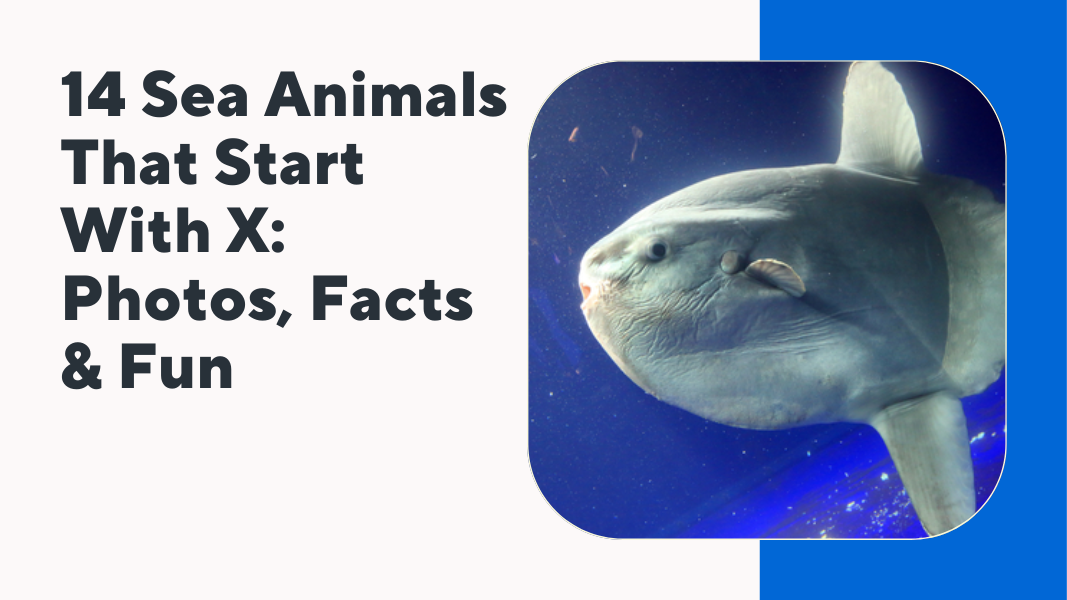
14 Sea Animals That Start With X: Photos, Facts & Fun
Exploring the ocean sometimes means meeting creatures with names as rare as the letter they begin with. This guide to sea animals that start with x brings together every well-documented marine species and group that truly begins with that letter. To keep things clear and educational, animals are grouped and described by type—fish, invertebrates, birds, and ancient marine lineages—so you can easily understand where each fits in the ocean ecosystem.
You’ll find information on habitat, range, diet, size, and conservation status, written in a magazine-style tone that’s friendly but factual. Because the letter X is uncommon in zoological naming, the total number is naturally smaller than other letters, but every entry here is real, marine, and scientifically recognized. From deep-sea organisms to coastal fish and seabirds, this article focuses on accuracy, clarity, and curiosity—helping you appreciate just how diverse ocean life can be, even under the rarest letters.
Sea Animals That Start With X
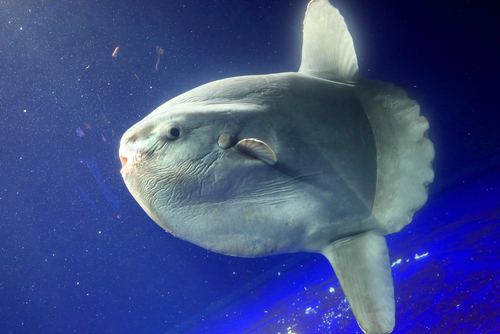
Xiphias gladius (Swordfish)
The swordfish is a large, fast-swimming predatory fish found in tropical and temperate oceans worldwide. It is known for its long, flat bill used to slash through schools of fish. Adults can reach impressive sizes and migrate long distances across open seas. Swordfish are solitary hunters that feed mainly on fish and squid. They are capable of diving to great depths and tolerating cold water. Conservation assessments list them as managed but still fished heavily in many regions.
Fun Fact: Swordfish can swim at speeds of over 60 km/h.
Quick Facts
| Attribute | Detail |
|---|---|
| Size | 3–4.5 m (9.8–14.8 ft) |
| Weight | up to 650 kg (1,430 lb) |
| Lifespan | ~9 years |
| Habitat | Open ocean |
| Diet | Fish, squid |
| Social Structure | Solitary |
| Conservation | Least Concern |
Xiphosura (Horseshoe Crabs)
Horseshoe crabs are ancient marine arthropods found along shallow coastal waters. Despite their name, they are more closely related to spiders than true crabs. They have hard, dome-shaped shells and long tails used for balance. These animals feed on worms and small invertebrates in sandy or muddy bottoms. Horseshoe crabs play an important ecological role, especially for migratory shorebirds. Some populations face pressure from habitat loss and harvesting.
Fun Fact: Horseshoe crabs have existed for over 450 million years.
Quick Facts
| Attribute | Detail |
|---|---|
| Size | 30–60 cm (12–24 in) |
| Weight | up to 4.5 kg (10 lb) |
| Lifespan | 20 years |
| Habitat | Coastal shallows |
| Diet | Worms, mollusks |
| Social Structure | Aggregations |
| Conservation | Vulnerable (some species) |
Xanthidae (Xanthid Crabs)
Xanthid crabs are a family of colorful reef-dwelling crabs found in tropical and subtropical seas. Many species hide among rocks and corals during the day. They feed on algae, detritus, and small animals. Some xanthid crabs are toxic if eaten due to substances accumulated from their diet. They are small but ecologically important in reef systems. Most species are not currently threatened.
Fun Fact: Some xanthid crabs contain toxins stronger than cyanide.
Quick Facts
| Attribute | Detail |
|---|---|
| Size | 2–10 cm (0.8–4 in) |
| Weight | <200 g (7 oz) |
| Lifespan | 3–5 years |
| Habitat | Coral reefs |
| Diet | Algae, small invertebrates |
| Social Structure | Solitary |
| Conservation | Least Concern |
Xenophyophorea (Xenophyophores)
Xenophyophores are giant single-celled organisms living on the deep-sea floor. They form large, delicate structures that provide habitat for other deep-sea life. These organisms thrive at extreme depths where little light reaches. They feed by trapping organic particles from the water. Xenophyophores are indicators of healthy deep-sea ecosystems. Their conservation status is not well evaluated due to limited study.
Fun Fact: Some xenophyophores can grow larger than a dinner plate.
Quick Facts
| Attribute | Detail |
|---|---|
| Size | up to 25 cm (10 in) |
| Weight | negligible |
| Lifespan | Unknown |
| Habitat | Deep-sea floor |
| Diet | Organic particles |
| Social Structure | Solitary |
| Conservation | Not Evaluated |
Xestospongia muta (Giant Barrel Sponge)
The giant barrel sponge is one of the largest sponge species in the ocean. It lives on coral reefs in the Caribbean and western Atlantic. These sponges filter vast amounts of water daily, helping maintain water quality. They grow very slowly and can live for centuries. Giant barrel sponges provide shelter for many small marine animals. Climate change and reef damage pose increasing threats.
Fun Fact: Giant barrel sponges are sometimes called “the redwoods of the reef.”
Quick Facts
| Attribute | Detail |
|---|---|
| Size | up to 1.8 m (6 ft) |
| Weight | up to 140 kg (300 lb) |
| Lifespan | 200+ years |
| Habitat | Coral reefs |
| Diet | Filter feeder |
| Social Structure | Solitary |
| Conservation | Least Concern |
Xiphister (Pricklebacks)
Pricklebacks are eel-like fish found along rocky Pacific coastlines. They live in tide pools and shallow waters, often hiding in crevices. These fish feed on algae and small invertebrates. Pricklebacks are well adapted to changing tides and low oxygen conditions. They are an important part of coastal ecosystems. Most species are stable in population.
Fun Fact: Some pricklebacks can survive briefly out of water.
Quick Facts
| Attribute | Detail |
|---|---|
| Size | 30–46 cm (12–18 in) |
| Weight | ~500 g (1.1 lb) |
| Lifespan | 7 years |
| Habitat | Rocky shores |
| Diet | Algae, invertebrates |
| Social Structure | Solitary |
| Conservation | Least Concern |
Xema sabini (Sabine’s Gull)
Sabine’s gull is a small seabird found in Arctic regions during breeding season. It migrates long distances over open oceans. The bird feeds on fish and invertebrates picked from the water surface. It has distinctive black, white, and gray plumage. Sabine’s gulls often associate with marine mammals while feeding. Their populations are considered stable.
Fun Fact: Sabine’s gulls can travel from the Arctic to the Southern Ocean.
Quick Facts
| Attribute | Detail |
|---|---|
| Size | 33–36 cm (13–14 in) |
| Weight | ~200 g (7 oz) |
| Lifespan | 10–12 years |
| Habitat | Open ocean, Arctic |
| Diet | Fish, invertebrates |
| Social Structure | Flocks |
| Conservation | Least Concern |
Xylophaga (Wood-Boring Bivalves)
Xylophaga are deep-sea clams that bore into submerged wood. They are found on shipwrecks and fallen trees on the ocean floor. These bivalves help recycle organic material in the deep sea. They host bacteria that aid in digesting wood. Xylophaga species are small but crucial to nutrient cycling. Their conservation status is largely unknown.
Fun Fact: Xylophaga can digest wood in complete darkness.
Quick Facts
| Attribute | Detail |
|---|---|
| Size | 1–3 cm (0.4–1.2 in) |
| Weight | <50 g (1.7 oz) |
| Lifespan | Unknown |
| Habitat | Deep-sea wood |
| Diet | Wood particles |
| Social Structure | Colonies |
| Conservation | Not Evaluated |
Xanthichthys (Triggerfish Genus)
This genus of triggerfish inhabits tropical and subtropical oceans. They are brightly colored and often seen near reefs. Xanthichthys species feed on plankton and small invertebrates. Unlike many triggerfish, they are less aggressive. They are popular among divers for their striking appearance. Populations are generally stable.
Fun Fact: Some species change color depending on mood.
Quick Facts
| Attribute | Detail |
|---|---|
| Size | 20–30 cm (8–12 in) |
| Weight | ~1 kg (2.2 lb) |
| Lifespan | 8–10 years |
| Habitat | Coral reefs |
| Diet | Plankton |
| Social Structure | Pairs |
| Conservation | Least Concern |
Xiphophorus (Marine-Associated Relatives)
While most Xiphophorus species are freshwater, related forms are studied for evolutionary links to marine fish. They are small, active swimmers. These fish are important in scientific research. Marine influence occurs in estuarine environments. Conservation varies by species.
Fun Fact: Xiphophorus species are famous in genetics research.
Quick Facts
| Attribute | Detail |
|---|---|
| Size | 4–6 cm (1.6–2.4 in) |
| Weight | <50 g (1.7 oz) |
| Lifespan | 3–5 years |
| Habitat | Estuaries |
| Diet | Algae, insects |
| Social Structure | Schools |
| Conservation | Least Concern |
Read: Sea Animals That Start With P
Read: Ocean Animals That Start With Q
Read: Ocean Animals That Start With X
Read: Sea Animals That Start With B
Read: Sea Animals That Start With N
FAQs
Are animals with X names really that rare?
Yes, animal names starting with X are uncommon because the letter is rarely used in Latin and Greek taxonomy. This makes each example especially interesting.
Do all these animals live in deep oceans?
No, they range from shallow coastal waters to the deep sea. Some live on reefs, while others inhabit open oceans or the seafloor.
Are any of these species endangered?
A few, like certain horseshoe crab species, face regional threats. Most others are currently considered stable.
Why study rare-letter animals?
Studying them highlights biodiversity and shows how naming conventions shape our understanding of life.
Where can I learn more about sea animals that start with x?
Marine biology textbooks, museum databases, and peer-reviewed ocean science journals are excellent sources for deeper research.
Conclusion
Although the letter X is rare in zoological naming, the ocean still hosts a fascinating variety of life under it. From ancient horseshoe crabs to massive barrel sponges and swift swordfish, these species play important roles in marine ecosystems. Learning about sea animals that start with x reveals how even uncommon names represent vital parts of ocean biodiversity.
Each species contributes uniquely to food webs, habitats, and evolutionary history. Exploring lesser-known creatures encourages curiosity and respect for the natural world. The ocean’s diversity proves that every letter has a story to tell.