40+ Sea Animals That Start With V: Photos, Facts & Fun
The oceans are home to an astonishing diversity of life, from tiny drifting creatures to powerful predators that rule the open seas. In this guide to sea animals that start with v, you’ll explore a wide range of marine species found across tropical reefs, deep oceans, polar waters, and coastal environments. To make learning easier and more engaging, animals are naturally grouped by type, including fish, mammals, reptiles, and invertebrates, while still being listed alphabetically. Each species profile highlights where the animal lives, how it behaves, what it eats, and its current conservation status based on global assessments.
Whether you’re a student, wildlife enthusiast, or casual reader curious about marine biodiversity, this article offers clear facts presented in a friendly, magazine-style tone. From well-known ocean giants to lesser-known deep-sea dwellers, this list shows just how fascinating marine life can be when viewed through a single letter of the alphabet.
Sea Animals That Start With V
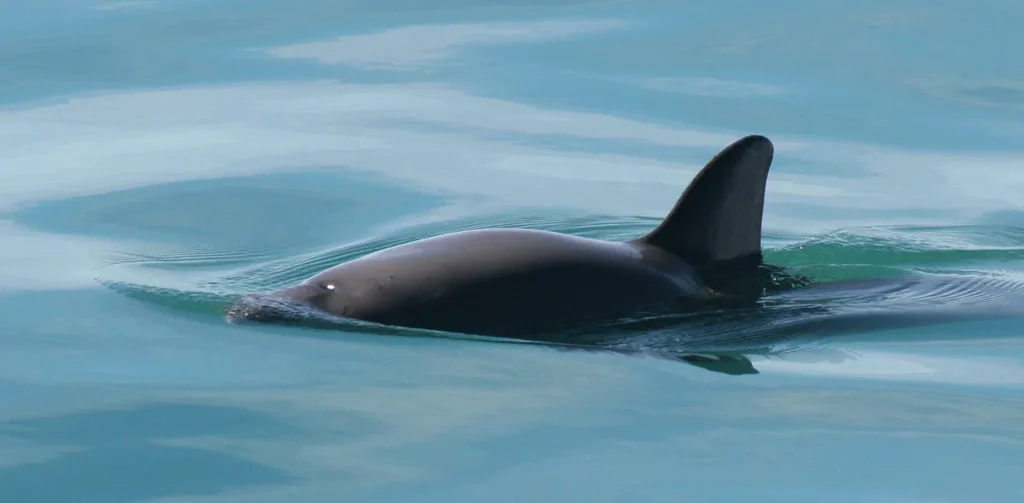
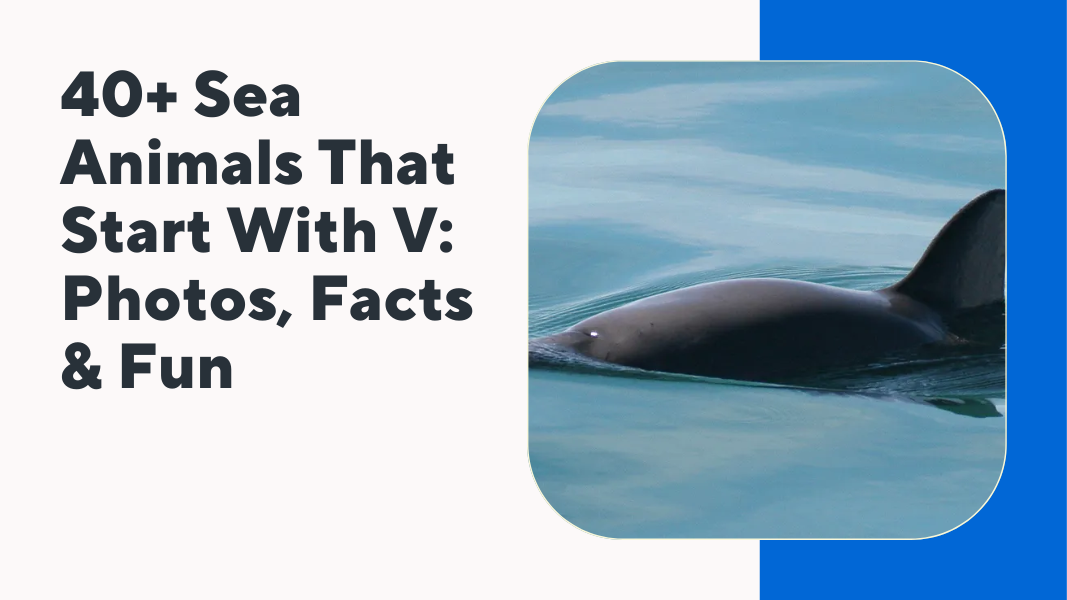
Vaquita ( Phocoena sinus )
The vaquita is a small porpoise native to the northern Gulf of California. It has a compact body, dark eye patches, and a shy nature that makes sightings extremely rare. Vaquitas live in shallow coastal waters and feed mainly on small fish and squid. They are typically solitary or found in pairs rather than large groups. Accidental entanglement in illegal fishing nets has caused a dramatic population decline.
Fun Fact: The vaquita is the rarest marine mammal on Earth.
Quick Facts
| Attribute | Detail |
|---|---|
| Size | 1.4–1.5 m / 4.6–4.9 ft |
| Weight | 40–55 kg / 88–121 lb |
| Lifespan | ~20 years |
| Habitat | Coastal waters |
| Diet | Fish, squid |
| Social Structure | Solitary or pairs |
| Conservation | Critically Endangered |
Vampire Squid ( Vampyroteuthis infernalis )
Despite its name, the vampire squid does not suck blood but feeds on marine debris. It lives in deep, oxygen-poor waters where few predators can survive. Its dark body, webbed arms, and glowing photophores give it a dramatic appearance. The species drifts slowly, conserving energy in the deep sea. When threatened, it turns itself inside out to appear larger.
Fun Fact: The vampire squid can glow in the dark to confuse predators.
Quick Facts
| Attribute | Detail |
|---|---|
| Size | 30 cm / 12 in |
| Weight | ~1 kg / 2.2 lb |
| Lifespan | ~10 years |
| Habitat | Deep ocean |
| Diet | Marine snow |
| Social Structure | Solitary |
| Conservation | Least Concern |
Velvet Belly Lanternshark ( Etmopterus spinax )
This small deep-sea shark inhabits the eastern Atlantic and Mediterranean Sea. It has a dark, velvety body with light-producing organs on its underside. These photophores help it blend with faint light from above, hiding it from predators. The lanternshark feeds on small fish and crustaceans. It is slow-moving and rarely seen by humans.
Fun Fact: Its glowing belly helps camouflage it in deep water.
Quick Facts
| Attribute | Detail |
|---|---|
| Size | 45–60 cm / 18–24 in |
| Weight | ~1.5 kg / 3.3 lb |
| Lifespan | ~20 years |
| Habitat | Deep sea |
| Diet | Fish, crustaceans |
| Social Structure | Solitary |
| Conservation | Least Concern |
Velvet Crab ( Necora puber )
The velvet crab is common along European rocky shores. It has bright red eyes and a blue-purple shell covered in fine hairs. This aggressive crab hunts small mollusks, worms, and other crustaceans. It is mostly active at night and hides under rocks during the day. Despite its bold appearance, it plays an important role in coastal ecosystems.
Fun Fact: Velvet crabs are known for their surprisingly aggressive behavior.
Quick Facts
| Attribute | Detail |
|---|---|
| Size | 8–10 cm / 3–4 in |
| Weight | ~150 g / 5 oz |
| Lifespan | ~5 years |
| Habitat | Rocky coasts |
| Diet | Mollusks, worms |
| Social Structure | Solitary |
| Conservation | Least Concern |
Venus Comb Murex ( Murex pecten )
This striking sea snail is found in tropical Indo-Pacific waters. It has long, spiny extensions that help deter predators. The Venus comb murex crawls slowly along sandy bottoms and coral reefs. It feeds on other mollusks using a specialized drilling organ. Its shell is highly valued by collectors.
Fun Fact: The spines on its shell can be longer than the shell itself.
Quick Facts
| Attribute | Detail |
|---|---|
| Size | 15–20 cm / 6–8 in |
| Weight | ~300 g / 10 oz |
| Lifespan | ~10 years |
| Habitat | Sandy reefs |
| Diet | Mollusks |
| Social Structure | Solitary |
| Conservation | Least Concern |
Violet Sea Snail ( Janthina janthina )
This floating snail lives at the ocean’s surface in warm seas. It creates a raft of bubbles to stay afloat while drifting with currents. The violet sea snail feeds on jellyfish and other floating organisms. Its purple shell provides camouflage against the ocean surface. Storms often wash these snails onto beaches.
Fun Fact: It uses trapped air bubbles as a natural life raft.
Quick Facts
| Attribute | Detail |
|---|---|
| Size | 3–4 cm / 1–1.6 in |
| Weight | ~10 g / 0.3 oz |
| Lifespan | ~1 year |
| Habitat | Open ocean surface |
| Diet | Jellyfish |
| Social Structure | Solitary |
| Conservation | Least Concern |
Viperfish ( Chauliodus sloani )
The viperfish is a fearsome-looking deep-sea predator. It has long fangs that curve backward, preventing prey from escaping. This fish uses bioluminescent lights to attract prey in dark waters. It migrates vertically, rising closer to the surface at night. Despite its scary appearance, it is relatively small.
Fun Fact: Its teeth are so large they don’t fit inside its mouth.
Quick Facts
| Attribute | Detail |
|---|---|
| Size | 30–35 cm / 12–14 in |
| Weight | ~0.5 kg / 1.1 lb |
| Lifespan | ~15 years |
| Habitat | Deep ocean |
| Diet | Fish, crustaceans |
| Social Structure | Solitary |
| Conservation | Least Concern |
Volleyball Sea Cucumber ( Cucumaria miniata )
This colorful sea cucumber lives along the Pacific coast of North America. It has a round, red-orange body resembling a volleyball. The species feeds by filtering plankton from the water using tentacles. It prefers rocky substrates in shallow waters. Sea cucumbers help recycle nutrients on the seafloor.
Fun Fact: Its bright color warns predators it may be toxic.
Quick Facts
| Attribute | Detail |
|---|---|
| Size | 20–25 cm / 8–10 in |
| Weight | ~500 g / 1.1 lb |
| Lifespan | ~10 years |
| Habitat | Rocky seabed |
| Diet | Plankton |
| Social Structure | Solitary |
| Conservation | Least Concern |
Volitans Lionfish ( Pterois volitans )
This invasive species is native to the Indo-Pacific but now common in the Atlantic. It has long venomous spines and bold striped patterns. Lionfish are efficient predators, feeding on small reef fish. Their rapid reproduction threatens native ecosystems. Control programs aim to limit their spread.
Fun Fact: Lionfish can consume prey half their own size.
Quick Facts
| Attribute | Detail |
|---|---|
| Size | 30–38 cm / 12–15 in |
| Weight | ~1.2 kg / 2.6 lb |
| Lifespan | ~15 years |
| Habitat | Coral reefs |
| Diet | Fish, crustaceans |
| Social Structure | Solitary |
| Conservation | Least Concern |
Velella ( Velella velella )
Often called “by-the-wind sailor,” this floating hydrozoan drifts across oceans. It has a small sail that catches the wind for movement. Velella feeds on plankton using tiny tentacles. Large numbers may wash ashore after storms. Despite its jellyfish-like look, it is a colony of organisms.
Fun Fact: Its sail can be angled left or right depending on wind patterns.
Quick Facts
| Attribute | Detail |
|---|---|
| Size | 5–10 cm / 2–4 in |
| Weight | <10 g |
| Lifespan | ~1 year |
| Habitat | Ocean surface |
| Diet | Plankton |
| Social Structure | Colonial |
| Conservation | Least Concern |
Velvet Dogfish ( Zameus squamulosus )
The velvet dogfish is a deep-sea shark found in tropical and temperate oceans worldwide. It has a dark brown body with rough, velvety skin and small eyes adapted for low light. This species inhabits continental slopes and deep ocean basins. It feeds mainly on bony fish and cephalopods. Very little is known about its reproduction due to its deep habitat.
Fun Fact: Velvet dogfish skin feels like sandpaper due to tiny dermal denticles.
Quick Facts
| Attribute | Detail |
|---|---|
| Size | 84–90 cm / 33–35 in |
| Weight | ~6 kg / 13 lb |
| Lifespan | ~30 years |
| Habitat | Deep ocean slopes |
| Diet | Fish, squid |
| Social Structure | Solitary |
| Conservation | Least Concern |
Velvet Whalefish ( Barbourisia rufa )
The velvet whalefish lives in deep pelagic waters of the Atlantic and Pacific Oceans. It has a rounded head, small fins, and a soft, dark body. This rare fish feeds on small crustaceans and plankton. Males and females look very different, which once confused scientists into thinking they were separate species. Sightings are extremely uncommon.
Fun Fact: Male velvet whalefish lack teeth, unlike females.
Quick Facts
| Attribute | Detail |
|---|---|
| Size | 10–12 cm / 4–5 in |
| Weight | ~50 g / 1.7 oz |
| Lifespan | Unknown |
| Habitat | Deep pelagic ocean |
| Diet | Plankton |
| Social Structure | Solitary |
| Conservation | Least Concern |
Vermilion Rockfish ( Sebastes miniatus )
This bright red fish is common along the Pacific coast of North America. It lives near rocky reefs and kelp forests. Vermilion rockfish are slow-growing and long-lived, often forming small groups. They feed on crustaceans, squid, and small fish. Overfishing has affected some populations.
Fun Fact: Some individuals can live over 60 years.
Quick Facts
| Attribute | Detail |
|---|---|
| Size | 50–55 cm / 20–22 in |
| Weight | ~3 kg / 6.6 lb |
| Lifespan | 60+ years |
| Habitat | Rocky reefs |
| Diet | Crustaceans, fish |
| Social Structure | Small groups |
| Conservation | Vulnerable |
Vermilion Snapper ( Rhomboplites aurorubens )
The vermilion snapper inhabits warm Atlantic waters, especially around reefs. It has a slender body with reddish coloration and yellow eyes. This species feeds on small fish, shrimp, and squid. It often forms schools near the seafloor. It is an important commercial fish.
Fun Fact: Its red color fades quickly after being caught.
Quick Facts
| Attribute | Detail |
|---|---|
| Size | 40–60 cm / 16–24 in |
| Weight | ~4 kg / 8.8 lb |
| Lifespan | ~15 years |
| Habitat | Coral reefs |
| Diet | Fish, shrimp |
| Social Structure | Schools |
| Conservation | Least Concern |
Vervain Sea Star ( Henricia leviuscula )
This sea star lives along the Pacific coast of North America. It has long, slender arms and a mottled purple or orange color. The vervain sea star feeds on sponges and organic particles. It prefers rocky substrates in cold waters. Its slow movement makes it easy to overlook.
Fun Fact: It can regenerate lost arms over time.
Quick Facts
| Attribute | Detail |
|---|---|
| Size | 25–30 cm / 10–12 in |
| Weight | ~500 g / 1.1 lb |
| Lifespan | ~20 years |
| Habitat | Rocky seabed |
| Diet | Sponges |
| Social Structure | Solitary |
| Conservation | Least Concern |
Vestimentiferan Tube Worm ( Riftia pachyptila )
This remarkable worm lives near deep-sea hydrothermal vents. It has no mouth or digestive system and relies on symbiotic bacteria for nutrition. Vestimentiferan tube worms can grow extremely fast due to abundant chemical energy. They thrive in extreme temperatures and toxic environments. Their red plumes absorb oxygen and chemicals.
Fun Fact: They were unknown to science until 1977.
Quick Facts
| Attribute | Detail |
|---|---|
| Size | Up to 2.4 m / 8 ft |
| Weight | ~1–2 kg / 2–4 lb |
| Lifespan | ~20 years |
| Habitat | Hydrothermal vents |
| Diet | Symbiotic bacteria |
| Social Structure | Colonies |
| Conservation | Least Concern |
Viper Moray ( Enchelycore pardalis )
The viper moray eel inhabits coral reefs in the Indo-Pacific. It has curved teeth that remain visible even when its mouth is closed. This eel hunts fish at night, hiding in crevices during the day. Its spotted pattern helps camouflage among coral. Despite its fearsome look, it avoids humans.
Fun Fact: Its jaws cannot fully close due to oversized teeth.
Quick Facts
| Attribute | Detail |
|---|---|
| Size | 90–100 cm / 35–39 in |
| Weight | ~3 kg / 6.6 lb |
| Lifespan | ~20 years |
| Habitat | Coral reefs |
| Diet | Fish |
| Social Structure | Solitary |
| Conservation | Least Concern |
Viper Shark ( Trigonognathus kabeyai )
The viper shark is a rare deep-sea species found in the Pacific Ocean. It has a slender body and needle-like teeth designed for grasping prey. This shark migrates vertically, feeding near the surface at night. It primarily eats small fish and squid. Encounters with humans are extremely rare.
Fun Fact: Its teeth resemble those of snakes.
Quick Facts
| Attribute | Detail |
|---|---|
| Size | 50–55 cm / 20–22 in |
| Weight | ~1 kg / 2.2 lb |
| Lifespan | Unknown |
| Habitat | Deep ocean |
| Diet | Fish, squid |
| Social Structure | Solitary |
| Conservation | Least Concern |
Violet Goby ( Gobioides broussonnetii )
The violet goby inhabits estuaries and coastal waters in the Americas. It has an eel-like body with a purple-gray hue. This fish burrows into muddy substrates and feeds on small invertebrates. It tolerates low-oxygen environments well. Despite its appearance, it is harmless.
Fun Fact: It can survive in very low oxygen conditions.
Quick Facts
| Attribute | Detail |
|---|---|
| Size | 60–70 cm / 24–28 in |
| Weight | ~1.5 kg / 3.3 lb |
| Lifespan | ~10 years |
| Habitat | Estuaries |
| Diet | Invertebrates |
| Social Structure | Solitary |
| Conservation | Least Concern |
Violet Stingray ( Pteroplatytrygon violacea )
This open-ocean stingray is found in warm waters worldwide. It has a smooth, purplish body and long tail with a venomous spine. Violet stingrays swim actively rather than resting on the seafloor. They feed on fish and squid. They often follow currents in the open sea.
Fun Fact: It is one of the few stingrays adapted to pelagic life.
Quick Facts
| Attribute | Detail |
|---|---|
| Size | 70–80 cm / 28–31 in |
| Weight | ~9 kg / 20 lb |
| Lifespan | ~15 years |
| Habitat | Open ocean |
| Diet | Fish, squid |
| Social Structure | Solitary |
| Conservation | Least Concern |
Volute Snail ( Volutidae family )
Volute snails are large marine snails found in tropical seas. They have smooth, patterned shells and a muscular foot for movement. These snails are carnivorous, feeding on smaller invertebrates. They live on sandy seabeds and shallow reefs. Their shells are prized by collectors.
Fun Fact: Some volute shells can grow larger than a human hand.
Quick Facts
| Attribute | Detail |
|---|---|
| Size | 15–30 cm / 6–12 in |
| Weight | ~400 g / 14 oz |
| Lifespan | ~10 years |
| Habitat | Sandy seabeds |
| Diet | Invertebrates |
| Social Structure | Solitary |
| Conservation | Least Concern |
Vanuatu Clownfish ( Amphiprion nigripes )
The Vanuatu clownfish is a small reef fish found in the western Pacific Ocean. It lives among sea anemones, gaining protection from predators. Its body is dark with bright orange fins and face. This species feeds on algae, plankton, and small invertebrates. It lives in small social groups with a strict hierarchy.
Fun Fact: The dominant individual in the group can change sex to become female.
Quick Facts
| Attribute | Detail |
|---|---|
| Size | 10–11 cm / 4–4.3 in |
| Weight | ~30 g / 1 oz |
| Lifespan | ~10 years |
| Habitat | Coral reefs |
| Diet | Algae, plankton |
| Social Structure | Small groups |
| Conservation | Least Concern |
Variegated Urchin ( Lytechinus variegatus )
This sea urchin is found in shallow waters of the Atlantic Ocean and Caribbean Sea. It has short spines and a rounded body that varies in color. Variegated urchins graze on algae and seagrass. They play a key role in controlling algae growth. Overgrazing can affect seagrass beds.
Fun Fact: It uses tube feet to grip rocks and surfaces.
Quick Facts
| Attribute | Detail |
|---|---|
| Size | 7–10 cm / 3–4 in |
| Weight | ~200 g / 7 oz |
| Lifespan | ~4 years |
| Habitat | Seagrass beds |
| Diet | Algae |
| Social Structure | Solitary |
| Conservation | Least Concern |
Variegated Sea Star ( Pisaster brevispinus )
This large sea star inhabits rocky Pacific coastlines. It has long arms with varied coloration, often orange or purple. The species feeds on clams and mussels, prying them open slowly. It is an important predator in intertidal ecosystems. Its presence helps maintain species balance.
Fun Fact: It can exert steady pressure for hours to open shells.
Quick Facts
| Attribute | Detail |
|---|---|
| Size | 60–80 cm / 24–31 in |
| Weight | ~1.5 kg / 3.3 lb |
| Lifespan | ~20 years |
| Habitat | Rocky shores |
| Diet | Mollusks |
| Social Structure | Solitary |
| Conservation | Least Concern |
Veligeroidea Larva ( Veligeroidea )
This larval stage is found in many marine snails and bivalves. It drifts freely in the plankton before settling on the seabed. Veligeroidea larvae use tiny cilia to swim and feed. This stage is crucial for dispersal across oceans. It eventually transforms into a juvenile mollusk.
Fun Fact: Many shellfish spend weeks drifting as veliger larvae.
Quick Facts
| Attribute | Detail |
|---|---|
| Size | <1 mm |
| Weight | Negligible |
| Lifespan | Weeks |
| Habitat | Open ocean |
| Diet | Plankton |
| Social Structure | Planktonic |
| Conservation | Not Evaluated |
Venezuelan Dwarf Seahorse ( Hippocampus reidi )
This seahorse lives in shallow coastal waters of the western Atlantic. It has a slender body and curled tail used for anchoring to seagrass. Males carry eggs in a brood pouch until hatching. They feed on tiny crustaceans. Habitat loss threatens local populations.
Fun Fact: Male seahorses give birth to live young.
Quick Facts
| Attribute | Detail |
|---|---|
| Size | 12–15 cm / 5–6 in |
| Weight | ~20 g / 0.7 oz |
| Lifespan | ~4 years |
| Habitat | Seagrass beds |
| Diet | Small crustaceans |
| Social Structure | Pairs |
| Conservation | Near Threatened |
Venus Girdle ( Cestum veneris )
The Venus girdle is one of the longest known gelatinous zooplankton. It has a ribbon-like transparent body that undulates gracefully. This ctenophore feeds on plankton using sticky cells. It is found in warm oceans worldwide. Its iridescent colors shimmer in sunlight.
Fun Fact: It can grow longer than a human adult.
Quick Facts
| Attribute | Detail |
|---|---|
| Size | Up to 1.5 m / 5 ft |
| Weight | Negligible |
| Lifespan | ~1 year |
| Habitat | Open ocean |
| Diet | Plankton |
| Social Structure | Solitary |
| Conservation | Least Concern |
Vexilliferan Flatworm ( Pseudoceros spp.)
These brightly colored flatworms live on coral reefs. They have flattened bodies and wave-like swimming motions. Vexilliferan flatworms feed on small invertebrates. Their vivid colors warn predators of toxicity. They are often mistaken for nudibranchs.
Fun Fact: Their colors come from pigments obtained from prey.
Quick Facts
| Attribute | Detail |
|---|---|
| Size | 3–6 cm / 1–2.4 in |
| Weight | <10 g |
| Lifespan | ~3 years |
| Habitat | Coral reefs |
| Diet | Invertebrates |
| Social Structure | Solitary |
| Conservation | Least Concern |
Victoria Parrotfish ( Scarus rubroviolaceus )
This large parrotfish inhabits Indo-Pacific coral reefs. It has strong beak-like teeth for scraping algae from coral. Victoria parrotfish help produce sand through digestion. They are active during the day and rest in reef crevices at night. Their feeding supports reef health.
Fun Fact: A single parrotfish can create hundreds of kilograms of sand yearly.
Quick Facts
| Attribute | Detail |
|---|---|
| Size | 70–100 cm / 28–39 in |
| Weight | ~20 kg / 44 lb |
| Lifespan | ~20 years |
| Habitat | Coral reefs |
| Diet | Algae |
| Social Structure | Schools |
| Conservation | Least Concern |
Virginia Whelk ( Busycotypus canaliculatus )
The Virginia whelk is a large predatory sea snail found along the US Atlantic coast. It has a thick spiral shell and muscular foot. This snail feeds on clams and other bivalves. It burrows in sandy seabeds. It is also known as the channeled whelk.
Fun Fact: It can drill through shells using acid and abrasion.
Quick Facts
| Attribute | Detail |
|---|---|
| Size | 18–25 cm / 7–10 in |
| Weight | ~500 g / 1.1 lb |
| Lifespan | ~15 years |
| Habitat | Sandy seabed |
| Diet | Bivalves |
| Social Structure | Solitary |
| Conservation | Least Concern |
Vlamingii Tang ( Naso vlamingii )
This large surgeonfish is found on Indo-Pacific reefs. It has a bluish-gray body with vivid markings. Vlamingii tangs feed on plankton and algae. They often form schools in open water near reefs. Sharp spines near the tail are used for defense.
Fun Fact: Its colors intensify dramatically when excited.
Quick Facts
| Attribute | Detail |
|---|---|
| Size | 60–70 cm / 24–28 in |
| Weight | ~7 kg / 15 lb |
| Lifespan | ~30 years |
| Habitat | Coral reefs |
| Diet | Plankton, algae |
| Social Structure | Schools |
| Conservation | Least Concern |
Volcano Limpet ( Fissurella volcano )
This limpet lives on rocky volcanic coastlines. It has a cone-shaped shell with a distinctive hole at the top. Volcano limpets graze on algae growing on rocks. They cling tightly to surfaces to avoid waves. Their shell shape helps reduce wave impact.
Fun Fact: The shell hole helps release water and waste efficiently.
Quick Facts
| Attribute | Detail |
|---|---|
| Size | 5–7 cm / 2–2.8 in |
| Weight | ~50 g / 1.7 oz |
| Lifespan | ~10 years |
| Habitat | Rocky shores |
| Diet | Algae |
| Social Structure | Solitary |
| Conservation | Least Concern |
Volcanic Vent Shrimp ( Rimicaris exoculata )
This shrimp inhabits deep-sea hydrothermal vents. It has reduced eyes and relies on heat and chemical cues. The shrimp feeds on bacteria growing on its body. It forms dense swarms near vents. These extreme environments support unique ecosystems.
Fun Fact: It lives in water hot enough to melt lead nearby.
Quick Facts
| Attribute | Detail |
|---|---|
| Size | 4–6 cm / 1.6–2.4 in |
| Weight | ~20 g / 0.7 oz |
| Lifespan | ~5 years |
| Habitat | Hydrothermal vents |
| Diet | Bacteria |
| Social Structure | Colonies |
| Conservation | Least Concern |
Read: Sea Animals That Start With P
Read: Ocean Animals That Start With Q
Read: Ocean Animals That Start With X
Read: Sea Animals That Start With B
Read: Sea Animals That Start With N
FAQs
What makes deep-sea animals so different from shallow-water species?
Deep-sea animals often evolve bioluminescence, slow metabolisms, and unique feeding strategies. These traits help them survive darkness, pressure, and scarce food.
Are all sea animals important to ocean ecosystems?
Yes, every species plays a role in maintaining balance, from predators controlling populations to grazers preventing algae overgrowth.
How do scientists study animals living in extreme depths?
Researchers use submersibles, remotely operated vehicles, and deep-sea sensors. These tools allow observation without harming fragile environments.
Why do many marine species have long lifespans?
Cold temperatures and slow metabolisms reduce growth rates. This often results in longer lifespans compared to land animals.
Is conservation a concern for marine life today?
Human activities like overfishing, pollution, and climate change impact many species. Protecting habitats helps preserve biodiversity.
Conclusion
This guide highlights the incredible diversity found among sea animals that start with v, from tiny drifting organisms to powerful reef fish and mysterious deep-sea species. Each animal contributes uniquely to ocean ecosystems, supporting food webs and habitat health. Learning about these species helps build appreciation for marine biodiversity and the importance of conservation.
Oceans cover most of our planet, yet much remains unexplored and misunderstood. Continued research and responsible stewardship are essential for protecting these remarkable creatures. Curiosity about marine life is the first step toward preserving it for future generations.