40+ Marine Animals That Start With I: Photos, Facts & Fun
Marine life is as mysterious as it is diverse, especially when you dive into the alphabet of ocean species. In this article, we’re showcasing marine animals that start with I—from spiny invertebrates to sleek fish and elusive deep-sea dwellers. Each entry includes key facts about the animal’s appearance, habitat, diet, and more, grouped across fish, mammals, invertebrates, and beyond.
Whether you’re a marine biology buff or a curious learner, you’ll enjoy exploring this collection of underwater creatures that prove the letter I is anything but invisible in the animal kingdom. Let’s dive into the world of marine animals that start with I!
Fish and Invertebrates That Start With I
Indian Mackerel (Rastrelliger kanagurta)
The Indian mackerel is a fast-swimming, streamlined fish found in tropical and subtropical waters of the Indian and western Pacific Oceans. Silvery-blue with faint stripes, these fish reach around 35 cm and are important in local fisheries across South and Southeast Asia. They are carnivorous, feeding on plankton, small fish, and crustaceans. Commonly seen in schools, they play a key role in nearshore marine ecosystems. They are currently listed as Least Concern.
Fun Fact: Indian mackerel are known for forming large, dense schools that sparkle like underwater clouds.
Quick Facts
| Attribute | Detail |
|---|---|
| Size | 30–35 cm / 12–14 in |
| Weight | 0.3–0.5 kg / 0.6–1.1 lbs |
| Lifespan | 4–5 years |
| Habitat | Coastal tropical waters |
| Diet | Zooplankton, crustaceans |
| Social Structure | Schools |
| Conservation | Least Concern |
| Fun Fact: Indian mackerel are known for forming large, dense schools that sparkle like underwater clouds. |
Indian Threadfish (Alectis indica)
Recognized by its long, trailing dorsal and anal fins, the Indian threadfish is found in shallow tropical waters near coral reefs. Juveniles are particularly striking, with ribbon-like extensions that mimic jellyfish tentacles to deter predators. Adults can grow quite large and are prized as game fish. They feed on smaller fish and crustaceans. Their population is stable and listed as Least Concern.
Fun Fact: Juvenile Indian threadfish use mimicry to resemble stinging jellyfish as a defense mechanism.
Quick Facts
| Attribute | Detail |
|---|---|
| Size | Up to 165 cm / 65 in |
| Weight | Up to 25 kg / 55 lbs |
| Lifespan | 10–12 years |
| Habitat | Tropical reefs, open water |
| Diet | Small fish, shrimp, crustaceans |
| Social Structure | Solitary or small groups |
| Conservation | Least Concern |
| Fun Fact: Juvenile Indian threadfish mimic jellyfish to avoid being eaten. |
Indian Ocean Bottlenose Dolphin (Tursiops aduncus)
This subspecies of bottlenose dolphin thrives in the warm, shallow coastal waters of the Indian Ocean. Slightly smaller than its Atlantic relative, it features a slender body and more pronounced spotting on the belly. These dolphins are highly social and known for their intelligence, communication, and complex group dynamics. They eat fish, squid, and crustaceans. Their status is Near Threatened due to habitat degradation and bycatch.
Fun Fact: Indian Ocean bottlenose dolphins often use sponges as tools when foraging on the sea floor.
Quick Facts
| Attribute | Detail |
|---|---|
| Size | 2–2.7 m / 6.5–8.9 ft |
| Weight | 150–230 kg / 330–507 lbs |
| Lifespan | 40–50 years |
| Habitat | Coastal waters of Indian Ocean |
| Diet | Fish, squid, crustaceans |
| Social Structure | Pods of 10–15 |
| Conservation | Near Threatened |
| Fun Fact: These dolphins are one of the few marine animals known to use tools. |
Indian Moonfish (Mene maculata)
Indian moonfish have a unique deep-bodied, silvery shape with translucent fins, making them easily recognizable. They are commonly found in the Indo-West Pacific near sandy and muddy bottoms. Their diet mainly consists of plankton and small benthic organisms. Though not targeted commercially, they are sometimes caught as bycatch. They are listed as Least Concern.
Fun Fact: Indian moonfish can shift their body color slightly to blend into different water conditions.
Quick Facts
| Attribute | Detail |
|---|---|
| Size | Up to 25 cm / 10 in |
| Weight | 0.2–0.4 kg / 0.4–0.9 lbs |
| Lifespan | 4–6 years |
| Habitat | Coastal muddy or sandy areas |
| Diet | Plankton, small benthic fauna |
| Social Structure | Small schools |
| Conservation | Least Concern |
| Fun Fact: This fish’s flat body acts like a natural camouflage shield on sandy seafloors. |
Indian Pufferfish (Arothron stellatus)
The Indian pufferfish is a spiny, balloon-like fish that inhabits reef environments and coastal waters in the Indo-Pacific region. It’s covered with star-like spots and can puff up dramatically when threatened. It feeds mostly on hard-shelled invertebrates like mollusks and sea urchins, using its powerful beak-like teeth. It is not considered endangered.
Fun Fact: Despite its adorable appearance, this pufferfish is toxic and potentially deadly if consumed.
Quick Facts
| Attribute | Detail |
|---|---|
| Size | Up to 120 cm / 47 in |
| Weight | Up to 10 kg / 22 lbs |
| Lifespan | 10–15 years |
| Habitat | Coral reefs, lagoons |
| Diet | Mollusks, crustaceans, urchins |
| Social Structure | Solitary |
| Conservation | Least Concern |
| Fun Fact: The Indian pufferfish contains tetrodotoxin—a deadly neurotoxin. |
Indian Anchovy (Stolephorus indicus)
A small, silvery schooling fish, the Indian anchovy plays an important role in the food web of the Indian Ocean and surrounding seas. Often used in local cuisine, it feeds on plankton and is a common target for small-scale fisheries. It serves as prey for larger fish, birds, and marine mammals. Its population is stable.
Fun Fact: Indian anchovies are frequently used as bait in larger commercial fishing operations.
Quick Facts
| Attribute | Detail |
|---|---|
| Size | 10–15 cm / 4–6 in |
| Weight | 0.01–0.02 kg / 0.02–0.04 lbs |
| Lifespan | 2–3 years |
| Habitat | Coastal tropical waters |
| Diet | Plankton |
| Social Structure | Large schools |
| Conservation | Least Concern |
| Fun Fact: Anchovies are packed with calcium and omega-3s, making them a superfood of the sea. |
Indian Sea Star (Pentaceraster mammillatus)
This large and brightly colored starfish is found on coral reefs and sandy bottoms in the Indian Ocean. Its thick arms are often covered in knobby projections, offering protection from predators. It feeds by everting its stomach to externally digest small invertebrates. The species is common and not under threat.
Fun Fact: Some Indian sea stars can regenerate lost arms over several months.
Quick Facts
| Attribute | Detail |
|---|---|
| Size | Up to 30 cm / 12 in |
| Weight | 1–2 kg / 2.2–4.4 lbs |
| Lifespan | 5–10 years |
| Habitat | Coral reefs, sandy substrates |
| Diet | Bivalves, sponges, detritus |
| Social Structure | Solitary |
| Conservation | Least Concern |
| Fun Fact: This sea star can regrow its limbs—and sometimes even its entire body from one arm. |
Indo-Pacific Humpback Dolphin (Sousa chinensis)
This distinctive dolphin is known for its light pink or gray coloring and humped back, especially visible in older individuals. Found in coastal waters across the Indo-Pacific, it is slow-moving and often spotted near estuaries and river mouths. It feeds on fish and crustaceans and is highly sensitive to human activity. Its population is declining and listed as Vulnerable.
Fun Fact: Some Indo-Pacific humpback dolphins appear pink due to blood vessels close to the skin that help regulate body temperature.
Quick Facts
| Attribute | Detail |
|---|---|
| Size | 2.5–2.7 m / 8.2–8.9 ft |
| Weight | 150–200 kg / 330–440 lbs |
| Lifespan | 30–40 years |
| Habitat | Coastal Indo-Pacific |
| Diet | Fish, shrimp, crabs |
| Social Structure | Small pods |
| Conservation | Vulnerable |
| Fun Fact: Their pinkish hue is caused by thermoregulation, not pigment. |
Indian Glassy Fish (Parambassis ranga)
The Indian glassy fish is a small, transparent species commonly found in slow-moving or still waters, including coastal estuaries. Native to the Indian subcontinent, it’s notable for its see-through body which reveals its spine and internal organs. It feeds on tiny invertebrates and insect larvae. These fish are often kept in aquariums, though dyed versions have sparked ethical concerns. They are currently not endangered.
Fun Fact: Its transparent body helps it evade predators by blending into the water column.
Quick Facts
| Attribute | Detail |
|---|---|
| Size | 6–8 cm / 2.4–3.1 in |
| Weight | ~0.01 kg / ~0.02 lbs |
| Lifespan | 2–3 years |
| Habitat | Estuaries, freshwater, brackish |
| Diet | Insect larvae, micro-crustaceans |
| Social Structure | Schools |
| Conservation | Least Concern |
| Fun Fact: Glassy fish bodies are nearly invisible in clear water, making them hard to spot. |
Indian Ocean Crocodilefish (Papilloculiceps longiceps)
Found resting on reefs and sandy seafloors, this flat-headed ambush predator uses camouflage to capture unsuspecting prey. Its frilly eyelids and mottled skin help it blend into the ocean floor. It’s found throughout the Indian Ocean and western Pacific. It primarily feeds on small fish and crustaceans. Though not targeted commercially, it may be caught as bycatch.
Fun Fact: The crocodilefish’s lacy eyes act as camouflage and reduce glare underwater.
Quick Facts
| Attribute | Detail |
|---|---|
| Size | Up to 50 cm / 20 in |
| Weight | 1.5–2 kg / 3.3–4.4 lbs |
| Lifespan | 8–10 years |
| Habitat | Coral reefs, sandy bottoms |
| Diet | Fish, shrimp, crabs |
| Social Structure | Solitary |
| Conservation | Least Concern |
| Fun Fact: It lies perfectly still for hours waiting to ambush prey. |
Indo-Pacific Moray Eel (Gymnothorax pictus)
This species of moray eel is native to reef systems across the Indo-Pacific. With an elongated body and sharp-toothed jaws, it lurks in crevices and rocks, emerging at night to hunt small fish and invertebrates. They play a vital role in controlling reef populations but are often mistaken for dangerous predators.
Fun Fact: Moray eels have a second set of jaws called pharyngeal jaws to help grip prey.
Quick Facts
| Attribute | Detail |
|---|---|
| Size | 60–100 cm / 24–39 in |
| Weight | 1–2.5 kg / 2.2–5.5 lbs |
| Lifespan | 10–15 years |
| Habitat | Coral reefs, rocky crevices |
| Diet | Fish, crustaceans |
| Social Structure | Solitary |
| Conservation | Least Concern |
| Fun Fact: Their unique second set of jaws helps pull prey deeper into the throat. |
Indian Whiting (Sillago indica)
Indian whiting is a common bottom-dwelling fish in shallow coastal waters and estuaries. With a slender, silvery body, it’s prized for its mild flavor and is an important species in local fisheries. It feeds on worms, crustaceans, and benthic invertebrates. Though widely fished, its population remains stable.
Fun Fact: Its mouth is specially adapted to vacuum small creatures from the seafloor.
Quick Facts
| Attribute | Detail |
|---|---|
| Size | Up to 25 cm / 10 in |
| Weight | 0.2–0.4 kg / 0.4–0.9 lbs |
| Lifespan | 4–6 years |
| Habitat | Coastal, muddy estuaries |
| Diet | Worms, small crustaceans |
| Social Structure | Small groups |
| Conservation | Least Concern |
| Fun Fact: It creates suction with its mouth to feed from the seabed. |
Indian Ocean Bluefin Trevally (Caranx melampygus)
This flashy, electric-blue predator roams reefs and open coastal waters. The bluefin trevally is known for its speed and agility, using sudden bursts to capture prey. It’s a popular sport fish and important to subsistence fishers. It hunts in packs or alone, preying on smaller fish and cephalopods.
Fun Fact: Its vibrant blue fins become even more intense during hunting.
Quick Facts
| Attribute | Detail |
|---|---|
| Size | 70–90 cm / 28–35 in |
| Weight | Up to 15 kg / 33 lbs |
| Lifespan | 10–12 years |
| Habitat | Coral reefs, lagoons, open water |
| Diet | Fish, squid |
| Social Structure | Solitary or groups |
| Conservation | Least Concern |
| Fun Fact: Their blue fins are more vivid when the fish is excited or aggressive. |
Indian River Shrimp (Macrobrachium malcolmsonii)
Native to the rivers and brackish waters of India, this shrimp species occasionally ventures into coastal environments. It has long claws, a translucent body, and thrives in aquaculture settings. It feeds on detritus, algae, and small organisms. It’s heavily farmed and plays a role in both ecosystems and economies.
Fun Fact: This shrimp can grow surprisingly large compared to other freshwater crustaceans.
Quick Facts
| Attribute | Detail |
|---|---|
| Size | Up to 30 cm / 12 in |
| Weight | 0.1–0.3 kg / 0.2–0.7 lbs |
| Lifespan | 1–2 years |
| Habitat | Rivers, estuaries, brackish |
| Diet | Algae, detritus, small insects |
| Social Structure | Solitary |
| Conservation | Least Concern |
| Fun Fact: Known as the “giant river prawn,” it’s one of the largest shrimp species in India. |
Indo-Pacific Beaked Whale (Indopacetus pacificus)
A rarely seen deep-sea cetacean, this elusive whale species dives to extreme depths to feed on squid. Found across the Indo-Pacific basin, it has a streamlined body, a long beak, and few surface sightings due to its shy nature. It’s one of the least understood whale species and classified as Data Deficient.
Fun Fact: This whale can dive for over an hour in pursuit of deep-sea prey.
Quick Facts
| Attribute | Detail |
|---|---|
| Size | 6–8 m / 19.7–26.2 ft |
| Weight | 2,000–3,000 kg / 4,400–6,600 lbs |
| Lifespan | 30–40 years |
| Habitat | Deep-sea Indo-Pacific regions |
| Diet | Squid, deep-sea fish |
| Social Structure | Small pods or solitary |
| Conservation | Data Deficient |
| Fun Fact: They’re so elusive that nearly all information comes from strandings. |
Indo-Pacific Sergeant (Abudefduf vaigiensis)
A small, vividly striped damselfish common in shallow reef environments, the Indo-Pacific sergeant is named for its black “sergeant stripes.” It’s aggressive when defending territory and feeds on algae, plankton, and small invertebrates. These fish are highly active and often seen in large schools near the surface.
Fun Fact: Males guard their eggs fiercely and fan them to ensure oxygen flow.
Quick Facts
| Attribute | Detail |
|---|---|
| Size | Up to 20 cm / 8 in |
| Weight | 0.1–0.3 kg / 0.2–0.7 lbs |
| Lifespan | 5–6 years |
| Habitat | Coral reefs, lagoons |
| Diet | Algae, plankton, small crustaceans |
| Social Structure | Schools |
| Conservation | Least Concern |
| Fun Fact: Their bold stripes serve as visual signals during social interactions. |
Indian Scad (Decapterus russelli)
Indian scad are slender, silvery fish often found in large schools throughout the Indian and western Pacific Oceans. They inhabit coastal waters, often near the surface, and are important both ecologically and commercially. Feeding on plankton, small fish, and crustaceans, they support a variety of predators including dolphins, sharks, and seabirds. This species is not considered at risk.
Fun Fact: Indian scad often follow ships and feed on scraps thrown overboard.
Quick Facts
| Attribute | Detail |
|---|---|
| Size | 20–25 cm / 8–10 in |
| Weight | 0.1–0.3 kg / 0.2–0.7 lbs |
| Lifespan | 4–6 years |
| Habitat | Coastal pelagic zones |
| Diet | Plankton, small fish, shrimp |
| Social Structure | Large schools |
| Conservation | Least Concern |
| Fun Fact: This species forms tight balls when threatened by predators. |
Indian Chank (Turbinella pyrum)
This large marine snail, also called the sacred chank, is found in the Indian Ocean along sandy seafloors. Known for its thick, spiral shell, it’s culturally significant in South Asia and often used as a ceremonial object. The chank grazes on algae and detritus and plays a key role in sediment turnover.
Fun Fact: Its shell is used as a traditional trumpet in Hindu rituals.
Quick Facts
| Attribute | Detail |
|---|---|
| Size | Up to 20 cm / 8 in |
| Weight | 0.5–1.5 kg / 1.1–3.3 lbs |
| Lifespan | 10–15 years |
| Habitat | Sandy seabeds, shallow coasts |
| Diet | Algae, detritus |
| Social Structure | Solitary |
| Conservation | Least Concern |
| Fun Fact: Revered in Hinduism, the chank is a symbol of auspiciousness. |
Indian Sea Cucumber (Bohadschia marmorata)
Sea cucumbers like this species are echinoderms that live on the seafloor and recycle nutrients by consuming detritus. The Indian sea cucumber has a sausage-shaped, leathery body and is found in the Indian and western Pacific Oceans. It is harvested in some regions for food and traditional medicine.
Fun Fact: When threatened, it can eject sticky threads to entangle predators.
Quick Facts
| Attribute | Detail |
|---|---|
| Size | Up to 40 cm / 16 in |
| Weight | 1–2 kg / 2.2–4.4 lbs |
| Lifespan | 5–10 years |
| Habitat | Benthic zones, coral reefs |
| Diet | Organic detritus |
| Social Structure | Solitary |
| Conservation | Vulnerable in some regions |
| Fun Fact: Sea cucumbers can liquefy their bodies to squeeze through tight spaces. |
Indian Mud Moray (Gymnothorax tile)
This mud-dwelling eel is found in coastal and estuarine habitats across the Indo-Pacific. It prefers muddy or sandy environments with plenty of cover, often burrowing during the day and emerging at night to hunt. It preys on small fish and invertebrates and has a flexible jaw to grip struggling prey.
Fun Fact: Its brown, mud-colored skin provides near-perfect camouflage.
Quick Facts
| Attribute | Detail |
|---|---|
| Size | 60–80 cm / 24–31 in |
| Weight | 1–2 kg / 2.2–4.4 lbs |
| Lifespan | 8–12 years |
| Habitat | Estuaries, muddy coasts |
| Diet | Small fish, worms, shrimp |
| Social Structure | Solitary |
| Conservation | Least Concern |
| Fun Fact: It often uses its tail to block burrow entrances when hiding. |
Indian Butterflyfish (Chaetodon mitratus)
Found in the deeper reef slopes of the Indian Ocean, this stunning fish features yellow coloration with black bars and a graceful shape. Though elusive and often found at depths of 30–70 meters, it’s popular in the aquarium trade. It feeds on coral polyps and small benthic invertebrates.
Fun Fact: This species mates for life and is often seen in bonded pairs.
Quick Facts
| Attribute | Detail |
|---|---|
| Size | Up to 14 cm / 5.5 in |
| Weight | ~0.1 kg / ~0.2 lbs |
| Lifespan | 5–7 years |
| Habitat | Deep coral slopes |
| Diet | Coral polyps, small invertebrates |
| Social Structure | Pairs or small groups |
| Conservation | Least Concern |
| Fun Fact: They communicate using body movements rather than sound. |
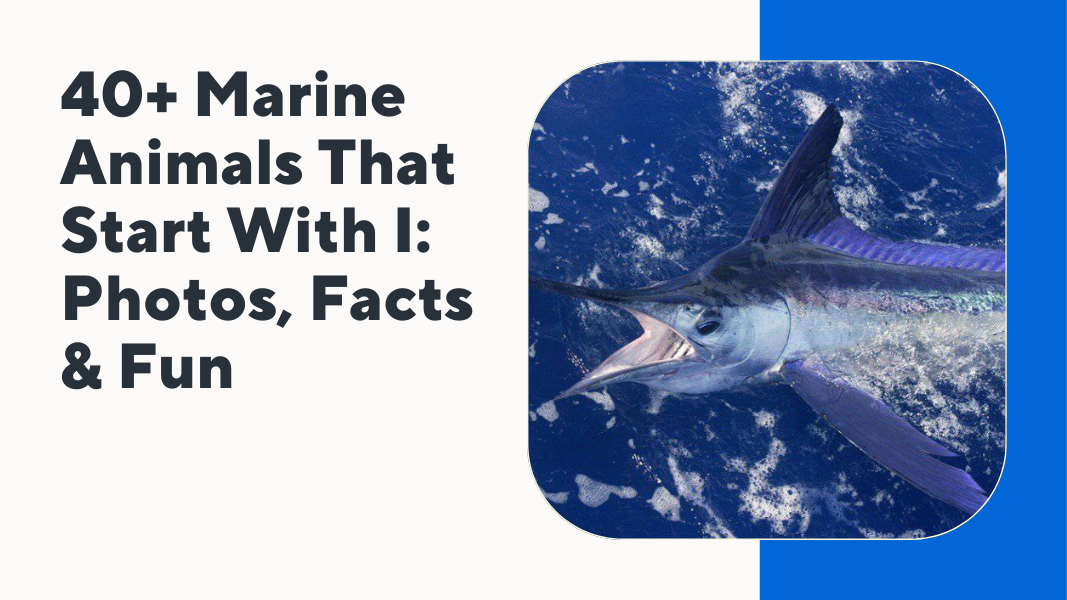
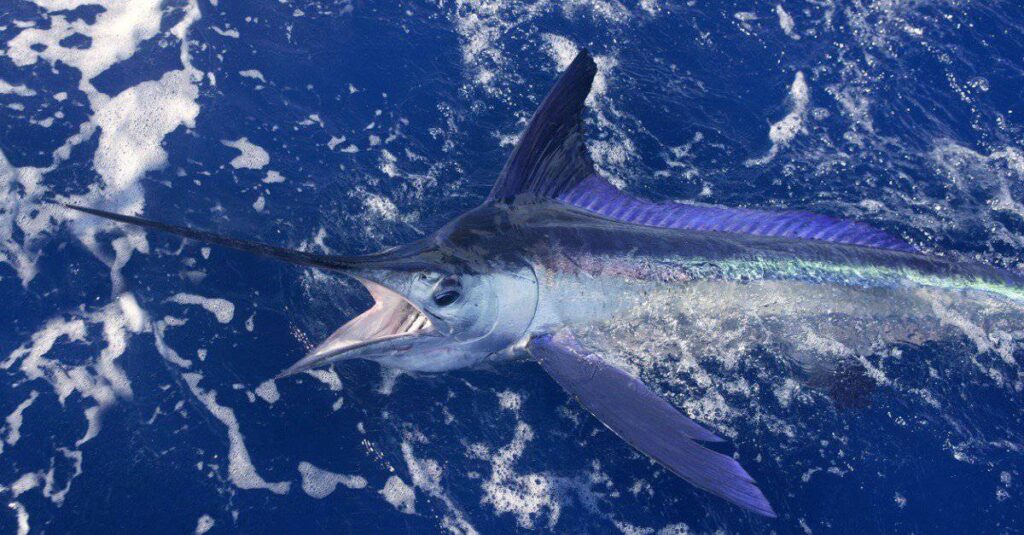
Indo-Pacific Sailfish (Istiophorus platypterus)
One of the fastest fish in the ocean, the sailfish is known for its elongated body, bill-like snout, and striking dorsal fin. Found throughout warm waters of the Indo-Pacific, this predator feeds on schools of small fish. It is a popular species among game fishers.
Fun Fact: Indo-Pacific sailfish can leap dramatically out of the water while chasing prey.
Quick Facts
| Attribute | Detail |
|---|---|
| Size | Up to 3.4 m / 11.2 ft |
| Weight | Up to 100 kg / 220 lbs |
| Lifespan | 13–15 years |
| Habitat | Open ocean (pelagic) |
| Diet | Fish, squid |
| Social Structure | Solitary or loose groups |
| Conservation | Least Concern |
| Fun Fact: They use their sail to herd fish into tight groups before striking. |
Indian Needlefish (Strongylura leiura)
With an elongated body and beak-like jaws, the Indian needlefish swims just below the water’s surface in warm coastal regions. It uses speed and surprise to spear small fish. Its slender, almost reptilian body is often mistaken for a stick or piece of seagrass.
Fun Fact: These fish sometimes leap from the water and can accidentally injure boaters.
Quick Facts
| Attribute | Detail |
|---|---|
| Size | Up to 90 cm / 35 in |
| Weight | 1–2.5 kg / 2.2–5.5 lbs |
| Lifespan | 4–6 years |
| Habitat | Coastal surface waters |
| Diet | Small fish |
| Social Structure | Small schools or solitary |
| Conservation | Least Concern |
| Fun Fact: Their sharp jaws are perfectly built for catching slippery prey mid-swim. |
Indo-Pacific Box Jellyfish (Chironex yamaguchii)
This venomous jellyfish is found in tropical Indo-Pacific waters. Known for its cube-shaped bell and long, trailing tentacles, it delivers one of the most powerful stings in the ocean. Despite its danger to humans, it plays a role in controlling fish larvae populations.
Fun Fact: It’s one of the few jellyfish species with eyes—24 of them.
Quick Facts
| Attribute | Detail |
|---|---|
| Size | Bell up to 20 cm / 8 in diameter |
| Weight | ~2 kg / ~4.4 lbs |
| Lifespan | Less than 1 year |
| Habitat | Tropical coastal waters |
| Diet | Small fish, zooplankton |
| Social Structure | Solitary |
| Conservation | Not Evaluated |
| Fun Fact: Its sting can cause heart failure within minutes in extreme cases. |
Indian Mottled Eel (Anguilla bengalensis bengalensis)
Although often found in freshwater, the Indian mottled eel is a catadromous species, meaning it migrates to the sea to spawn. It’s distributed across rivers and coastal zones of South Asia. This eel is highly adaptable and feeds on aquatic insects, crustaceans, and small fish. It plays a key role in both inland and coastal food webs.
Fun Fact: It travels to the ocean only once in its life—to reproduce—and then dies.
Quick Facts
| Attribute | Detail |
|---|---|
| Size | Up to 120 cm / 47 in |
| Weight | Up to 6 kg / 13 lbs |
| Lifespan | 12–20 years |
| Habitat | Rivers, estuaries, coastal seas |
| Diet | Crustaceans, worms, fish |
| Social Structure | Solitary |
| Conservation | Least Concern |
| Fun Fact: It’s one of the few fish that can breathe through its skin during dry spells. |
Indian Flapshell Turtle (Lissemys punctata)
Although primarily freshwater, the Indian flapshell turtle also ventures into estuarine and brackish marine zones. It’s a soft-shelled species with flaps over its limbs for added protection. Common in South Asia, it feeds on aquatic plants, snails, insects, and small fish.
Fun Fact: This turtle can survive droughts by burrowing and becoming dormant for months.
Quick Facts
| Attribute | Detail |
|---|---|
| Size | 25–36 cm / 10–14 in |
| Weight | Up to 2.5 kg / 5.5 lbs |
| Lifespan | 25–30 years |
| Habitat | Rivers, lakes, estuaries |
| Diet | Insects, snails, plants, fish |
| Social Structure | Solitary |
| Conservation | Least Concern |
| Fun Fact: It can extract oxygen through its skin and throat while underwater. |
Indo-Pacific Tarpon (Megalops cyprinoides)
This tarpon is a silvery fish found in both marine and brackish waters across the Indo-Pacific. With its upturned mouth and large eyes, it’s a strong swimmer and leaps from the water when hooked. Tarpons feed on shrimp, fish, and insects and are sometimes farmed in aquaculture.
Fun Fact: Indo-Pacific tarpons can gulp air and survive in low-oxygen water.
Quick Facts
| Attribute | Detail |
|---|---|
| Size | Up to 150 cm / 59 in |
| Weight | 20–30 kg / 44–66 lbs |
| Lifespan | 15–20 years |
| Habitat | Estuaries, coastal lagoons |
| Diet | Fish, crustaceans |
| Social Structure | Solitary or small groups |
| Conservation | Least Concern |
| Fun Fact: They have a primitive lung-like organ that lets them breathe air. |
Iridescent Swimming Crab (Thalamita crenata)
Found in mangroves and coastal tidal zones, this crab is known for its metallic blue or green iridescence. It’s aggressive and fast, using sharp claws to catch prey and defend territory. It scavenges and preys on small animals, playing a key ecological role in shoreline ecosystems.
Fun Fact: This crab can move sideways and forward with equal speed.
Quick Facts
| Attribute | Detail |
|---|---|
| Size | Up to 10 cm / 4 in (carapace) |
| Weight | ~0.2 kg / ~0.4 lbs |
| Lifespan | 3–4 years |
| Habitat | Mangroves, estuaries, tidal flats |
| Diet | Small invertebrates, carrion |
| Social Structure | Solitary |
| Conservation | Least Concern |
| Fun Fact: It can regenerate lost claws over time. |
Indo-Pacific Lionfish (Pterois volitans)
An invasive yet beautiful species, the Indo-Pacific lionfish has venomous spines and striking red-and-white bands. It’s native to the Indo-Pacific but has spread to the Atlantic. It inhabits coral reefs and wrecks, feeding voraciously on smaller fish and shrimp.
Fun Fact: Lionfish can consume prey up to half their body size.
Quick Facts
| Attribute | Detail |
|---|---|
| Size | 30–38 cm / 12–15 in |
| Weight | 0.5–1 kg / 1.1–2.2 lbs |
| Lifespan | 10–15 years |
| Habitat | Coral reefs, rocky ledges |
| Diet | Fish, shrimp |
| Social Structure | Solitary |
| Conservation | Least Concern (invasive threat elsewhere) |
| Fun Fact: They can eat up to 20 fish in 30 minutes. |
Read: Big Animals That Start With E
Read: Sea Animals That Start With M
Read: Ocean Animals That Start With M
Read: Ocean Animals That Start With I
Read: Wild Animals That Start With X
FAQs About Marine Species That Start With I
How many different types of animals start with I in the ocean?
There are over 40 recognized marine animals that start with the letter I, including fish, reptiles, mammals, mollusks, and crustaceans.
Are any marine animals that start with I dangerous?
Yes, species like the Indo-Pacific box jellyfish and lionfish are venomous and can be harmful to humans if touched or mishandled.
What is the most intelligent marine animal starting with I?
The Indian Ocean bottlenose dolphin is one of the most intelligent, known for using tools and complex vocal communication.
Do all these animals only live in the Indian Ocean?
Many do, but some like the Indo-Pacific lionfish and sailfish have broader ranges that extend into the Pacific and beyond.
Conclusion
From the depths of the Indian Ocean to the tidal flats of coastal estuaries, marine animals that start with I offer an incredible glimpse into nature’s diversity. Whether it’s the speed of a sailfish, the stealth of a moray eel, or the intelligence of a dolphin, each species adds something special to our underwater ecosystems. Exploring the full list of marine animals that start with I shows just how much the ocean still has to teach us—and how interconnected marine life really is.