
80+ Animals That Start With X: Info, Facts & Fun
Welcome to a fascinating exploration of animals that start with X—a letter that might seem rare but hides plenty of extraordinary species! From the graceful xantus’s hummingbird fluttering across Mexico’s skies to the curious xerus squirrels of Africa’s savannas, this list reveals wildlife you’ve probably never heard of.
We’ll journey through mammals, birds, reptiles, amphibians, fish, and even extinct species that once walked the Earth. Each entry includes quick facts about size, habitat, diet, and conservation status. Get ready to meet 80+ creatures whose names begin with X—proof that even the rarest letters in nature’s alphabet hold incredible stories.
Animals That Start With X
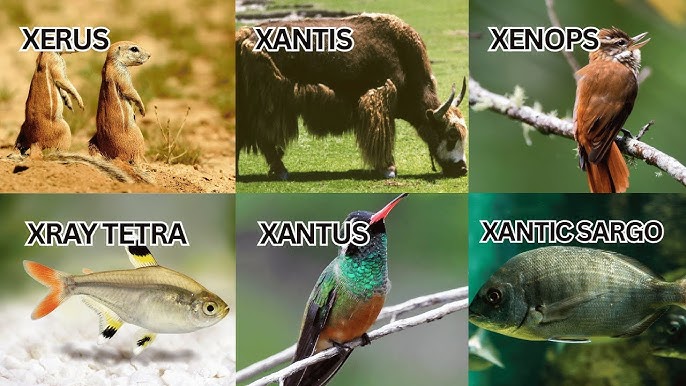
1. Xerus (African Ground Squirrel)
The xerus is a genus of African ground squirrels found across dry savannas and open woodlands south of the Sahara. These rodents have bushy tails and live in colonies that dig elaborate burrow systems. They mainly feed on seeds, nuts, roots, and small insects. Xerus are active during the day and rely on cooperation for predator vigilance.
Fun Fact: Xerus often use their large tails as umbrellas to shade themselves from the scorching African sun.
| Attribute | Detail |
|---|---|
| Size | 25–45 cm (10–18 in) |
| Weight | 0.5–1 kg (1.1–2.2 lb) |
| Lifespan | Up to 6 years |
| Habitat | African savannas and grasslands |
| Diet | Seeds, nuts, roots, insects |
| Social Structure | Colonies |
| Conservation | Least Concern |
Fun Fact: Xerus use teamwork to spot predators like jackals and snakes.
2. Xoloitzcuintli (Mexican Hairless Dog)
The xoloitzcuintli, or xolo, is a native Mexican breed revered since Aztec times as a spiritual guardian. It comes in toy, miniature, and standard sizes. This hairless dog has warm skin, upright ears, and a calm temperament. Xolos thrive in warm climates and are loyal companions.
Fun Fact: The breed’s name combines the Aztec god Xolotl and the word itzcuintli, meaning “dog.”
| Attribute | Detail |
|---|---|
| Size | 25–60 cm (10–24 in) |
| Weight | 4–25 kg (9–55 lb) |
| Lifespan | 12–15 years |
| Habitat | Domesticated (origin Mexico) |
| Diet | Omnivorous (domestic diet) |
| Social Structure | Family pet |
| Conservation | Domesticated species |
Fun Fact: Ancient Mexicans believed xolos guided souls to the afterlife.
3. Xantus’s Deer Mouse (Peromyscus xanthus)
This small nocturnal rodent is found only on islands off Baja California, Mexico. It inhabits rocky scrub areas, feeding on seeds and insects. Adapted to arid life, it conserves water efficiently.
Fun Fact: It’s named after Hungarian zoologist John Xantus de Véssey.
| Attribute | Detail |
|---|---|
| Size | 7–10 cm (2.7–4 in) |
| Weight | 15–25 g (0.5–0.9 oz) |
| Lifespan | Up to 2 years |
| Habitat | Baja California islands |
| Diet | Seeds, insects |
| Social Structure | Solitary |
| Conservation | Near Threatened |
Fun Fact: The species evolved in isolation, showing unique fur coloration.
4. Xingu River Ray (Potamotrygon leopoldi)
This freshwater stingray lives exclusively in Brazil’s Xingu River. Its dark body covered with bright white spots makes it one of the most striking rays. It feeds on crustaceans and small fish.
Fun Fact: The Xingu River Ray is prized in the aquarium trade for its pattern.
| Attribute | Detail |
|---|---|
| Size | Up to 45 cm (18 in) disk width |
| Weight | 10–15 kg (22–33 lb) |
| Lifespan | 10–15 years |
| Habitat | Freshwater rivers, Brazil |
| Diet | Crustaceans, fish |
| Social Structure | Solitary |
| Conservation | Endangered |
Fun Fact: It’s one of few stingrays adapted entirely to freshwater.
5. Xantus’s Leaf-Toed Gecko (Phyllodactylus xanti)
This small nocturnal reptile from Baja California lives among rocks and dry shrubs. Its leaf-shaped toes help it climb surfaces easily. The species feeds on small insects and hides during the day to avoid heat.
Fun Fact: The gecko can detach its tail to escape predators.
| Attribute | Detail |
|---|---|
| Size | 5–7 cm (2–3 in) |
| Weight | <10 g (0.35 oz) |
| Lifespan | 3–5 years |
| Habitat | Desert rocks and shrubs |
| Diet | Insects |
| Social Structure | Solitary |
| Conservation | Least Concern |
Fun Fact: Each gecko has unique toe patterns, like fingerprints.
6. Xantus’s Hummingbird (Basilinna xantusii)
A dazzling bird native to Baja California Sur, this hummingbird displays emerald-green plumage with a white stripe behind its eye. It hovers expertly while sipping nectar and catching insects mid-air.
Fun Fact: Males perform rapid dives to attract females.
| Attribute | Detail |
|---|---|
| Size | 9–10 cm (3.5–4 in) |
| Weight | 3–4 g (0.1 oz) |
| Lifespan | 3–5 years |
| Habitat | Mexican scrublands |
| Diet | Nectar, insects |
| Social Structure | Solitary |
| Conservation | Least Concern |
Fun Fact: It’s the only hummingbird species endemic to the Baja peninsula.
7. X-ray Tetra (Pristella maxillaris)
The X-ray tetra is a transparent fish found in South America’s rivers and streams. Its see-through body lets you view its bones and organs, a natural camouflage strategy. It lives in schools and eats worms, crustaceans, and plant material.
Fun Fact: It’s a favorite among aquarium enthusiasts.
| Attribute | Detail |
|---|---|
| Size | 4–5 cm (1.5–2 in) |
| Weight | 1–2 g (0.03–0.07 oz) |
| Lifespan | 3–5 years |
| Habitat | Freshwater rivers (Amazon Basin) |
| Diet | Worms, crustaceans, plants |
| Social Structure | Schooling |
| Conservation | Least Concern |
Fun Fact: The yellow-black-white pattern on its fins acts as a warning signal.
8. Xantus’s Murrelet (Synthliboramphus hypoleucus)
This small seabird breeds on islands off the Pacific coast of Mexico and California. It spends most of its life at sea, diving for small fish and plankton. The species is threatened by introduced predators like rats and cats.
Fun Fact: Chicks leave the nest just two days after hatching!
| Attribute | Detail |
|---|---|
| Size | 25 cm (10 in) |
| Weight | 150 g (5 oz) |
| Lifespan | 8–10 years |
| Habitat | Coastal seas and islands |
| Diet | Small fish, plankton |
| Social Structure | Monogamous pairs |
| Conservation | Vulnerable |
Fun Fact: Parents call to chicks at night to guide them to the sea.
9. Xenops (Xenops minutus)
A small brown bird from Central and South America’s tropical forests, xenops are related to woodcreepers and forage by climbing tree trunks for insects. Their upturned bills are perfect for prying bark.
Fun Fact: Xenops nests in rotted tree cavities lined with bark chips.
| Attribute | Detail |
|---|---|
| Size | 12 cm (4.7 in) |
| Weight | 12 g (0.4 oz) |
| Lifespan | 5–8 years |
| Habitat | Tropical forests |
| Diet | Insects, larvae |
| Social Structure | Pairs |
| Conservation | Least Concern |
Fun Fact: Its name literally means “strange-faced.”
10. Xingu Corydoras (Corydoras xinguensis)
A small armored catfish native to Brazil’s Xingu River. It scavenges along the riverbed in schools and is popular in aquariums for its peaceful behavior.
Fun Fact: These catfish use intestinal breathing to survive low oxygen.
| Attribute | Detail |
|---|---|
| Size | 5 cm (2 in) |
| Weight | 3 g (0.1 oz) |
| Lifespan | 5 years |
| Habitat | Freshwater rivers, Brazil |
| Diet | Detritus, insects |
| Social Structure | Schooling |
| Conservation | Least Concern |
Fun Fact: They gulp air at the surface to absorb oxygen through the gut.
11. Xeme (Xema sabini)
Also known as the Sabine’s gull, the xeme is a small Arctic seabird with a striking black head and forked tail. It breeds on tundra ponds and migrates long distances to the tropics during winter. Its diet includes insects, crustaceans, and small fish.
Fun Fact: The xeme can fly over 12,000 kilometers during migration!
| Attribute | Detail |
|---|---|
| Size | 27–33 cm (10.6–13 in) |
| Weight | 150–250 g (5–9 oz) |
| Lifespan | 10–14 years |
| Habitat | Arctic coasts and tundras |
| Diet | Insects, crustaceans, fish |
| Social Structure | Colonies |
| Conservation | Least Concern |
Fun Fact: Xemes nest close to Arctic terns for extra protection from predators.
12. Xenarthra (Superorder of Mammals)
Xenarthrans include armadillos, anteaters, and sloths, native to Central and South America. They share unique spinal joints and slow metabolisms. Sloths are arboreal, anteaters eat insects, and armadillos are diggers.
Fun Fact: Their name means “strange joints,” describing their unique vertebrae.
| Attribute | Detail |
|---|---|
| Size | Varies (40 cm to 1.8 m / 1.3–6 ft) |
| Weight | 5–40 kg (11–88 lb) |
| Lifespan | 10–30 years |
| Habitat | Forests, grasslands |
| Diet | Insects, leaves, fruit |
| Social Structure | Solitary |
| Conservation | Several species endangered |
Fun Fact: Some extinct xenarthrans like megatherium were the size of elephants.
13. Xingu Cichlid (Cichla xinguensis)
Native to the Xingu River Basin in Brazil, this colorful fish thrives in fast-moving waters. Known for its bright yellow fins, it’s a carnivore feeding on smaller fish.
Fun Fact: It’s part of the peacock bass family prized by anglers.
| Attribute | Detail |
|---|---|
| Size | Up to 50 cm (20 in) |
| Weight | Up to 3.5 kg (7.7 lb) |
| Lifespan | 10 years |
| Habitat | Freshwater rivers |
| Diet | Fish, crustaceans |
| Social Structure | Solitary |
| Conservation | Data Deficient |
Fun Fact: Xingu cichlids are indicators of water quality in their ecosystem.
14. Xantus’s Side-blotched Lizard (Uta xantusi)
Found in Mexico’s Baja Peninsula, this small reptile thrives in arid deserts and rocky outcrops. It basks in sunlight to regulate body temperature and feeds on small insects.
Fun Fact: This species can change its skin color slightly with temperature shifts.
| Attribute | Detail |
|---|---|
| Size | 5–7 cm (2–3 in) |
| Weight | <10 g (0.35 oz) |
| Lifespan | 3–4 years |
| Habitat | Arid deserts |
| Diet | Insects |
| Social Structure | Solitary |
| Conservation | Least Concern |
Fun Fact: Its side spots are used for territorial displays among males.
15. Xantic Sargo (Anisotremus davidsonii)
A coastal fish from the eastern Pacific, the xantic sargo inhabits rocky reefs and kelp forests. It has silver scales and a gold stripe along its body.
Fun Fact: Juveniles act as “cleaners,” removing parasites from larger fish.
| Attribute | Detail |
|---|---|
| Size | Up to 45 cm (18 in) |
| Weight | 2 kg (4.4 lb) |
| Lifespan | 10 years |
| Habitat | Coastal reefs |
| Diet | Crustaceans, mollusks |
| Social Structure | Small schools |
| Conservation | Least Concern |
Fun Fact: The name “xantic” refers to its yellowish hue.
16. Xiphias gladius (Swordfish)
This powerful predator inhabits tropical and temperate oceans worldwide. Its elongated “sword” helps slash schools of fish for easier feeding. Swordfish are fast swimmers reaching speeds up to 97 km/h.
Fun Fact: They can thermoregulate their eyes for deep-sea hunting.
| Attribute | Detail |
|---|---|
| Size | Up to 4.5 m (15 ft) |
| Weight | Up to 650 kg (1,430 lb) |
| Lifespan | 9 years |
| Habitat | Open oceans |
| Diet | Fish, squid |
| Social Structure | Solitary |
| Conservation | Least Concern |
Fun Fact: Swordfish lose all teeth and scales as adults.
17. Xingu Killifish (Simpsonichthys xinguensis)
A small, vividly colored freshwater fish endemic to Brazil’s Xingu basin. It thrives in shallow seasonal pools, feeding on larvae and microinvertebrates.
Fun Fact: Their eggs can survive dry seasons buried in mud.
| Attribute | Detail |
|---|---|
| Size | 4–5 cm (1.5–2 in) |
| Weight | <2 g (0.07 oz) |
| Lifespan | 1–2 years |
| Habitat | Seasonal pools |
| Diet | Larvae, insects |
| Social Structure | Pairs |
| Conservation | Data Deficient |
Fun Fact: Killifish hatch only when rains refill the pools.
18. Xenopus laevis (African Clawed Frog)
This aquatic frog from sub-Saharan Africa has webbed feet and no tongue. It lives in stagnant ponds, feeding on worms and small fish. Xenopus was once used in human pregnancy testing.
Fun Fact: Females can regenerate damaged tissue rapidly.
| Attribute | Detail |
|---|---|
| Size | 6–13 cm (2.3–5 in) |
| Weight | 60–200 g (2–7 oz) |
| Lifespan | 10–15 years |
| Habitat | Ponds and wetlands |
| Diet | Invertebrates, small fish |
| Social Structure | Group-living |
| Conservation | Least Concern |
Fun Fact: The species is fully aquatic and rarely leaves water.
19. Xenopsaris (Xenopsaris albinucha)
Also called the white-naped xenopsaris, this small flycatcher-like bird lives in South America’s savannas. It perches on open branches hunting for insects mid-air.
Fun Fact: It was long mistaken for a close relative of xenops until genetic testing.
| Attribute | Detail |
|---|---|
| Size | 12–13 cm (5 in) |
| Weight | 10–12 g (0.4 oz) |
| Lifespan | 4–6 years |
| Habitat | Grasslands, savannas |
| Diet | Insects |
| Social Structure | Pairs |
| Conservation | Least Concern |
Fun Fact: Its white nape patch gleams under sunlight, aiding communication.
20. Xestia Moth (Genus Xestia)
This large genus of nocturnal moths inhabits temperate regions worldwide. Adults are active at night and attracted to light, while caterpillars feed on grasses.
Fun Fact: Some Xestia species migrate seasonally.
| Attribute | Detail |
|---|---|
| Size | Wingspan 3–5 cm (1–2 in) |
| Weight | <1 g (0.03 oz) |
| Lifespan | Few weeks (adult) |
| Habitat | Forests, meadows |
| Diet | Nectar (adults), grasses (larvae) |
| Social Structure | Solitary |
| Conservation | Least Concern |
Fun Fact: Over 100 species of Xestia moths exist globally.
21. Xingu River Turtle (Podocnemis expansa)
Also known as the giant South American river turtle, this species inhabits the Amazon and Xingu basins. It’s one of the largest freshwater turtles in the world. Females lay eggs on sandy riverbanks, and hatchlings emerge en masse during the wet season.
Fun Fact: These turtles communicate with each other using underwater sounds.
| Attribute | Detail |
|---|---|
| Size | 90 cm (35 in) |
| Weight | Up to 65 kg (143 lb) |
| Lifespan | 50+ years |
| Habitat | Freshwater rivers |
| Diet | Aquatic plants, fruits |
| Social Structure | Aggregations |
| Conservation | Vulnerable |
Fun Fact: Xingu turtles play a key role in seed dispersal along Amazon rivers.
22. Xanthichthys auromarginatus (Blue Triggerfish)
This reef-dwelling fish is known for its electric blue body and yellow-lined fins. Found across Indo-Pacific coral reefs, it feeds on plankton near the surface.
Fun Fact: Males guard nesting sites on the ocean floor.
| Attribute | Detail |
|---|---|
| Size | 23–25 cm (9–10 in) |
| Weight | 300 g (0.6 lb) |
| Lifespan | 8–12 years |
| Habitat | Coral reefs |
| Diet | Plankton |
| Social Structure | Harem groups |
| Conservation | Least Concern |
Fun Fact: Blue triggerfish can lock their dorsal spine to wedge into reef crevices.
23. Xantus’s Becard (Pachyramphus aglaiae xantusi)
This small bird inhabits dry tropical forests in Baja California. It’s known for its thick bill and melodious calls. Males have gray plumage, while females show a rufous tinge.
Fun Fact: Their cup-shaped nests hang from high branches for safety.
| Attribute | Detail |
|---|---|
| Size | 13–15 cm (5–6 in) |
| Weight | 20 g (0.7 oz) |
| Lifespan | 4–5 years |
| Habitat | Tropical dry forests |
| Diet | Insects, berries |
| Social Structure | Pairs |
| Conservation | Least Concern |
Fun Fact: Xantus’s becards often mimic other birds’ songs to deter rivals.
24. Xestochilus Nightjar (Caprimulgus xestochilus)
A rare nocturnal bird found in Southeast Asia’s forests. It has cryptic plumage that blends perfectly with leaf litter, making it nearly invisible when resting.
Fun Fact: It catches insects mid-flight using its wide, bristle-framed mouth.
| Attribute | Detail |
|---|---|
| Size | 23–30 cm (9–12 in) |
| Weight | 60–100 g (2–3.5 oz) |
| Lifespan | 8 years |
| Habitat | Tropical forests |
| Diet | Flying insects |
| Social Structure | Solitary or pairs |
| Conservation | Data Deficient |
Fun Fact: It lays just one or two eggs directly on the forest floor.
25. Xiphophorus hellerii (Green Swordtail)
A popular aquarium fish native to Central America. Males have a long, sword-like extension on their tail fin. Swordtails inhabit slow-moving rivers and feed on algae and small insects.
Fun Fact: They can interbreed with platies to create hybrids.
| Attribute | Detail |
|---|---|
| Size | 12–15 cm (5–6 in) |
| Weight | 20 g (0.7 oz) |
| Lifespan | 3–5 years |
| Habitat | Freshwater rivers |
| Diet | Algae, insects |
| Social Structure | Groups |
| Conservation | Least Concern |
Fun Fact: Swordtails are livebearers that give birth to free-swimming young.
26. Xanthomixis zosterops (Spectacled Tetraka)
An insect-eating bird endemic to Madagascar’s rainforests. It’s olive-green with a distinctive white eye ring. It forages among foliage for insects and larvae.
Fun Fact: The species is an important pollinator in its habitat.
| Attribute | Detail |
|---|---|
| Size | 13 cm (5 in) |
| Weight | 11 g (0.4 oz) |
| Lifespan | 6 years |
| Habitat | Rainforests |
| Diet | Insects, nectar |
| Social Structure | Pairs |
| Conservation | Least Concern |
Fun Fact: Its name means “yellow mixer” in Greek, referring to its bright plumage.
27. Xantus’s Eelpout (Pachycara xantusi)
A deep-sea fish found off the Pacific coast of North America. It lives in cold, rocky seabeds and has a slender, eel-like body adapted for burrowing.
Fun Fact: It was named in honor of naturalist John Xantus.
| Attribute | Detail |
|---|---|
| Size | 20–25 cm (8–10 in) |
| Weight | 100 g (3.5 oz) |
| Lifespan | 6–8 years |
| Habitat | Deep-sea |
| Diet | Worms, crustaceans |
| Social Structure | Solitary |
| Conservation | Data Deficient |
Fun Fact: It can tolerate extreme ocean pressures.
28. Xenodermus javanicus (Dragon Snake)
Found in Indonesia, this bizarre-looking snake has rough, dragon-like scales. It prefers swampy habitats and feeds mostly on frogs.
Fun Fact: It’s nonvenomous and rarely seen due to its secretive nature.
| Attribute | Detail |
|---|---|
| Size | 60–70 cm (24–28 in) |
| Weight | 200 g (7 oz) |
| Lifespan | 10 years |
| Habitat | Swamps, forests |
| Diet | Frogs, amphibians |
| Social Structure | Solitary |
| Conservation | Least Concern |
Fun Fact: When threatened, it stiffens its body to appear larger.
29. Xylocopa virginica (Eastern Carpenter Bee)
This large bee species bores into wood to build its nest. Males are territorial, while females handle nest construction and pollen collection.
Fun Fact: They are crucial pollinators for many native plants.
| Attribute | Detail |
|---|---|
| Size | 2–3 cm (0.8–1.2 in) |
| Weight | <1 g (0.03 oz) |
| Lifespan | 1 year |
| Habitat | Gardens, forests |
| Diet | Nectar, pollen |
| Social Structure | Solitary |
| Conservation | Least Concern |
Fun Fact: Carpenter bees recognize human faces!
30. Xestobium rufovillosum (Deathwatch Beetle)
A wood-boring beetle known for the ticking sound males make to attract females. Found in old timber and historic buildings, especially in Europe.
Fun Fact: The ticking inspired its eerie name during the Middle Ages.
| Attribute | Detail |
|---|---|
| Size | 7 mm (0.3 in) |
| Weight | <1 g |
| Lifespan | Up to 5 years (larval stage) |
| Habitat | Wooden structures |
| Diet | Dead wood |
| Social Structure | Solitary |
| Conservation | Least Concern |
Fun Fact: The sound of this beetle is often heard during quiet nights.
31. Xestia c-nigrum (Setaceous Hebrew Character Moth)
Named for the black “Hebrew character” mark on its wings, this moth is common in Europe and Asia. It feeds on various crops, making it a minor pest species.
Fun Fact: It can fly during both day and night.
| Attribute | Detail |
|---|---|
| Size | 4 cm (1.6 in) wingspan |
| Weight | <1 g |
| Lifespan | 1 year |
| Habitat | Gardens, fields |
| Diet | Nectar (adults), crops (larvae) |
| Social Structure | Solitary |
| Conservation | Least Concern |
Fun Fact: It’s active in cooler months unlike many moths.
32. Xiphorhynchus guttatus (Buff-throated Woodcreeper)
A slender forest bird found in Central and South America. It climbs tree trunks using its stiff tail feathers for support.
Fun Fact: Its call is one of the most recognizable jungle sounds.
| Attribute | Detail |
|---|---|
| Size | 23–25 cm (9–10 in) |
| Weight | 40–50 g (1.7 oz) |
| Lifespan | 6 years |
| Habitat | Tropical rainforests |
| Diet | Insects |
| Social Structure | Solitary or pairs |
| Conservation | Least Concern |
Fun Fact: The woodcreeper’s curved bill acts like a natural chisel.
33. Xenerpestes singularis (Equatorial Rusty Spinneret)
This small bird is native to Ecuador and Peru’s montane forests. It forages among mossy branches, often hanging upside down to reach insects.
Fun Fact: Its name refers to its “spinning” movement while searching for food.
| Attribute | Detail |
|---|---|
| Size | 12 cm (4.7 in) |
| Weight | 11 g (0.4 oz) |
| Lifespan | 4–5 years |
| Habitat | Cloud forests |
| Diet | Insects |
| Social Structure | Pairs |
| Conservation | Near Threatened |
Fun Fact: Its rust-colored plumage blends into tree bark.
34. Xantusia vigilis (Desert Night Lizard)
A tiny, secretive lizard found in the Mojave and Sonoran Deserts. It lives under fallen yucca plants and rarely ventures outside.
Fun Fact: Unlike most reptiles, it gives birth to live young.
| Attribute | Detail |
|---|---|
| Size | 4–6 cm (1.5–2.5 in) |
| Weight | <5 g (0.18 oz) |
| Lifespan | 5–10 years |
| Habitat | Desert shrubs |
| Diet | Termites, ants |
| Social Structure | Family groups |
| Conservation | Least Concern |
Fun Fact: It doesn’t need free water—extracting moisture from food alone.
35. Xiphactinus audax (Extinct Predator Fish)
A massive predatory fish from the Late Cretaceous period, reaching over 5 meters. Fossils reveal it swallowed prey nearly half its size whole!
Fun Fact: Xiphactinus fossils are among the most complete in marine paleontology.
| Attribute | Detail |
|---|---|
| Size | 5 m (16 ft) |
| Weight | 600 kg (1,300 lb) |
| Lifespan | Unknown |
| Habitat | Prehistoric oceans |
| Diet | Fish |
| Social Structure | Unknown |
| Conservation | Extinct |
Fun Fact: A fossil was found with another fish fully intact inside its stomach.
36. Xenicidae (Family of Wrens)
These small, insectivorous birds are endemic to New Zealand. Known as “bush wrens,” they inhabit dense forest undergrowth.
Fun Fact: Several species went extinct due to invasive predators.
| Attribute | Detail |
|---|---|
| Size | 10–12 cm (4–5 in) |
| Weight | 10 g (0.35 oz) |
| Lifespan | 4 years |
| Habitat | Forests |
| Diet | Insects |
| Social Structure | Pairs |
| Conservation | Some species extinct |
Fun Fact: They evolved separately from true wrens of other continents.
37. Xanthomyza phrygia (Regent Honeyeater)
An endangered bird from southeastern Australia, known for its bright yellow and black plumage. It feeds on nectar and insects.
Fun Fact: It mimics the calls of up to 20 other bird species.
| Attribute | Detail |
|---|---|
| Size | 20–23 cm (8–9 in) |
| Weight | 45 g (1.6 oz) |
| Lifespan | 8 years |
| Habitat | Woodland |
| Diet | Nectar, insects |
| Social Structure | Small flocks |
| Conservation | Critically Endangered |
Fun Fact: Fewer than 400 individuals remain in the wild.
38. Xysticus cristatus (Crab Spider)
A small ambush predator that blends into flowers and leaves. Found across Europe and Asia, it captures insects that wander too close.
Fun Fact: It can walk sideways like a crab.
| Attribute | Detail |
|---|---|
| Size | 6–10 mm (0.2–0.4 in) |
| Weight | <1 g |
| Lifespan | 1 year |
| Habitat | Meadows, gardens |
| Diet | Insects |
| Social Structure | Solitary |
| Conservation | Least Concern |
Fun Fact: Crab spiders can change color to match their background.
39. Xylophanes tersa (Tersa Sphinx Moth)
This moth has a streamlined body and long, narrow wings, resembling a tiny jet. It feeds on nectar and migrates across the Americas.
Fun Fact: Its larvae mimic twigs to avoid predators.
| Attribute | Detail |
|---|---|
| Size | 6–8 cm (2.3–3 in) wingspan |
| Weight | <2 g |
| Lifespan | Few weeks |
| Habitat | Tropical forests |
| Diet | Nectar |
| Social Structure | Solitary |
| Conservation | Least Concern |
Fun Fact: It’s a powerful flyer capable of hovering like a hummingbird.
40. Xylaria polymorpha (Dead Man’s Fingers Fungus)
A creepy but vital decomposer found on decaying wood in forests. It produces black finger-like fruiting bodies that resemble hands rising from soil.
Fun Fact: Despite its look, it’s harmless and aids nutrient cycling.
| Attribute | Detail |
|---|---|
| Size | 2–8 cm (1–3 in) |
| Weight | — |
| Lifespan | Seasonal |
| Habitat | Decaying logs |
| Diet | Dead wood |
| Social Structure | Colonies |
| Conservation | Not Evaluated |
Fun Fact: It glows faintly under ultraviolet light.
41. Xantusia riversiana (Island Night Lizard)
Endemic to the Channel Islands of California, this reptile lives in rocky crevices and dense shrubs. It’s shy and slow-moving, spending much of the day hidden.
Fun Fact: It was once endangered but recovered through habitat protection.
| Attribute | Detail |
|---|---|
| Size | 10–12 cm (4–5 in) |
| Weight | 30 g (1 oz) |
| Lifespan | 10–15 years |
| Habitat | Coastal scrub, rocky outcrops |
| Diet | Insects, spiders |
| Social Structure | Solitary |
| Conservation | Least Concern |
Fun Fact: This species gives live birth instead of laying eggs.
42. Xanthogramma pedissequum (Hoverfly)
A striking black-and-yellow hoverfly found in Europe, mimicking wasps for defense. Adults feed on nectar, while larvae feed on aphids.
Fun Fact: It’s an important pollinator for wildflowers.
| Attribute | Detail |
|---|---|
| Size | 1.2 cm (0.5 in) |
| Weight | <1 g |
| Lifespan | 3–4 weeks |
| Habitat | Meadows, gardens |
| Diet | Nectar, aphids |
| Social Structure | Solitary |
| Conservation | Least Concern |
Fun Fact: The hoverfly’s mimicry deters birds despite being harmless.
43. Xiphophorus maculatus (Southern Platyfish)
A close relative of the swordtail, this colorful fish lives in Mexico’s rivers. It’s small, peaceful, and breeds prolifically in aquariums.
Fun Fact: Its varied color patterns come from selective breeding.
| Attribute | Detail |
|---|---|
| Size | 5 cm (2 in) |
| Weight | <2 g |
| Lifespan | 3 years |
| Habitat | Freshwater streams |
| Diet | Algae, insect larvae |
| Social Structure | Groups |
| Conservation | Least Concern |
Fun Fact: The platyfish helped scientists study melanoma genetics.
44. Xiphophorus variatus (Variable Platyfish)
Native to Mexico’s coastal rivers, this species tolerates a range of temperatures and salinities. It displays vibrant orange or blue hues.
Fun Fact: It’s named “variatus” for its highly variable color morphs.
| Attribute | Detail |
|---|---|
| Size | 6 cm (2.4 in) |
| Weight | <2 g |
| Lifespan | 3–4 years |
| Habitat | Rivers, ponds |
| Diet | Algae, detritus |
| Social Structure | Groups |
| Conservation | Least Concern |
Fun Fact: It can survive in slightly brackish water.
45. Xiphocolaptes promeropirhynchus (Strong-billed Woodcreeper)
A large Neotropical bird that climbs trees searching for insects beneath bark. Its long, curved bill pries open crevices.
Fun Fact: Its powerful calls echo through rainforests at dawn.
| Attribute | Detail |
|---|---|
| Size | 28–30 cm (11–12 in) |
| Weight | 70 g (2.4 oz) |
| Lifespan | 8–10 years |
| Habitat | Tropical forests |
| Diet | Insects, spiders |
| Social Structure | Pairs |
| Conservation | Least Concern |
Fun Fact: It often follows army ant swarms to catch fleeing insects.
46. Xiphorhynchus susurrans (Cocoa Woodcreeper)
Found in Central and South America, this bird’s song resembles soft whispers, inspiring its name susurrans (“whispering”).
Fun Fact: It feeds by hitching rides near army ant swarms.
| Attribute | Detail |
|---|---|
| Size | 22–25 cm (8.5–10 in) |
| Weight | 35–45 g (1.5 oz) |
| Lifespan | 6 years |
| Habitat | Tropical forests |
| Diet | Insects |
| Social Structure | Pairs |
| Conservation | Least Concern |
Fun Fact: Its stiff tail helps it cling vertically to tree trunks.
47. Xenos vesparum (Parasitic Strepsipteran)
A bizarre parasitic insect that infects paper wasps. Females remain inside the host’s body, while males emerge briefly to mate.
Fun Fact: It manipulates host behavior to benefit its reproduction.
| Attribute | Detail |
|---|---|
| Size | 3–5 mm (0.1–0.2 in) |
| Weight | Negligible |
| Lifespan | Weeks |
| Habitat | Wasp nests |
| Diet | Parasitic |
| Social Structure | Parasitic |
| Conservation | Least Concern |
Fun Fact: Infected wasps stop reproducing and care for parasites instead.
48. Xyrauchen texanus (Razorback Sucker)
An endangered fish from the Colorado River Basin, known for its sharp dorsal ridge. It’s a long-lived species threatened by habitat loss.
Fun Fact: Some individuals exceed 40 years of age.
| Attribute | Detail |
|---|---|
| Size | 90 cm (35 in) |
| Weight | 6 kg (13 lb) |
| Lifespan | 40+ years |
| Habitat | Freshwater rivers |
| Diet | Algae, detritus |
| Social Structure | Schools |
| Conservation | Endangered |
Fun Fact: It spawns in shallow gravel bars during spring floods.
49. Xenicibis xympithecus (Jamaican Flightless Ibis, Extinct)
This extinct bird from Jamaica had club-like wings used as weapons. It lived in forests and likely fed on insects and small prey.
Fun Fact: It’s the only known bird to use wings as clubs in combat.
| Attribute | Detail |
|---|---|
| Size | 50 cm (20 in) |
| Weight | 1.5 kg (3.3 lb) |
| Lifespan | Unknown |
| Habitat | Forests (Jamaica) |
| Diet | Insects, small animals |
| Social Structure | Unknown |
| Conservation | Extinct |
Fun Fact: Fossils show muscular wing joints ideal for striking.
50. Xenocyon lycaonoides (Extinct Wolf-like Canid)
A prehistoric predator that lived across Eurasia and Africa. It hunted in packs, resembling modern African wild dogs.
Fun Fact: It’s believed to be an ancestor of today’s painted wolf.
| Attribute | Detail |
|---|---|
| Size | 1.2 m (4 ft) |
| Weight | 35–45 kg (77–99 lb) |
| Lifespan | Unknown |
| Habitat | Grasslands, plains |
| Diet | Meat |
| Social Structure | Packs |
| Conservation | Extinct |
Fun Fact: Fossil evidence shows cooperative pack hunting similar to wolves.
51. Xanthocercis zambesiaca (Nyala Tree)
A large African tree that supports wildlife with its edible pods and shade. While not an animal, it’s vital to the food web supporting many X-letter fauna.
Fun Fact: Antelopes and birds feast on its fruits.
| Attribute | Detail |
|---|---|
| Size | 20–25 m (65–82 ft) |
| Weight | — |
| Lifespan | Decades |
| Habitat | Savannas |
| Diet | — |
| Social Structure | — |
| Conservation | Least Concern |
Fun Fact: Elephants disperse its seeds over vast distances.
52. Xenacanthus (Extinct Freshwater Shark)
This ancient shark genus lived 300 million years ago in rivers and lakes. It had eel-like bodies and a unique spine projecting from the back of its head.
Fun Fact: Its teeth were adapted for catching amphibians.
| Attribute | Detail |
|---|---|
| Size | 1–2 m (3–6 ft) |
| Weight | 10–20 kg (22–44 lb) |
| Lifespan | Unknown |
| Habitat | Freshwater rivers |
| Diet | Fish, amphibians |
| Social Structure | Unknown |
| Conservation | Extinct |
Fun Fact: Unlike most sharks, Xenacanthus lived entirely in freshwater.
53. Xylocoris flavipes (Warehouse Pirate Bug)
A tiny predatory insect used in pest control against grain moths. It’s found in warehouses worldwide.
Fun Fact: It’s one of the few insects beneficial to stored-food industries.
| Attribute | Detail |
|---|---|
| Size | 2 mm (0.08 in) |
| Weight | — |
| Lifespan | 6 months |
| Habitat | Grain storage areas |
| Diet | Moth larvae |
| Social Structure | Solitary |
| Conservation | Least Concern |
Fun Fact: Farmers rear it commercially for biological pest control.
54. Xiphosura (Horseshoe Crabs)
Marine arthropods that have existed for 450 million years. They are not true crabs but close to spiders. Their blue blood is used in medical testing.
Fun Fact: They’re living fossils with little evolutionary change.
| Attribute | Detail |
|---|---|
| Size | 30–60 cm (12–24 in) |
| Weight | 2–4 kg (4–9 lb) |
| Lifespan | 20 years |
| Habitat | Coastal mudflats |
| Diet | Worms, mollusks |
| Social Structure | Solitary |
| Conservation | Vulnerable |
Fun Fact: Their blood detects bacterial toxins in vaccines.
55. Xanthichthys ringens (Sargassum Triggerfish)
Found in the Atlantic, this colorful reef fish drifts among floating sargassum seaweed. It feeds on crustaceans and small invertebrates.
Fun Fact: It uses its dorsal spine to anchor in seaweed mats.
| Attribute | Detail |
|---|---|
| Size | 25 cm (10 in) |
| Weight | 200 g (7 oz) |
| Lifespan | 8 years |
| Habitat | Open ocean, reefs |
| Diet | Crustaceans |
| Social Structure | Pairs |
| Conservation | Least Concern |
Fun Fact: Its bright yellow tail distinguishes it from other triggerfish.
56. Xenopus tropicalis (Western Clawed Frog)
A smaller cousin of the African clawed frog, found across West Africa. It’s an important model organism in biological research.
Fun Fact: Its genome was the first amphibian genome fully sequenced.
| Attribute | Detail |
|---|---|
| Size | 4–5 cm (1.5–2 in) |
| Weight | 10–15 g (0.4 oz) |
| Lifespan | 8 years |
| Habitat | Ponds, wetlands |
| Diet | Insects, worms |
| Social Structure | Groups |
| Conservation | Least Concern |
Fun Fact: Scientists study it to understand vertebrate development.
57. Xenosaurus grandis (Knob-scaled Lizard)
A chunky lizard with knobby scales found in Mexican forests. It’s a sit-and-wait predator that ambushes insects.
Fun Fact: It has remained unchanged for millions of years.
| Attribute | Detail |
|---|---|
| Size | 13–15 cm (5–6 in) |
| Weight | 50 g (1.8 oz) |
| Lifespan | 10 years |
| Habitat | Rocky forests |
| Diet | Insects |
| Social Structure | Solitary |
| Conservation | Near Threatened |
Fun Fact: It gives birth to live young rather than laying eggs.
58. Xiphinema index (Dagger Nematode)
A microscopic soil worm that parasitizes plant roots, especially grapevines. Though harmful, it’s vital for studying plant-virus transmission.
Fun Fact: It carries the grapevine fanleaf virus.
| Attribute | Detail |
|---|---|
| Size | 2 mm (0.08 in) |
| Weight | — |
| Lifespan | Weeks |
| Habitat | Soil |
| Diet | Plant roots |
| Social Structure | Solitary |
| Conservation | Not Evaluated |
Fun Fact: Its needle-like mouthpart pierces roots to feed.
59. Xanthias maculatus (Spotted Reef Crab)
This small crab hides among coral heads in the Indo-Pacific. It’s nocturnal and feeds on algae and detritus.
Fun Fact: It often partners with sea anemones for protection.
| Attribute | Detail |
|---|---|
| Size | 3–4 cm (1.2–1.5 in) |
| Weight | 20 g (0.7 oz) |
| Lifespan | 3–4 years |
| Habitat | Coral reefs |
| Diet | Algae, detritus |
| Social Structure | Pairs |
| Conservation | Least Concern |
Fun Fact: Its claws contain mild toxins for defense.
60. Xylocopa caerulea (Blue Carpenter Bee)
This striking bee sports metallic blue fur and builds nests in wood. Native to Southeast Asia, it’s a powerful pollinator.
Fun Fact: Its buzz pollination helps fertilize plants like tomatoes.
| Attribute | Detail |
|---|---|
| Size | 2.5 cm (1 in) |
| Weight | <1 g |
| Lifespan | 1 year |
| Habitat | Forests, gardens |
| Diet | Nectar, pollen |
| Social Structure | Solitary |
| Conservation | Least Concern |
Fun Fact: The vivid blue sheen comes from microscopic hair structures.
61. Xantusia henshawi (Granite Night Lizard)
Native to Southern California, this small lizard hides beneath granite boulders and is active mainly at dusk. It’s highly secretive and rarely seen.
Fun Fact: Its translucent skin helps it blend perfectly into stone surfaces.
| Attribute | Detail |
|---|---|
| Size | 10 cm (4 in) |
| Weight | 20 g (0.7 oz) |
| Lifespan | 10–15 years |
| Habitat | Rocky deserts |
| Diet | Insects |
| Social Structure | Solitary |
| Conservation | Least Concern |
Fun Fact: It can survive long periods without direct water intake.
62. Xenicid Wrens (New Zealand Wrens)
These tiny insect-eating birds are among the oldest passerines on Earth. Once widespread in New Zealand, most species are now extinct due to predators.
Fun Fact: Some species were flightless, a rarity among songbirds.
| Attribute | Detail |
|---|---|
| Size | 8–10 cm (3–4 in) |
| Weight | 7–9 g (0.3 oz) |
| Lifespan | 3–5 years |
| Habitat | Forest floor |
| Diet | Insects, larvae |
| Social Structure | Pairs |
| Conservation | Extinct/Endangered |
Fun Fact: The Stephens Island wren was discovered from a cat’s prey remains.
63. Xystocheir dissecta (Millipede)
Found in the Pacific Northwest of the U.S., this millipede lives under moist logs and leaf litter. It plays an essential role in decomposing organic matter.
Fun Fact: It secretes mild cyanide compounds to deter predators.
| Attribute | Detail |
|---|---|
| Size | 3–5 cm (1–2 in) |
| Weight | <1 g |
| Lifespan | 3 years |
| Habitat | Forest floor |
| Diet | Decaying vegetation |
| Social Structure | Solitary |
| Conservation | Least Concern |
Fun Fact: Its bright coloration warns predators of its toxins.
64. Xanthippus corallipes (Red-shanked Grasshopper)
A North American grasshopper recognized by its vivid red hind legs. It inhabits arid plains and grasslands, feeding on dry grasses.
Fun Fact: Its colors flash as it jumps, confusing predators.
| Attribute | Detail |
|---|---|
| Size | 3–4 cm (1.2–1.6 in) |
| Weight | <1 g |
| Lifespan | 1 year |
| Habitat | Grasslands |
| Diet | Grasses |
| Social Structure | Solitary |
| Conservation | Least Concern |
Fun Fact: Its name corallipes means “coral-footed.”
65. Xenosaurus platyceps (Flat-headed Knob-scaled Lizard)
Found in eastern Mexico, this reptile dwells in rocky forests. It is slow-moving and relies on camouflage.
Fun Fact: It’s a live-bearer, giving birth to 1–2 offspring annually.
| Attribute | Detail |
|---|---|
| Size | 13 cm (5 in) |
| Weight | 50 g (1.8 oz) |
| Lifespan | 8–10 years |
| Habitat | Mountain forests |
| Diet | Insects, spiders |
| Social Structure | Solitary |
| Conservation | Near Threatened |
Fun Fact: The species name means “flat head,” describing its broad skull.
66. Xestospiza fastigiata (Cone-billed Finch, Extinct)
This extinct Hawaiian honeycreeper had a conical bill suited for seeds and fruits. It disappeared due to habitat loss and disease.
Fun Fact: It’s part of Hawaii’s legendary adaptive radiation of finches.
| Attribute | Detail |
|---|---|
| Size | 12 cm (5 in) |
| Weight | 15 g (0.5 oz) |
| Lifespan | Unknown |
| Habitat | Hawaiian forests |
| Diet | Seeds, berries |
| Social Structure | Unknown |
| Conservation | Extinct |
Fun Fact: Fossils show it once shared forests with giant flightless geese.
67. Xylophaga dorsalis (Wood-boring Bivalve)
A deep-sea clam that bores into submerged wood for shelter and nutrients. It plays a key role in recycling sunken plant material.
Fun Fact: It uses symbiotic bacteria to digest cellulose.
| Attribute | Detail |
|---|---|
| Size | 2–3 cm (1 in) |
| Weight | — |
| Lifespan | Few years |
| Habitat | Deep-sea wood falls |
| Diet | Wood particles |
| Social Structure | Colonies |
| Conservation | Not Evaluated |
Fun Fact: It’s the ocean’s version of a termite.
68. Xenicibis minor (Lesser Jamaican Ibis, Extinct)
A smaller relative of Xenicibis xympithecus, this bird also had modified wings and likely shared its forest habitat.
Fun Fact: It vanished after humans arrived on Jamaica.
| Attribute | Detail |
|---|---|
| Size | 40 cm (16 in) |
| Weight | 1 kg (2.2 lb) |
| Lifespan | Unknown |
| Habitat | Forests |
| Diet | Insects, small animals |
| Social Structure | Unknown |
| Conservation | Extinct |
Fun Fact: It’s among the rarest fossil discoveries from the Caribbean.
69. Xylocoris cursitans (Predatory Bug)
A tiny predatory insect that hunts other pests in stored grains. It’s harmless to humans and valuable in biological control.
Fun Fact: It can detect prey through vibrations.
| Attribute | Detail |
|---|---|
| Size | 2 mm (0.08 in) |
| Weight | — |
| Lifespan | 4–6 months |
| Habitat | Warehouses, barns |
| Diet | Moth and beetle larvae |
| Social Structure | Solitary |
| Conservation | Least Concern |
Fun Fact: Used commercially in pest management programs.
70. Xiphorhynchus elegans (Elegant Woodcreeper)
This beautifully patterned forest bird lives in Amazonian lowlands. It uses its long bill to pick insects from bark crevices.
Fun Fact: Its song consists of flute-like whistles.
| Attribute | Detail |
|---|---|
| Size | 23 cm (9 in) |
| Weight | 35 g (1.2 oz) |
| Lifespan | 7 years |
| Habitat | Rainforests |
| Diet | Insects, larvae |
| Social Structure | Pairs |
| Conservation | Least Concern |
Fun Fact: It often joins mixed-species bird flocks while foraging.
71. Xestospiza conica (Thick-billed Finch, Extinct)
Another extinct Hawaiian honeycreeper with a thick, cone-shaped bill for cracking seeds.
Fun Fact: It highlights how fast island birds can evolve and disappear.
| Attribute | Detail |
|---|---|
| Size | 13 cm (5 in) |
| Weight | 17 g (0.6 oz) |
| Lifespan | Unknown |
| Habitat | Forests |
| Diet | Seeds |
| Social Structure | Unknown |
| Conservation | Extinct |
Fun Fact: It’s closely related to modern-day finches by ancestry.
72. Xanthichthys mento (Crosshatch Triggerfish)
A spectacular reef fish from the Pacific Ocean with yellow crosshatching on its body. Males and females form pairs for life.
Fun Fact: Its gentle nature makes it a favorite among divers.
| Attribute | Detail |
|---|---|
| Size | 30 cm (12 in) |
| Weight | 500 g (1.1 lb) |
| Lifespan | 10 years |
| Habitat | Coral reefs |
| Diet | Crustaceans |
| Social Structure | Pairs |
| Conservation | Least Concern |
Fun Fact: Its bright blue tail turns darker when it’s alarmed.
73. Xenodermidae (Odd-scaled Snakes)
A family of snakes found in Asia, characterized by rough, irregular scales. They live in moist forest floors and feed on amphibians.
Fun Fact: Their primitive traits give clues to early snake evolution.
| Attribute | Detail |
|---|---|
| Size | 40–60 cm (16–24 in) |
| Weight | 100 g (3.5 oz) |
| Lifespan | 8 years |
| Habitat | Forests |
| Diet | Frogs, worms |
| Social Structure | Solitary |
| Conservation | Least Concern |
Fun Fact: Their fragmented scales act as armor against predators.
74. Xenicibis antiquus (Ancient Jamaican Ibis)
A prehistoric relative of the club-winged ibis, known only from fossils. It lived in the same forests as extinct Caribbean owls.
Fun Fact: Its fossil bones show extreme wing thickening.
| Attribute | Detail |
|---|---|
| Size | 45 cm (18 in) |
| Weight | 1.2 kg (2.6 lb) |
| Lifespan | Unknown |
| Habitat | Forests |
| Diet | Insects |
| Social Structure | Unknown |
| Conservation | Extinct |
Fun Fact: It’s one of few birds to evolve weaponized wings independently.
75. Xyrichtys novacula (Pearly Razorfish)
A slender wrasse from the Atlantic and Mediterranean that buries itself in sand when threatened.
Fun Fact: Its name novacula means “razor” for its sharp profile.
| Attribute | Detail |
|---|---|
| Size | 15–20 cm (6–8 in) |
| Weight | 100 g (3.5 oz) |
| Lifespan | 5 years |
| Habitat | Sandy shallows |
| Diet | Crustaceans |
| Social Structure | Solitary |
| Conservation | Least Concern |
Fun Fact: It can dive into sand in less than a second.
76. Xylophanes ceratomioides (Ceratomia Sphinx Moth)
A large moth found across Central and South America. It pollinates night-blooming flowers while hovering like a hummingbird.
Fun Fact: Its caterpillars mimic snakes to deter predators.
| Attribute | Detail |
|---|---|
| Size | 7–9 cm (3 in) wingspan |
| Weight | <2 g |
| Lifespan | 1 month |
| Habitat | Tropical forests |
| Diet | Nectar |
| Social Structure | Solitary |
| Conservation | Least Concern |
Fun Fact: Its proboscis can reach over 10 cm to sip deep floral nectar.
77. Xanthia icteritia (Sallow Moth)
A bright yellow moth from Europe that flies in autumn. It feeds on willow and poplar leaves.
Fun Fact: Its color helps it blend with autumn foliage.
| Attribute | Detail |
|---|---|
| Size | 3.5 cm (1.3 in) wingspan |
| Weight | <1 g |
| Lifespan | 1 year |
| Habitat | Woodlands |
| Diet | Leaves (larvae), nectar (adults) |
| Social Structure | Solitary |
| Conservation | Least Concern |
Fun Fact: It’s one of the last moths to appear before winter.
78. Xylocopa tenuiscapa (Indian Carpenter Bee)
Common across South Asia, this robust bee nests in bamboo and dead wood. It’s a key pollinator for crops like passion fruit.
Fun Fact: Females can drill nearly perfect circular holes.
| Attribute | Detail |
|---|---|
| Size | 2.5 cm (1 in) |
| Weight | <1 g |
| Lifespan | 1 year |
| Habitat | Forest edges, gardens |
| Diet | Nectar, pollen |
| Social Structure | Solitary |
| Conservation | Least Concern |
Fun Fact: The buzz from its wings can be heard several meters away.
79. Xestia baja (Dotted Clay Moth)
Found across Europe, this brown moth is named for the clay-like color of its wings. Its caterpillars feed on low vegetation.
Fun Fact: It’s active during cool, damp nights.
| Attribute | Detail |
|---|---|
| Size | 4 cm (1.6 in) wingspan |
| Weight | <1 g |
| Lifespan | 1 year |
| Habitat | Meadows, woodland edges |
| Diet | Grasses, herbs |
| Social Structure | Solitary |
| Conservation | Least Concern |
Fun Fact: Its subtle wing spots vary by region.
80. Xiphotheca guthriei (Plant-associated Insect)
A small pollinating beetle associated with Xiphotheca plants in South Africa. It aids in cross-pollination of rare legumes.
Fun Fact: Its discovery helped botanists map plant-insect coevolution.
| Attribute | Detail |
|---|---|
| Size | 5 mm (0.2 in) |
| Weight | — |
| Lifespan | 1 year |
| Habitat | Shrublands |
| Diet | Pollen |
| Social Structure | Solitary |
| Conservation | Not Evaluated |
Fun Fact: It’s one of the few insects named after its host plant.
Read: Are Kangaroos Smart Animals?
Read: How Many Animals Are In The World?
Read: How Much Does A Camel Cost?
Read: Do Hippos Like Chocolate?
Read: 7 Most Curious Animals In The World
Read: List Of 6 Mammals That Can’t Jump
Read: 10+ Unique Animals with Down Syndrome
FAQs
What are some rare animals that start with X?
Rare examples include the Xeme, Xingu River Ray, Xenopus laevis, and the extinct Xenicibis xympithecus. Many of these are unique to specific islands or river systems.
How many animals start with the letter X?
While not as common as other letters, there are around 80 scientifically recorded animals starting with X, including both living and extinct species across multiple classes.
Are there mammals that start with X?
Yes! Mammals include the Xerus, Xoloitzcuintli, and Xenarthra group (sloths, anteaters, and armadillos).
What habitats do X animals live in?
They inhabit diverse environments—from African savannas and tropical forests to deep-sea trenches and Arctic tundras, depending on their species.
Why are so many X animals little-known?
Because the letter X often appears in Latinized scientific names, many species beginning with X are lesser-known, localized, or newly discovered.
Conclusion
The world of animals that start with X reveals just how vast and surprising Earth’s biodiversity can be. From ancient sharks like Xenacanthus to colorful birds like Xantus’s hummingbird, each species adds its own fascinating piece to nature’s puzzle.
These creatures, though rare, highlight evolution’s creativity—whether thriving in deserts, rainforests, or coral reefs. By learning about them, we celebrate both life’s variety and the scientists preserving these wonders for the future.